


































GLEDOPTO WLED Controllers — SPI, PWM & Hybrid





























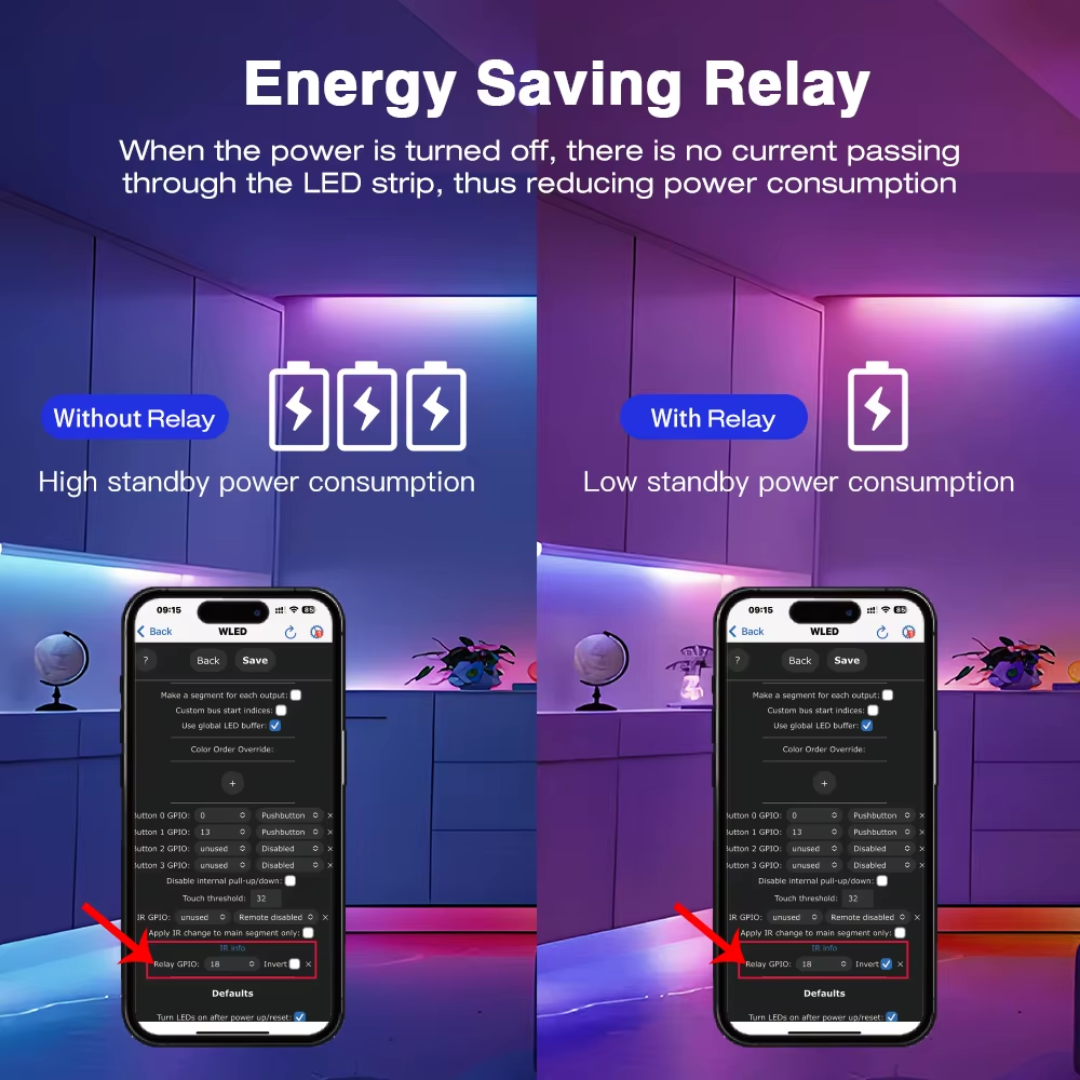


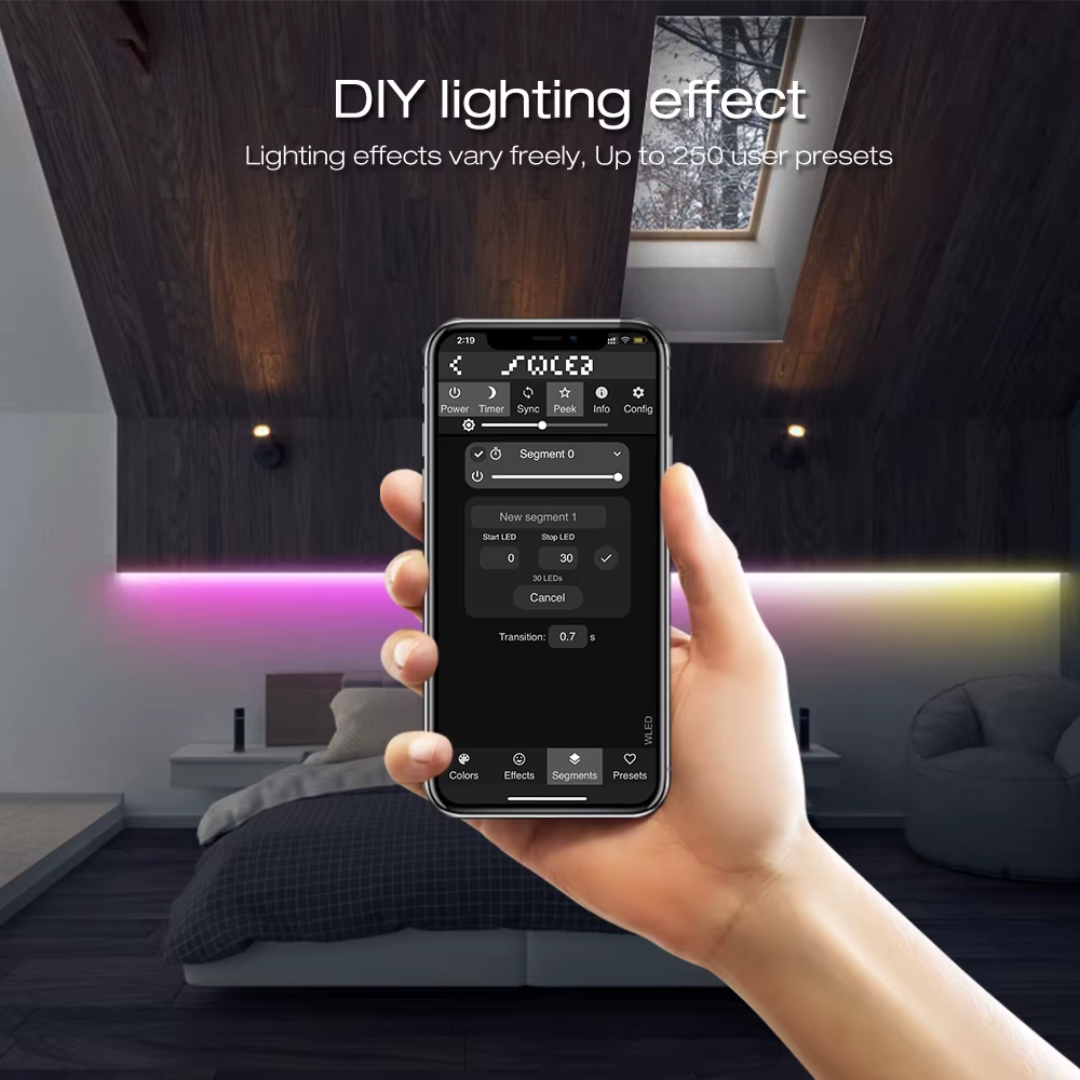


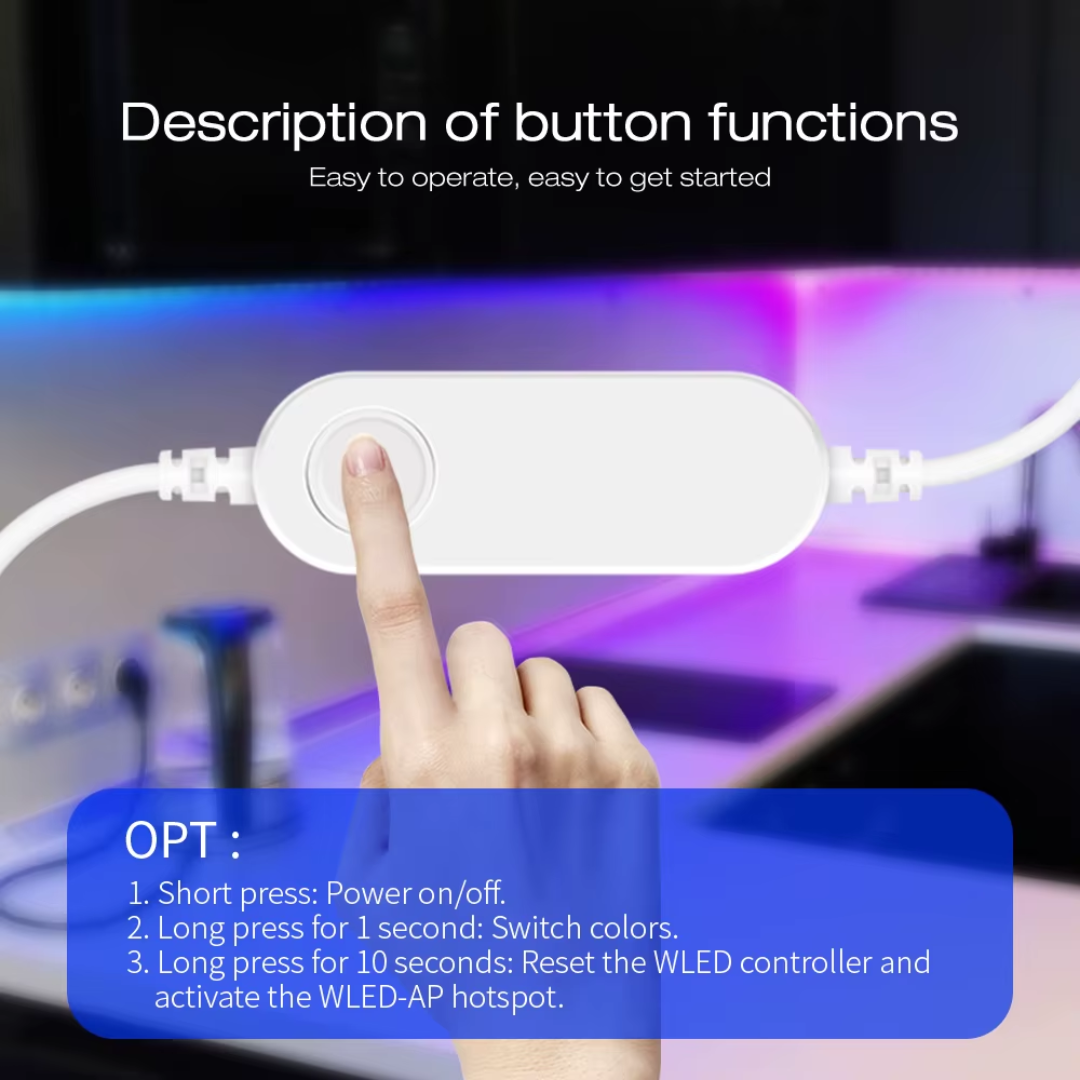

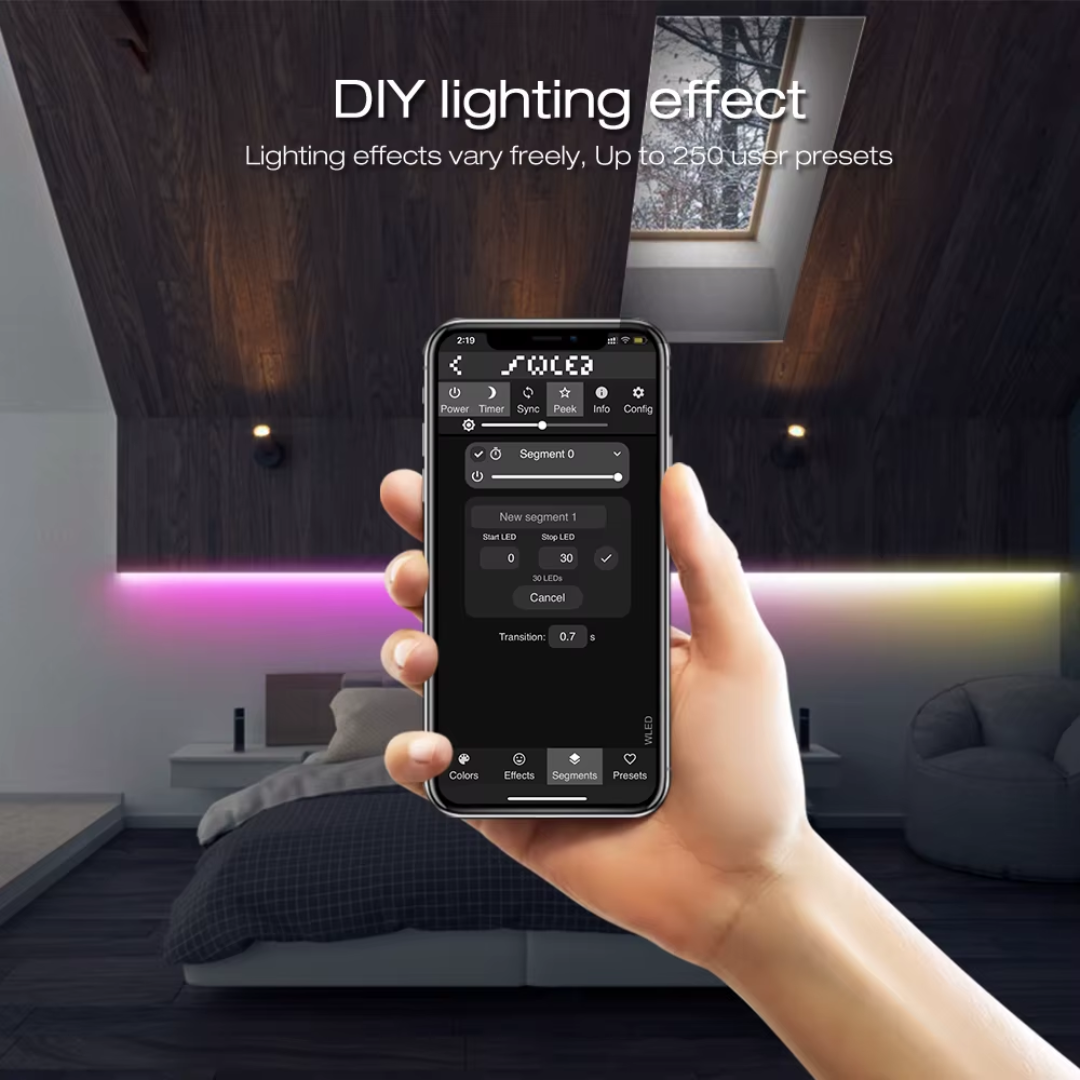




Genuine GLEDOPTO ESP32 WLED controllers — SPI pixel, PWM analog & hybrid models. Control WS2812, SK6812, CCT & RGBW strips. Fast India shipping.
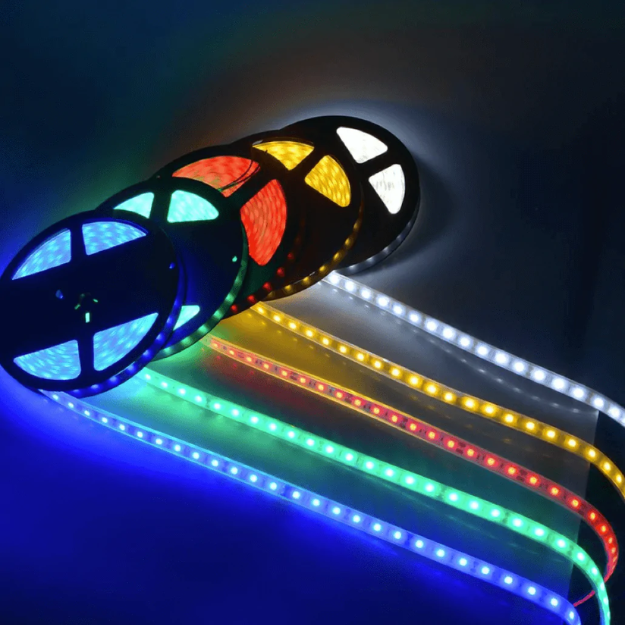
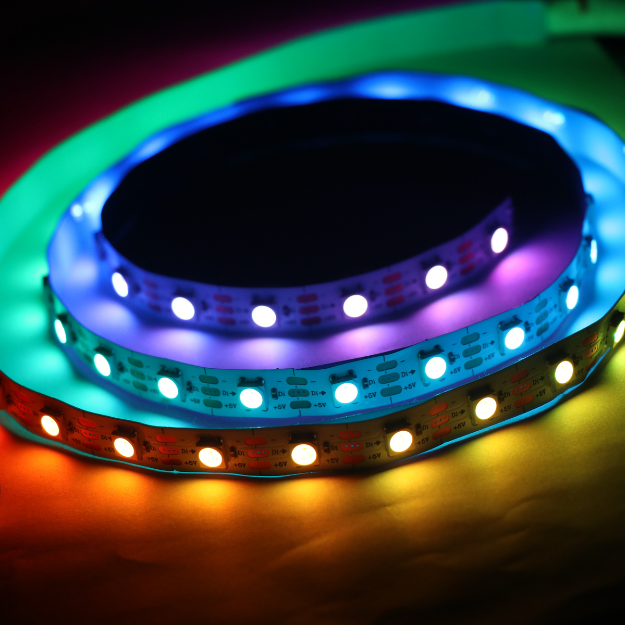
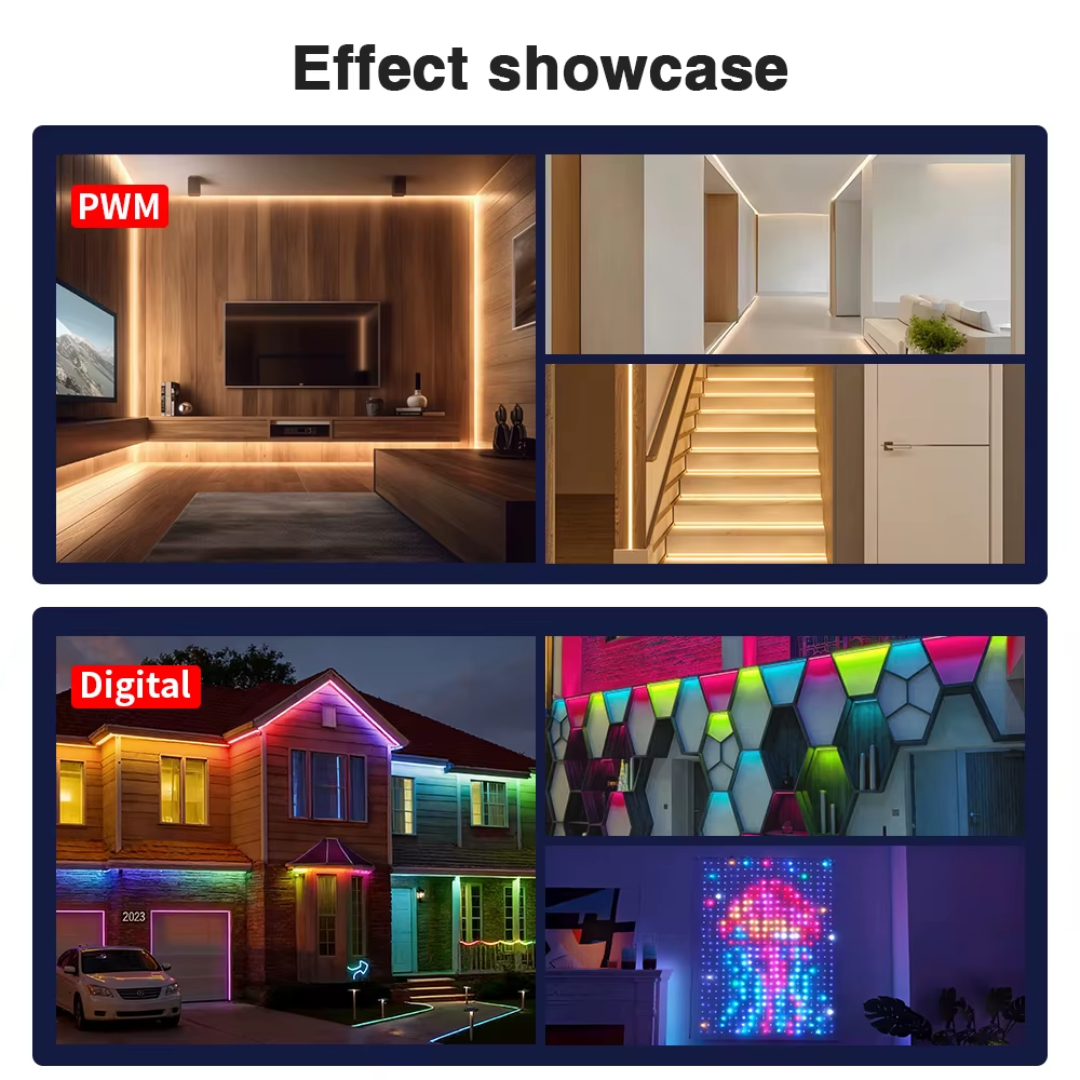
Bought the wrong controller once already? You're not alone — it's the single most common reason a new LED strip "doesn't work" on arrival. Every addressable and analog LED strip runs on one of two protocols: SPI (digital/IC-based) for pixel strips like WS2812 and SK6812, or PWM (analog) for standard RGB, RGBW, RGBCCT, and CCT strips. Most controllers only handle one. GLEDOPTO's range — genuine stock, held and shipped from India by Chronos Lights — covers both, including one controller that runs both at the same time.
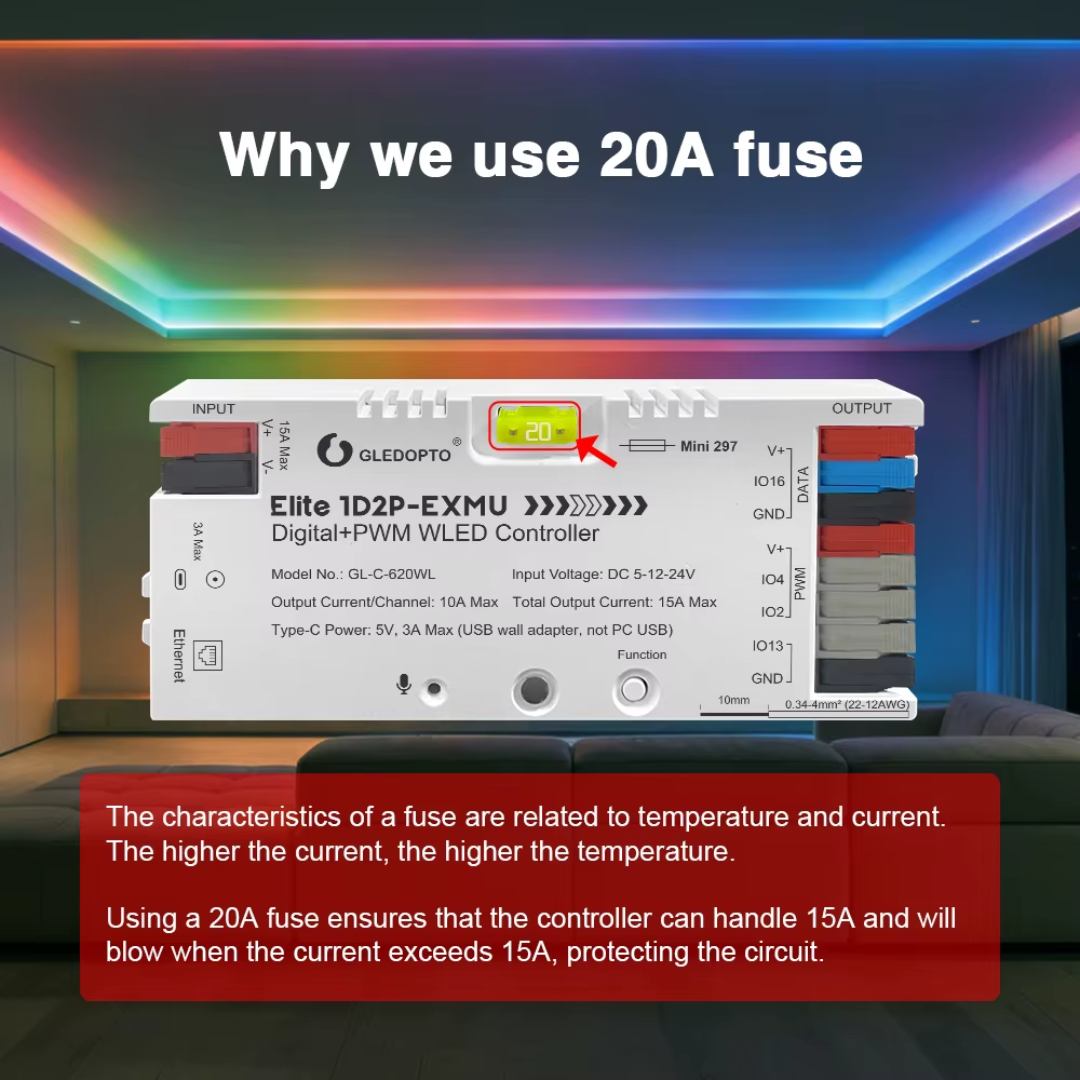
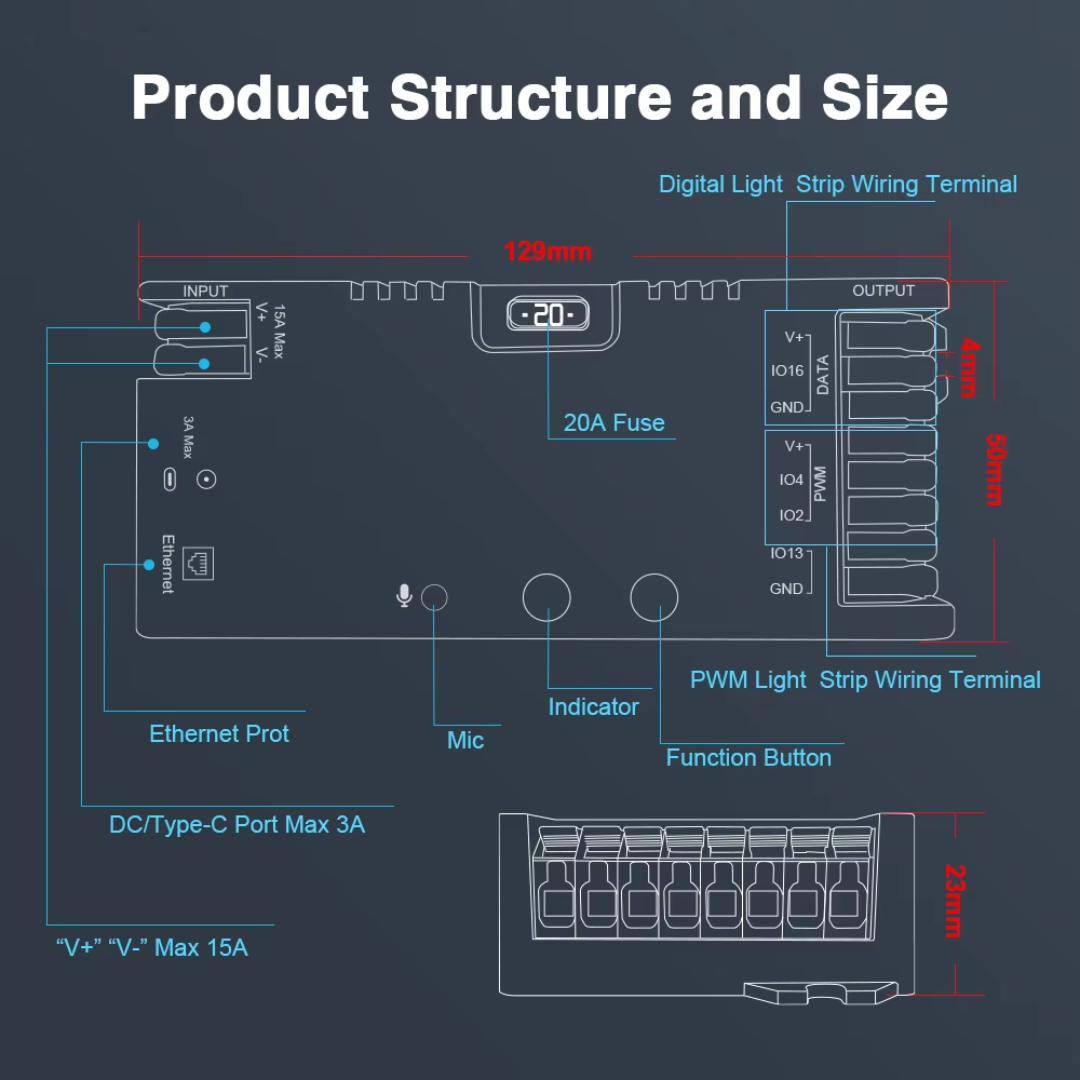
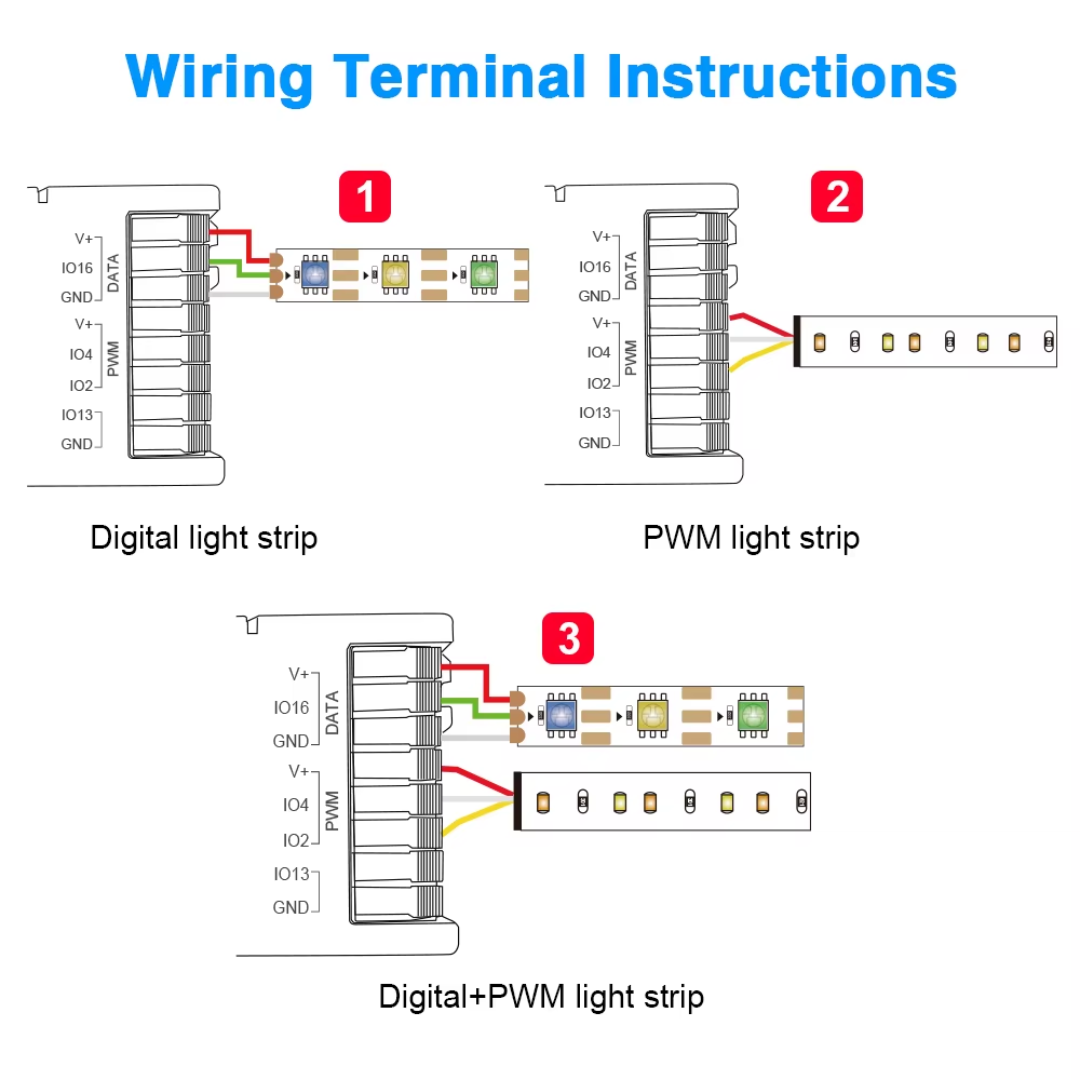
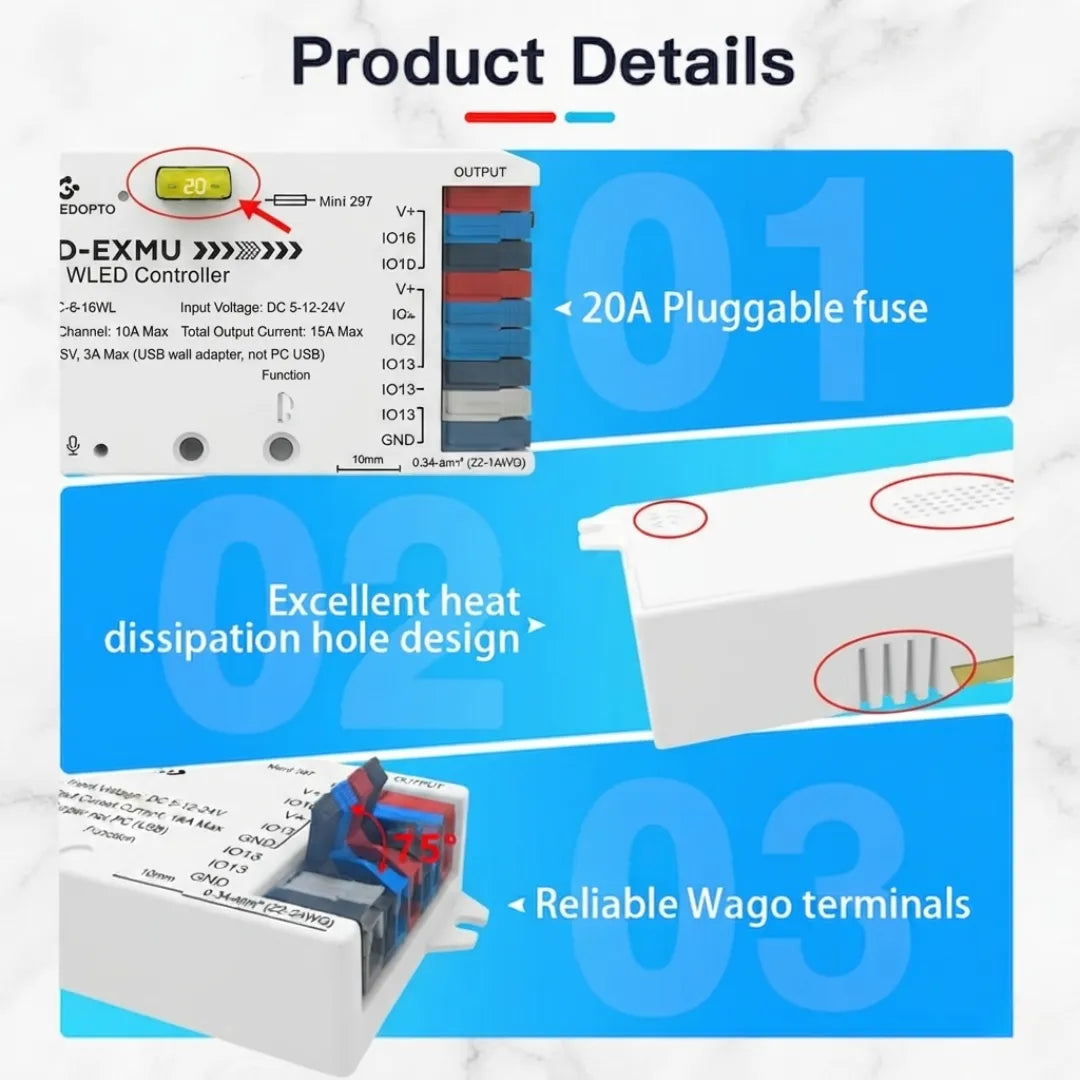
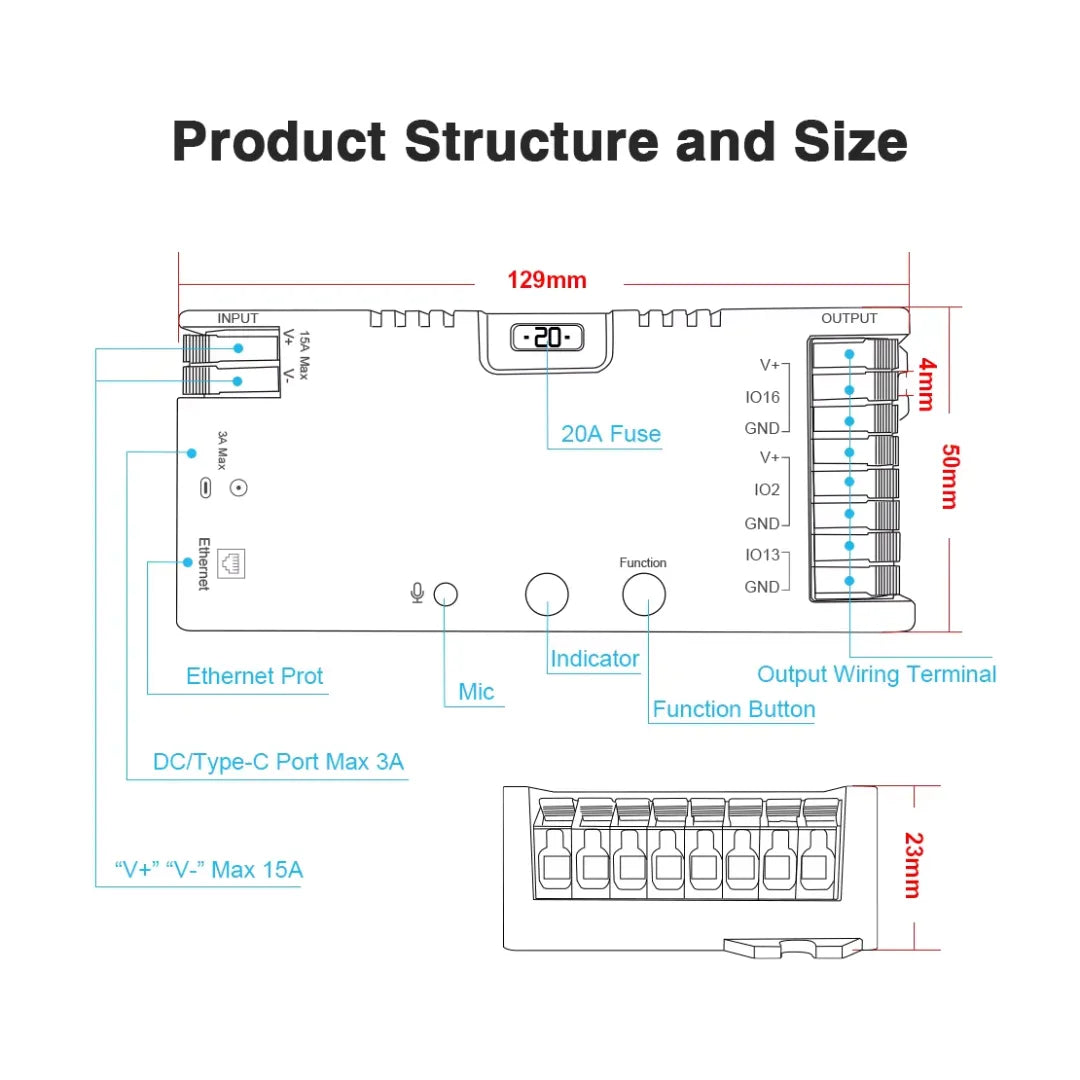
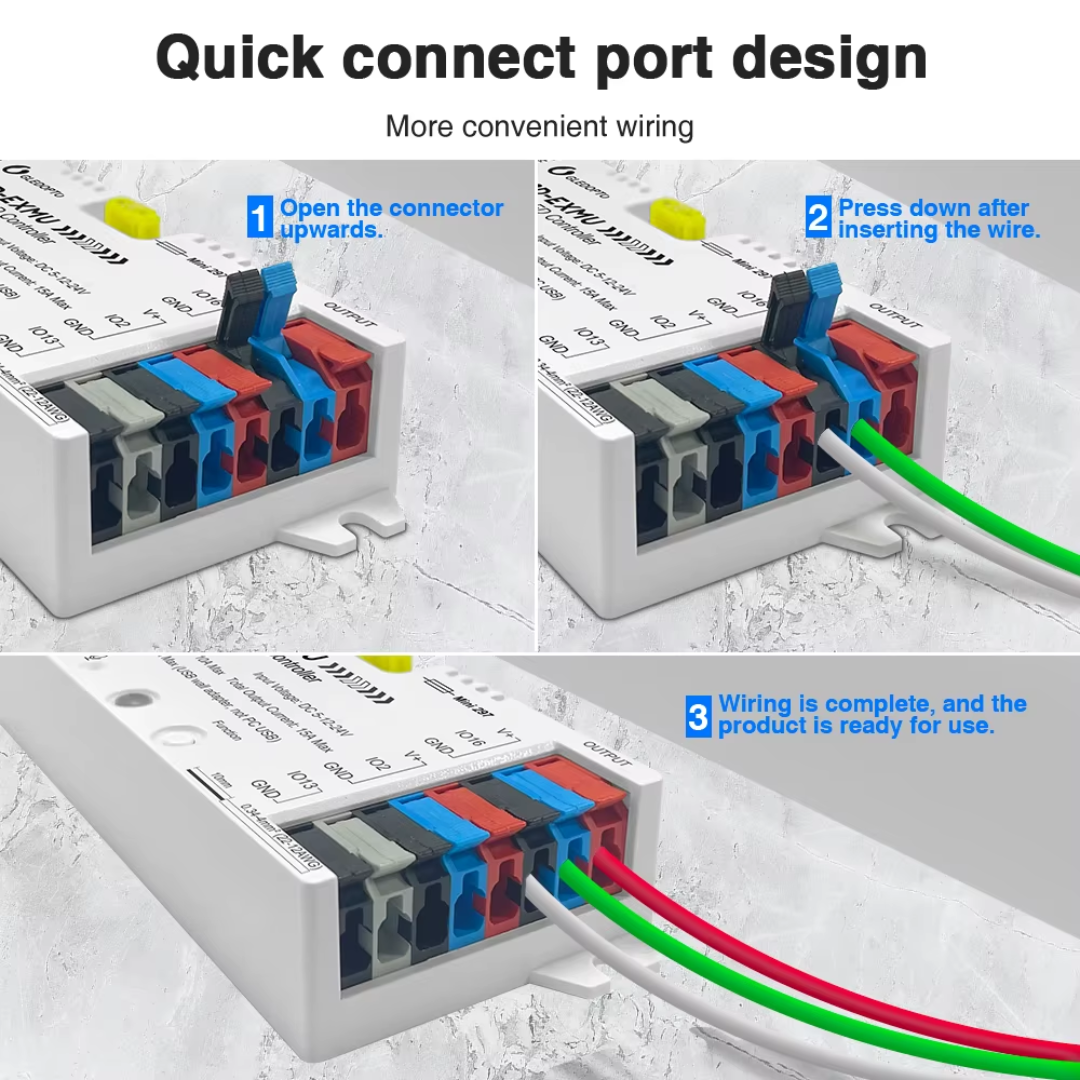
That controller is the GL-C-620WL: 1 digital SPI output for addressable pixel strips plus 2 independent PWM channels for analog CCT/RGB strips, running simultaneously from a single ESP32 board on official WLED firmware. Mix RGBIC cove lighting with tunable-white ceiling lighting, control both from one app, one schedule, one music-sync engine — no second controller, no second ecosystem, no second point of failure.
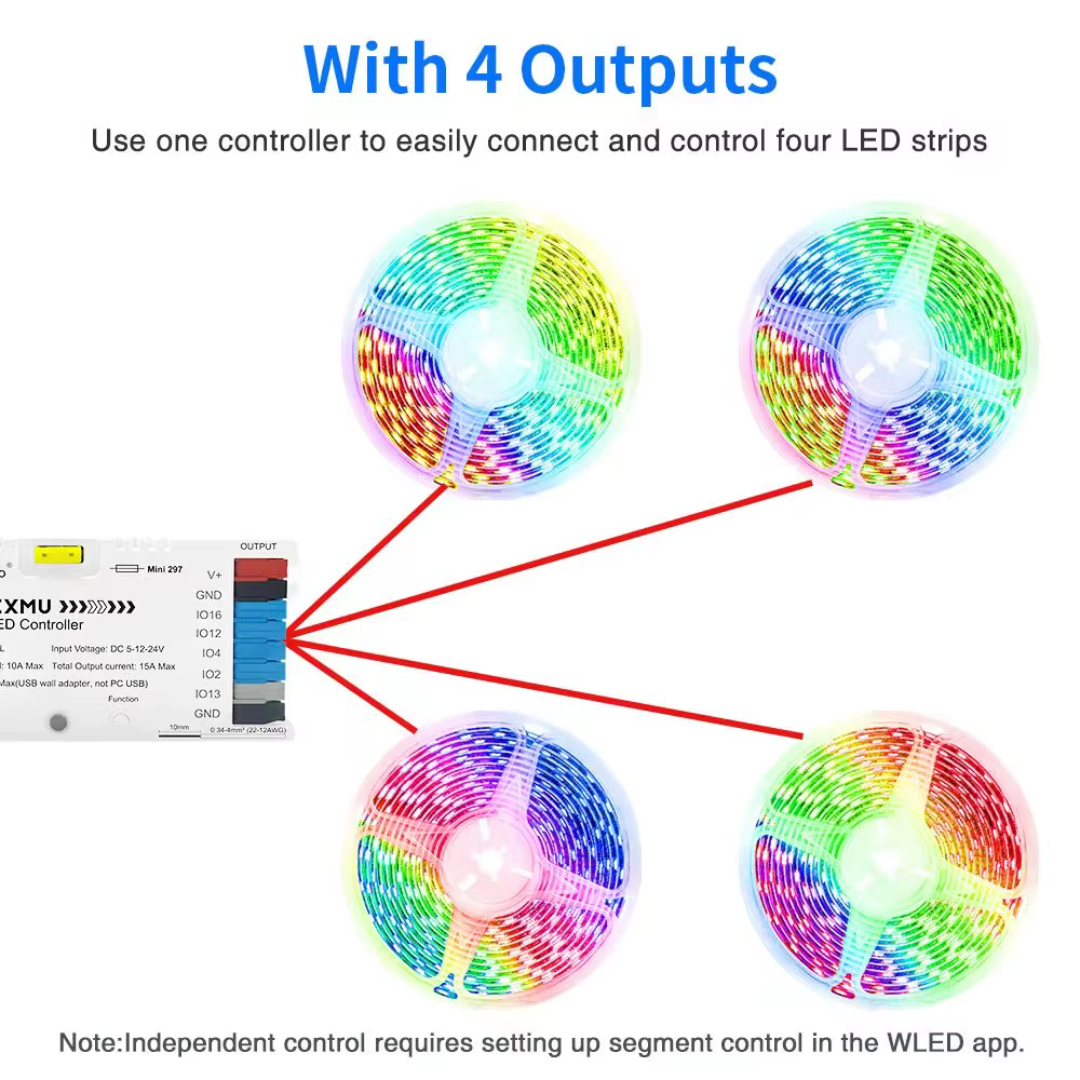
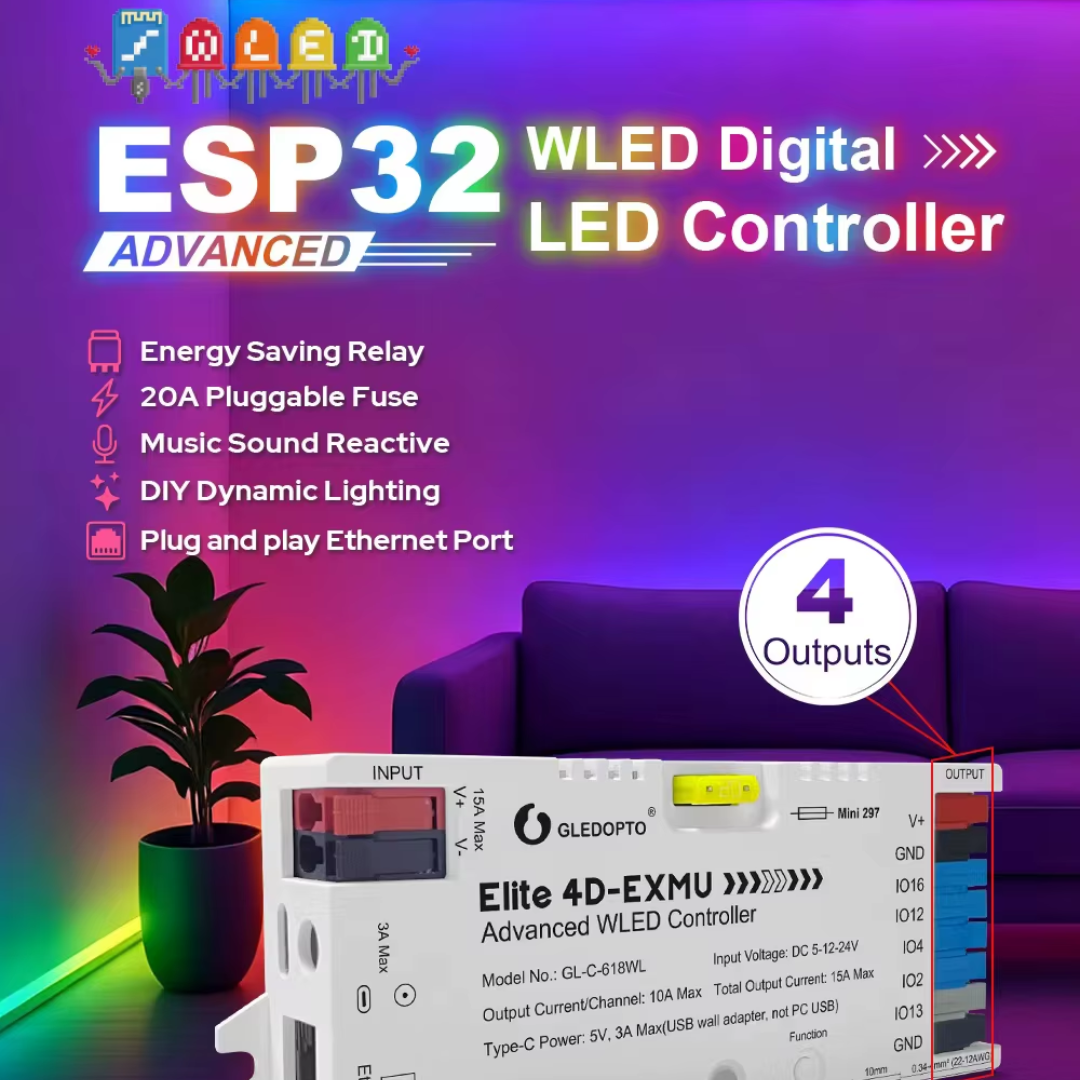
For everything else, this range covers pure-SPI pixel controllers (single or dual output, WiFi-only or WiFi+Ethernet, with or without developer UART ports), a dedicated pure-PWM model for high-power analog installs, and a Tuya-based SPI controller for anyone already inside the Smart Life ecosystem. Every WLED model here runs the official open-source firmware — no cloud account, no subscription, no risk of losing app support down the line — with full Home Assistant and MQTT compatibility.
"Which one do I need?" table:
| Your situation | Protocol | Controller |
|---|---|---|
| Pixel strip only (WS2811/WS2812/SK6812/WS2815) | SPI (Digital) | GL-C-310WL, GL-C-010WL-D, GL-C-016WL-D, GL-C-615WL, GL-C-616WL, GL-MC-001WL/002WL |
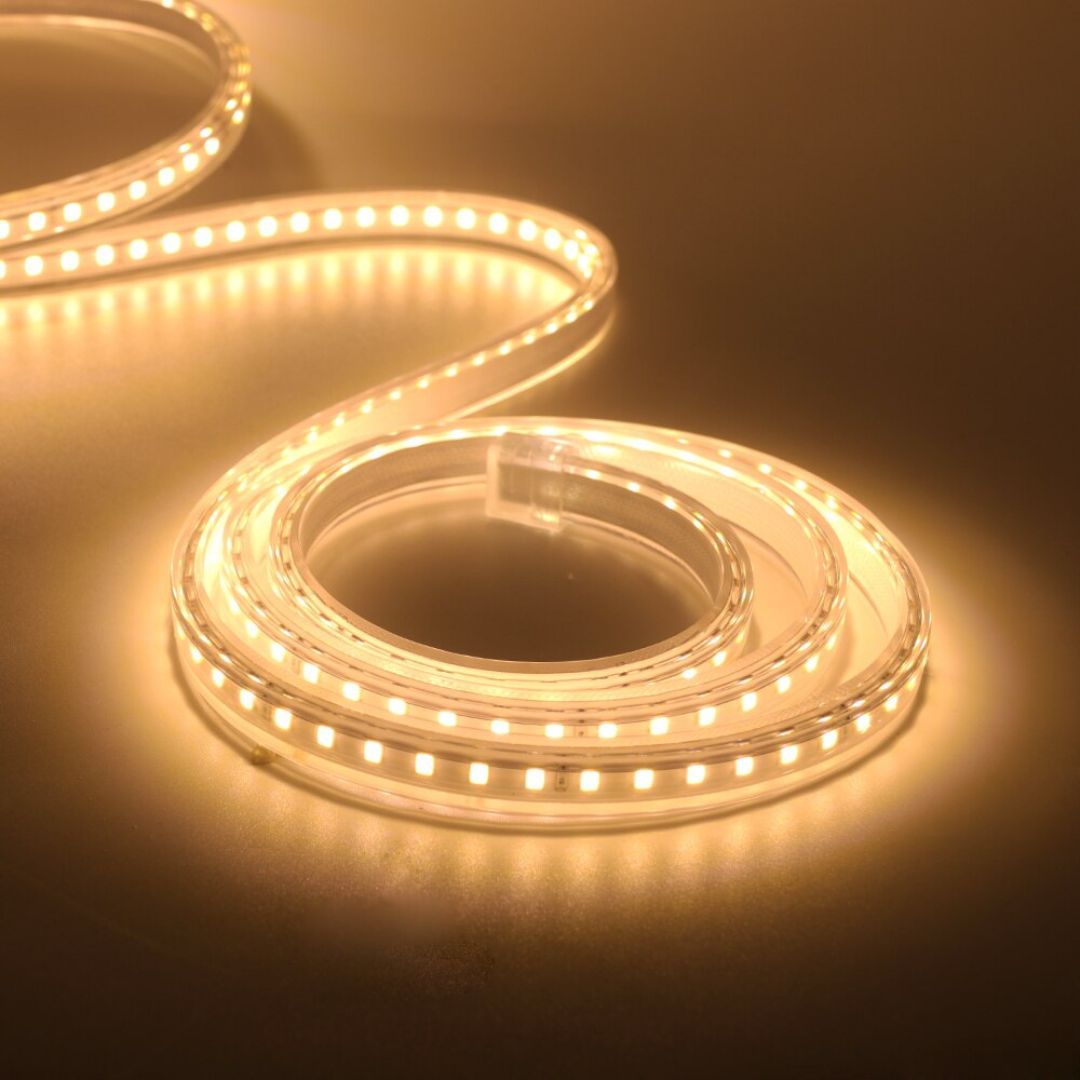
| Single-colour, CCT, or standard RGB/RGBW/RGBCCT strip | PWM (Analog) | GL-C-618WL |
| Pixel strip AND analog strip, controlled together | Hybrid SPI + PWM | GL-C-620WL |
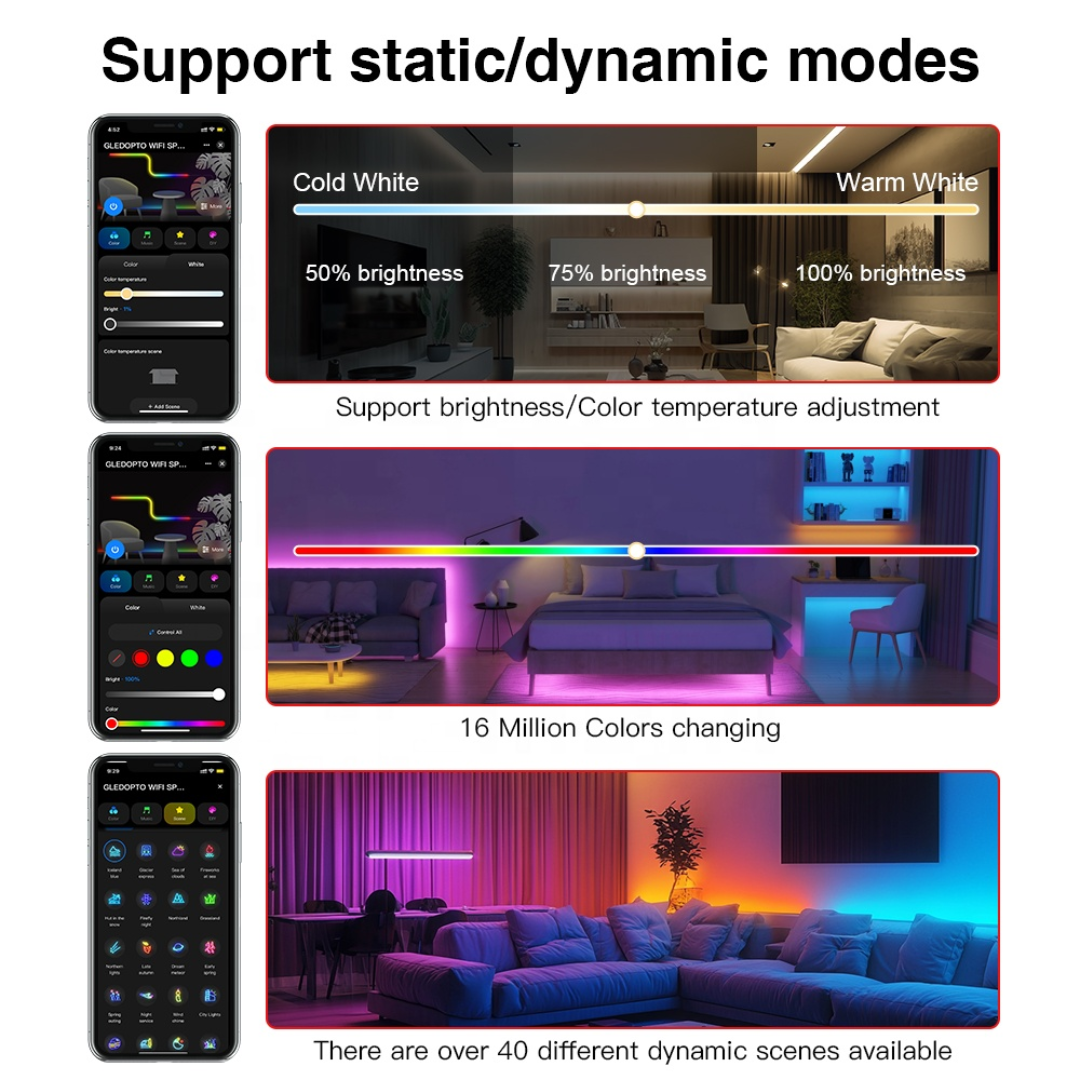
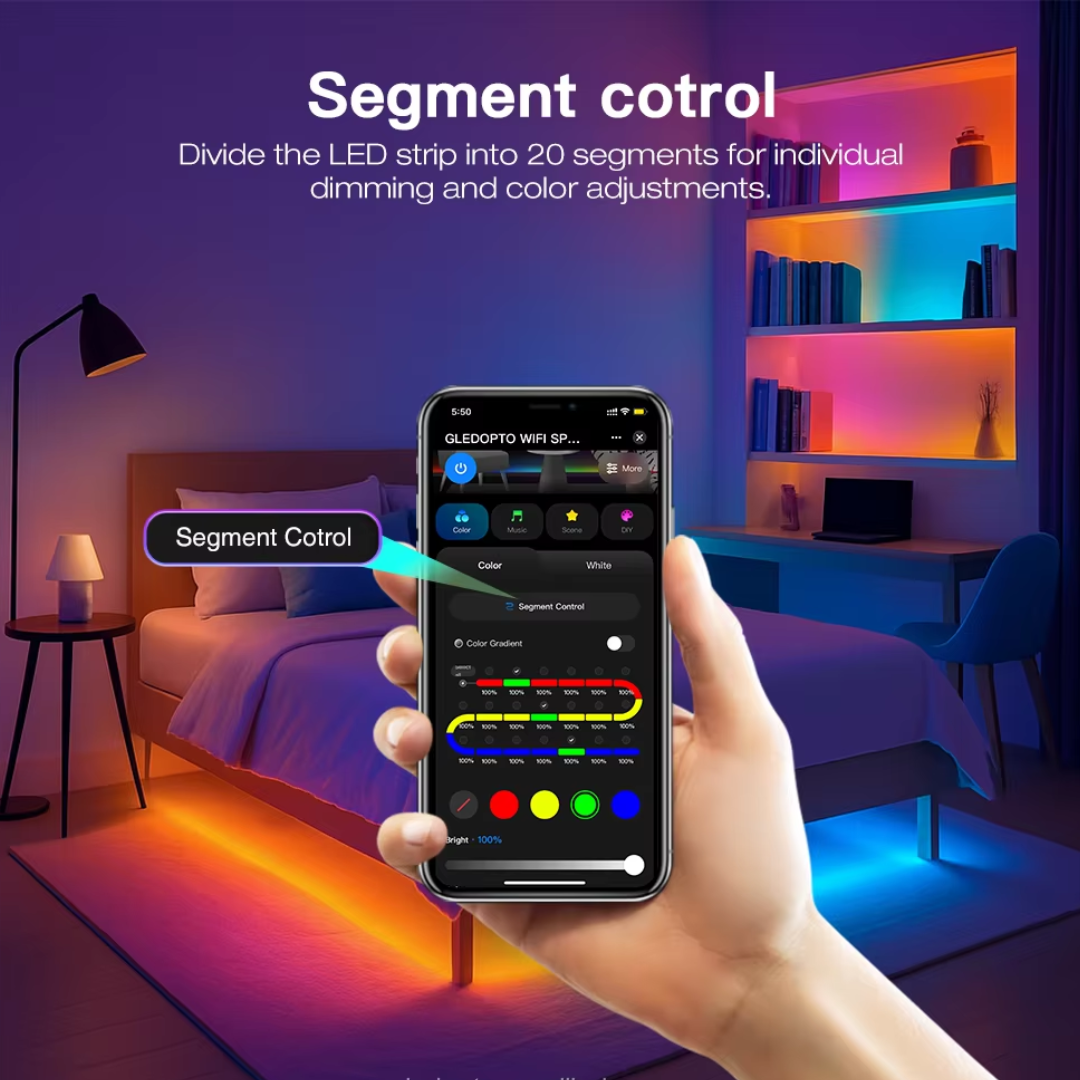
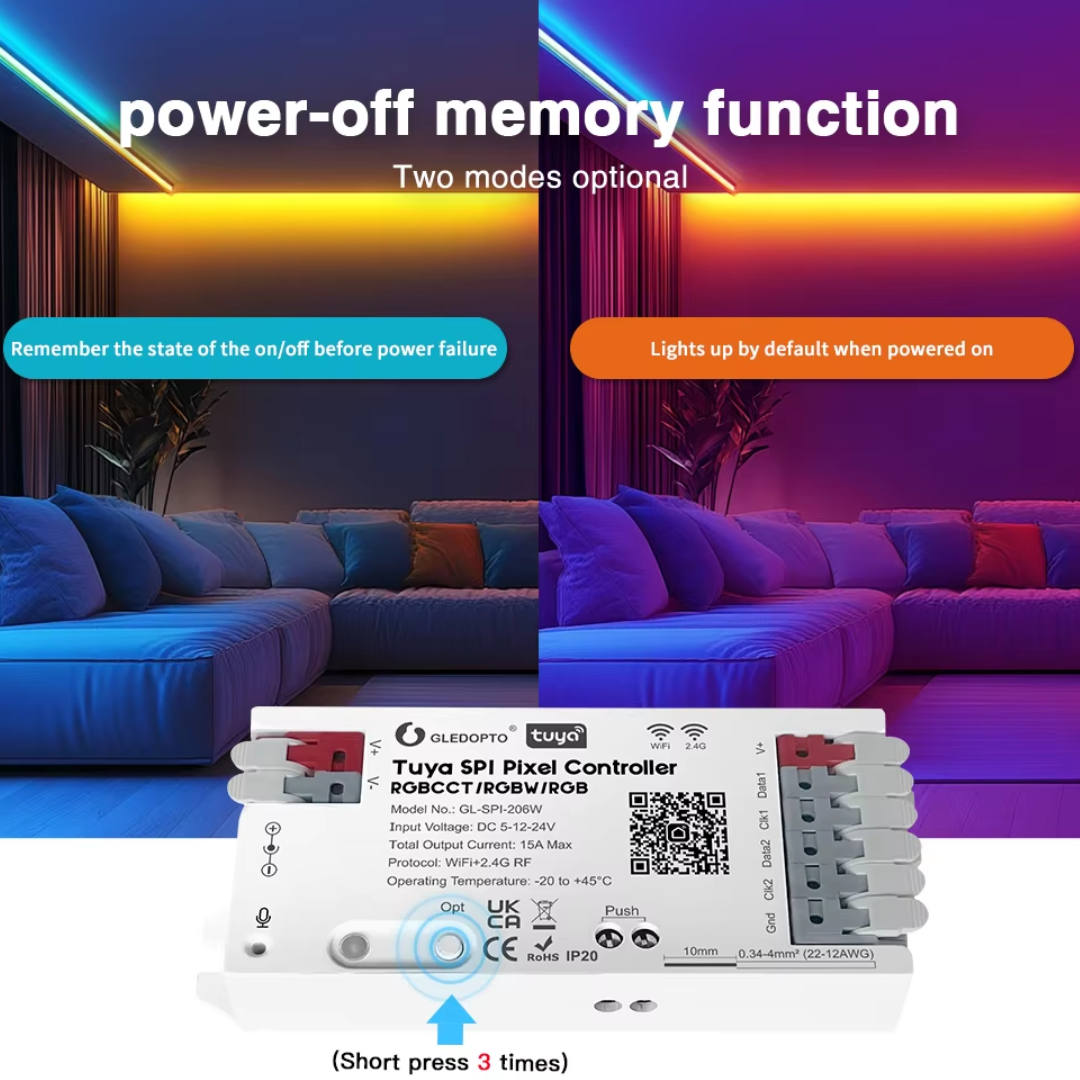
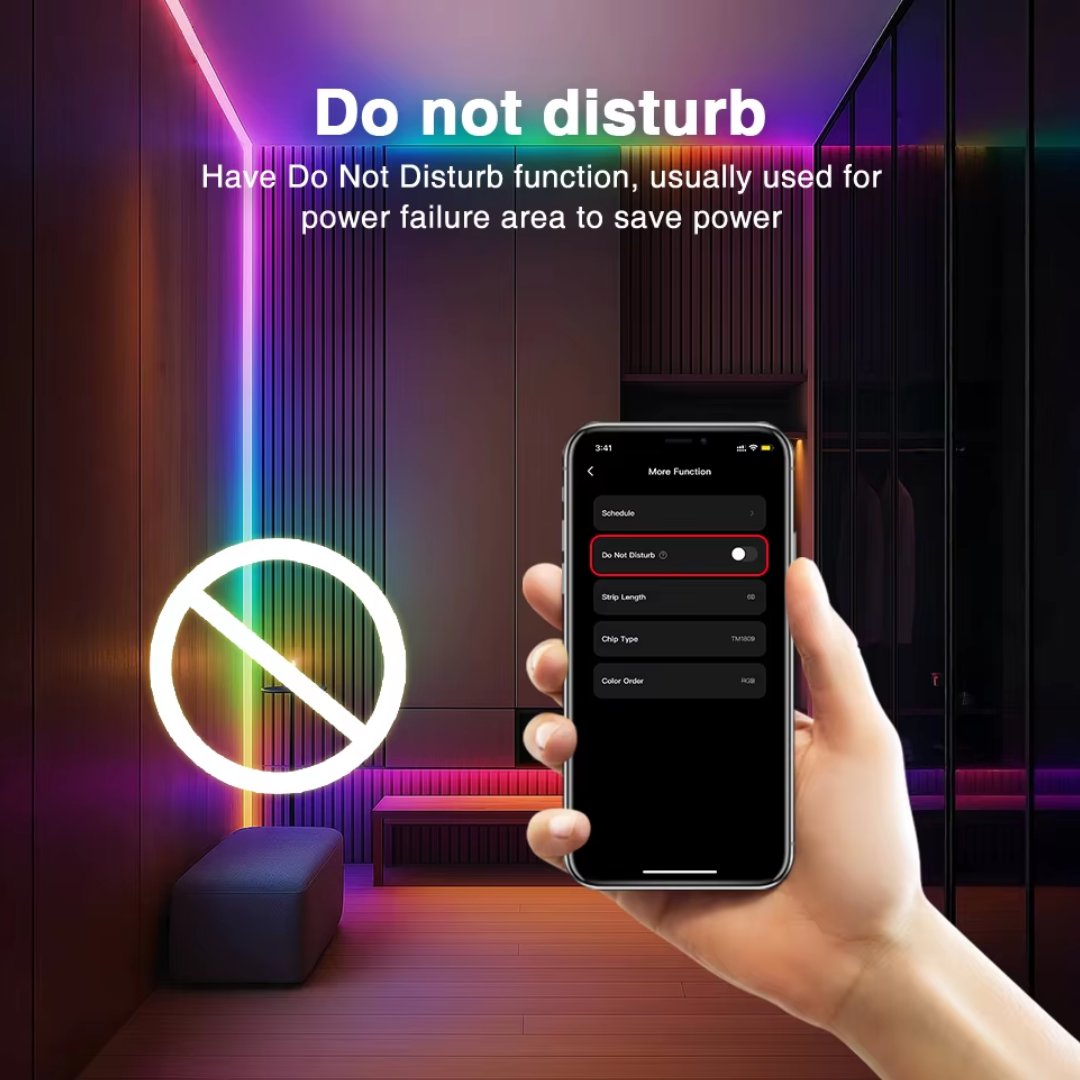
| Already on Tuya/Smart Life for other smart devices | Tuya SPI | GL-SPI-206W |
Comparison table:
| Model | Type | Voltage | Max Output | Pixels/Load | Connectivity | Best For |
|---|---|---|---|---|---|---|
| GL-SPI-206W | Tuya SPI Pixel | 5–24V | 15A | 1,000 px | WiFi + BT + RF | Tuya/Smart Life households |
| GL-C-618WL | 4-Ch PWM WLED | 12–48V | 10A/ch, 480W | — | WiFi | Multi-zone CCT/RGBW installs |
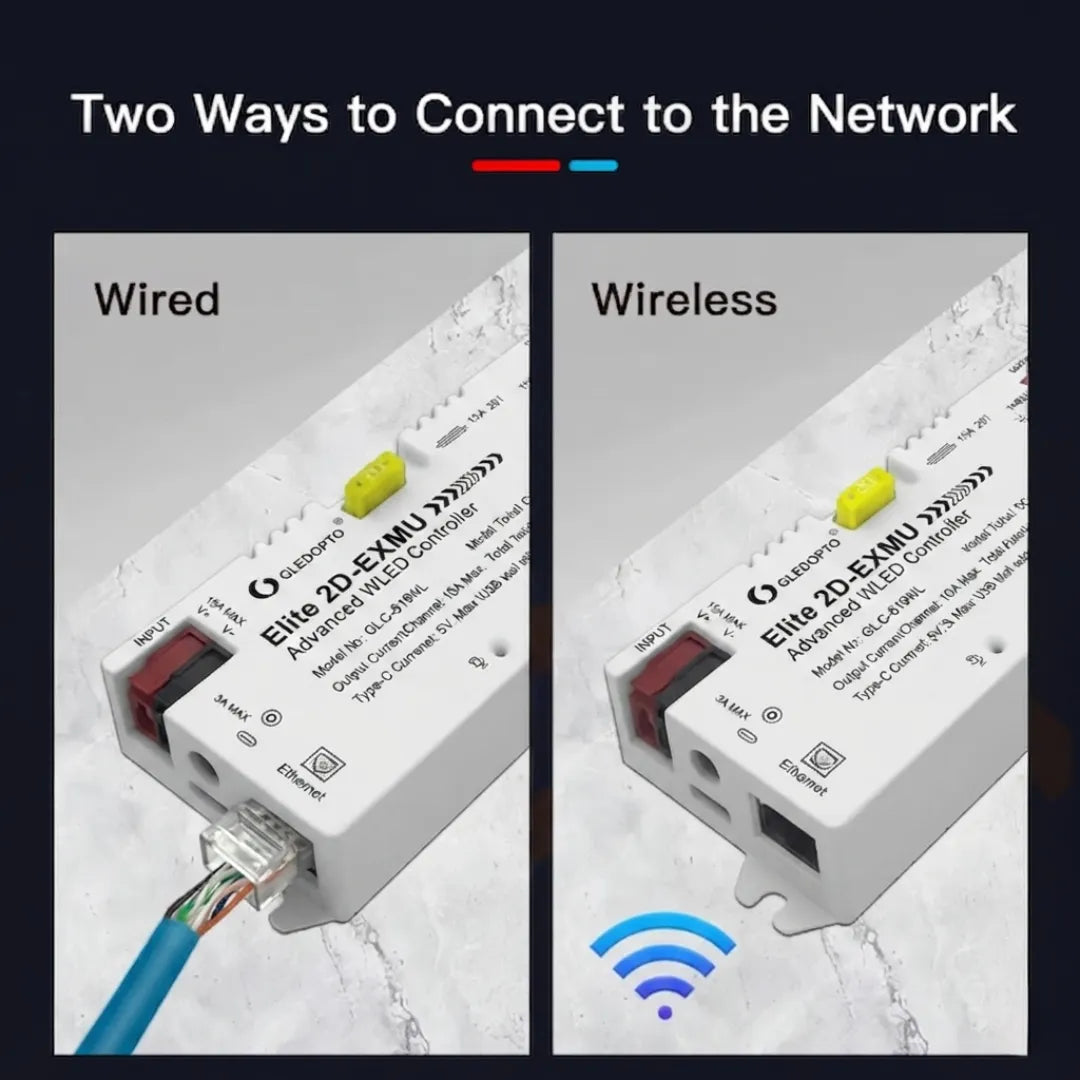
| GL-C-620WL | Hybrid SPI+PWM WLED | 5–24V | 15A, 360W | 1,600 px | WiFi + Ethernet | Mixed RGBIC + CCT projects |
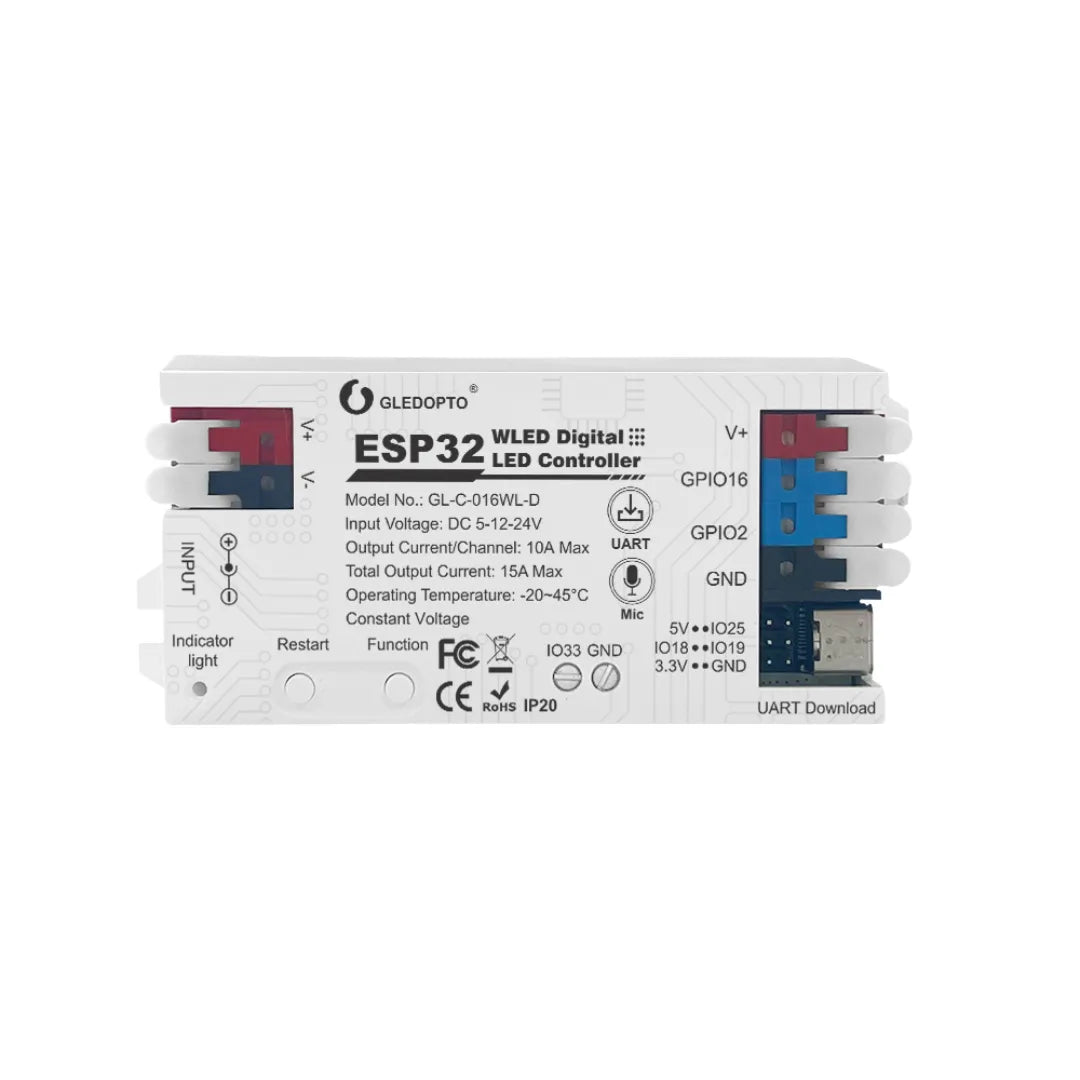
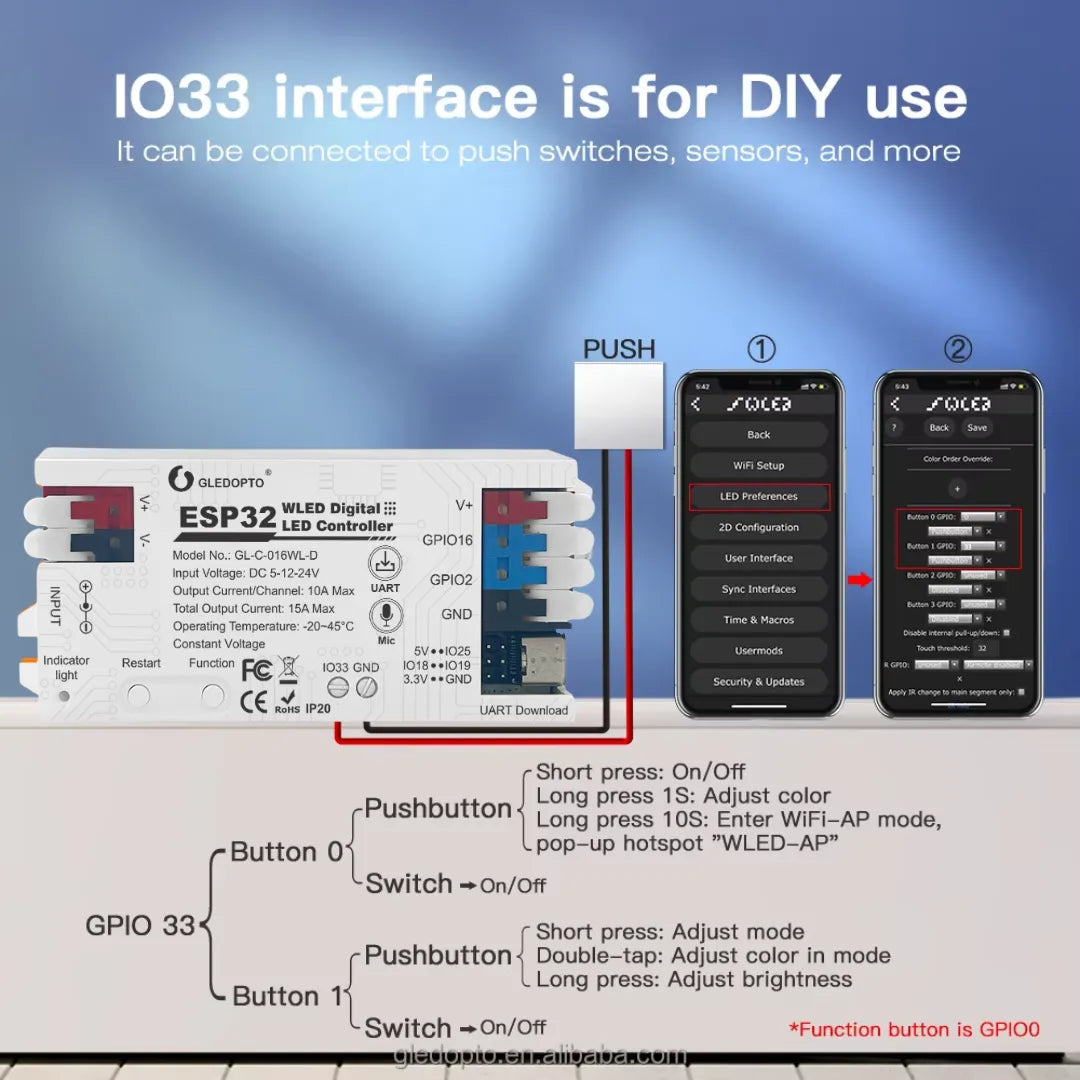
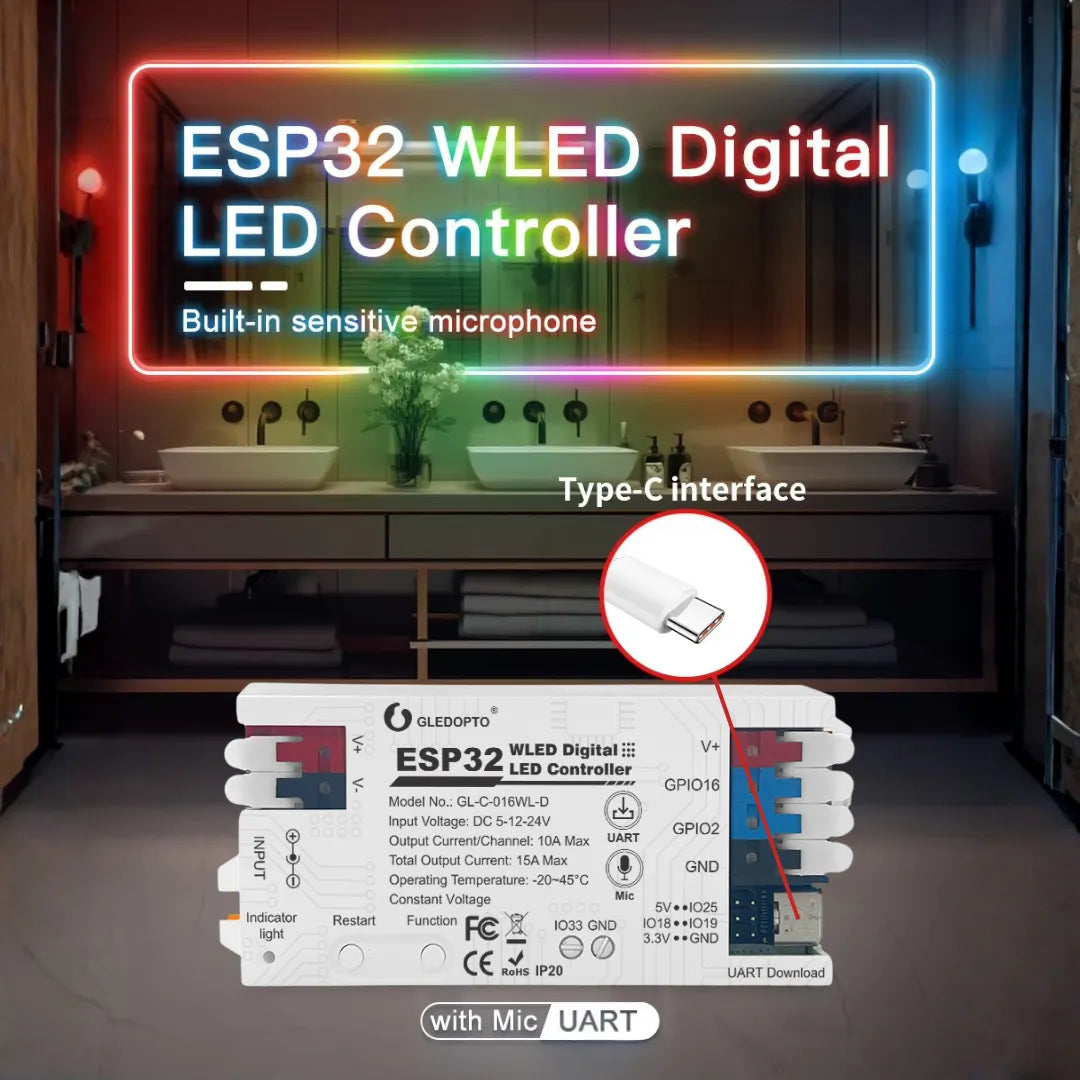
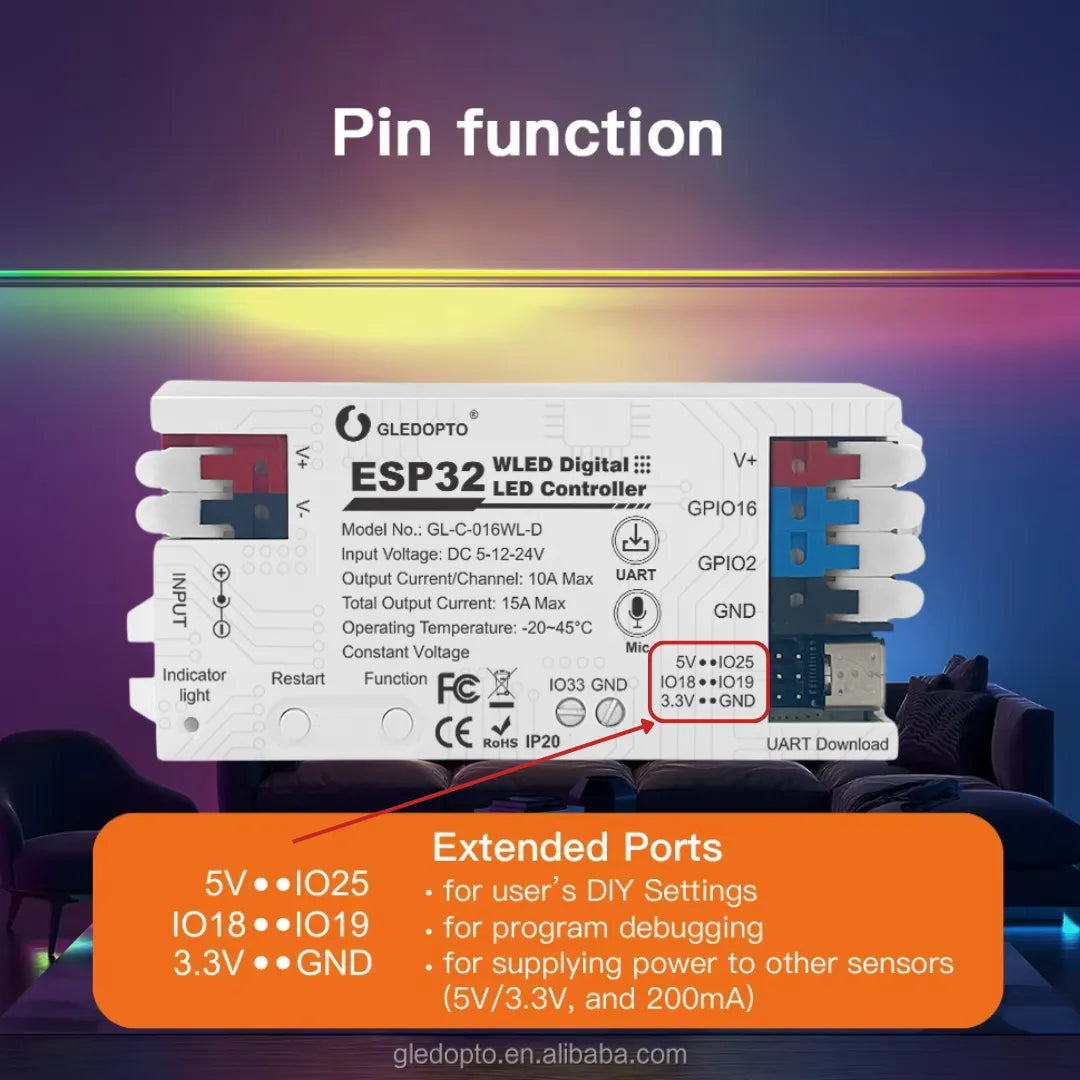
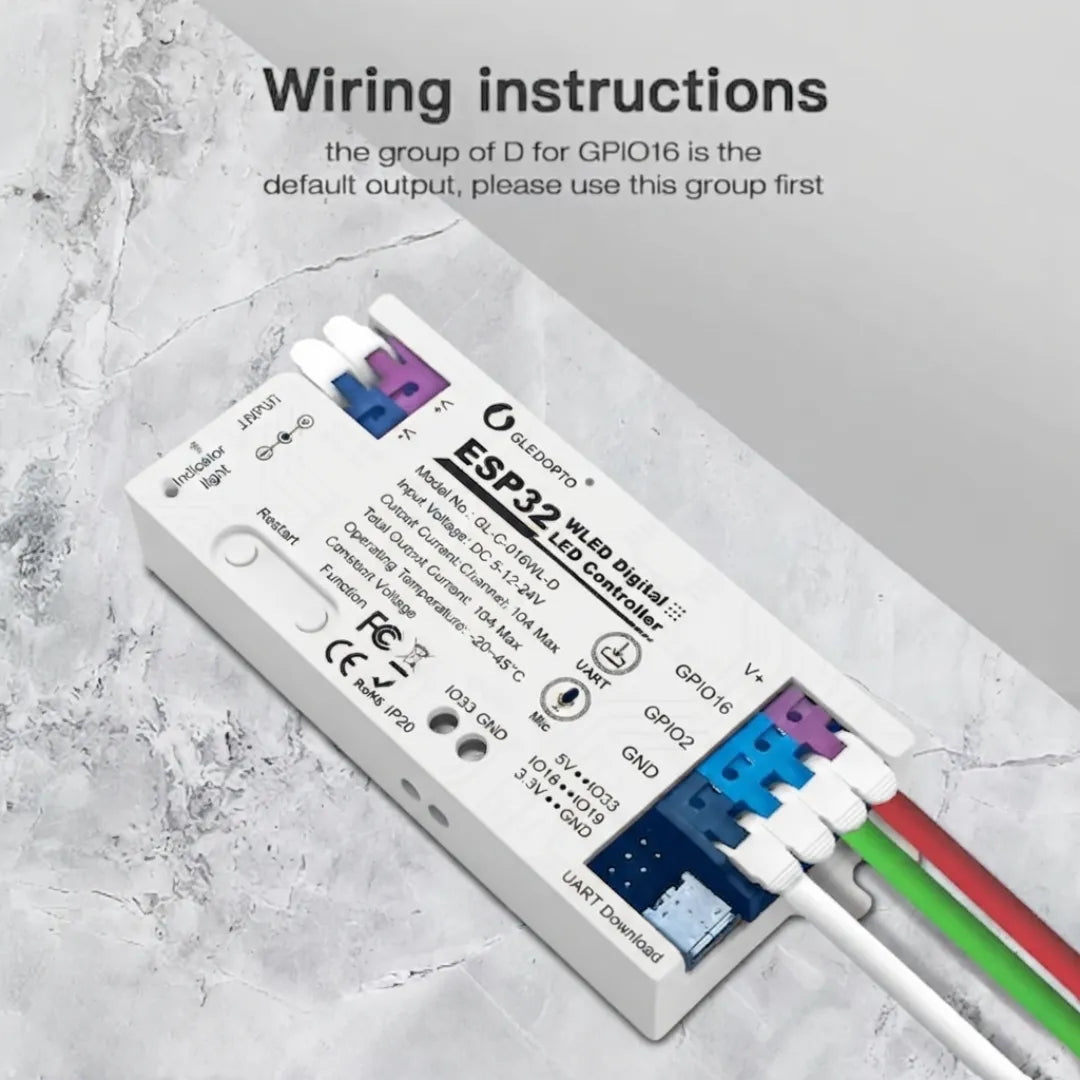
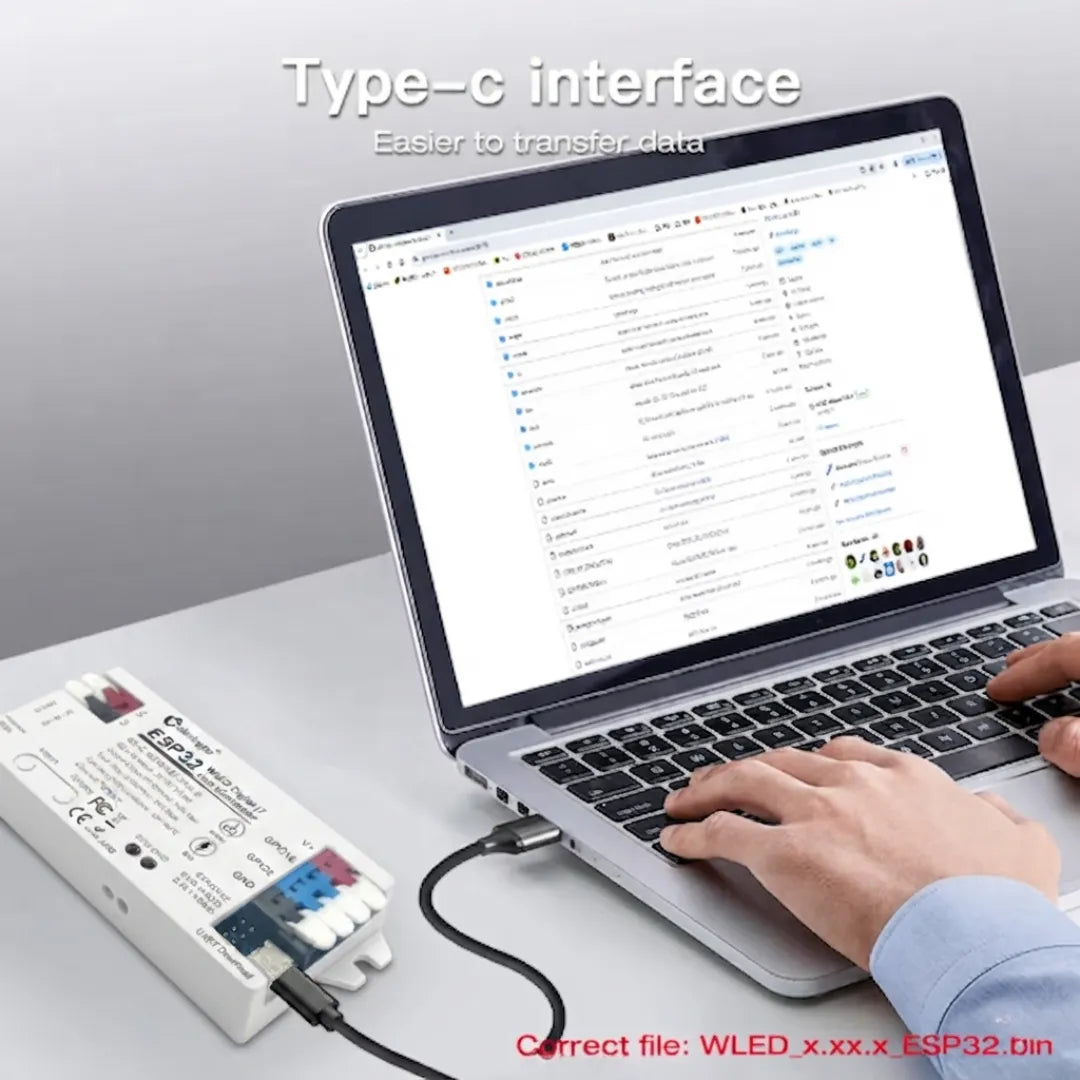
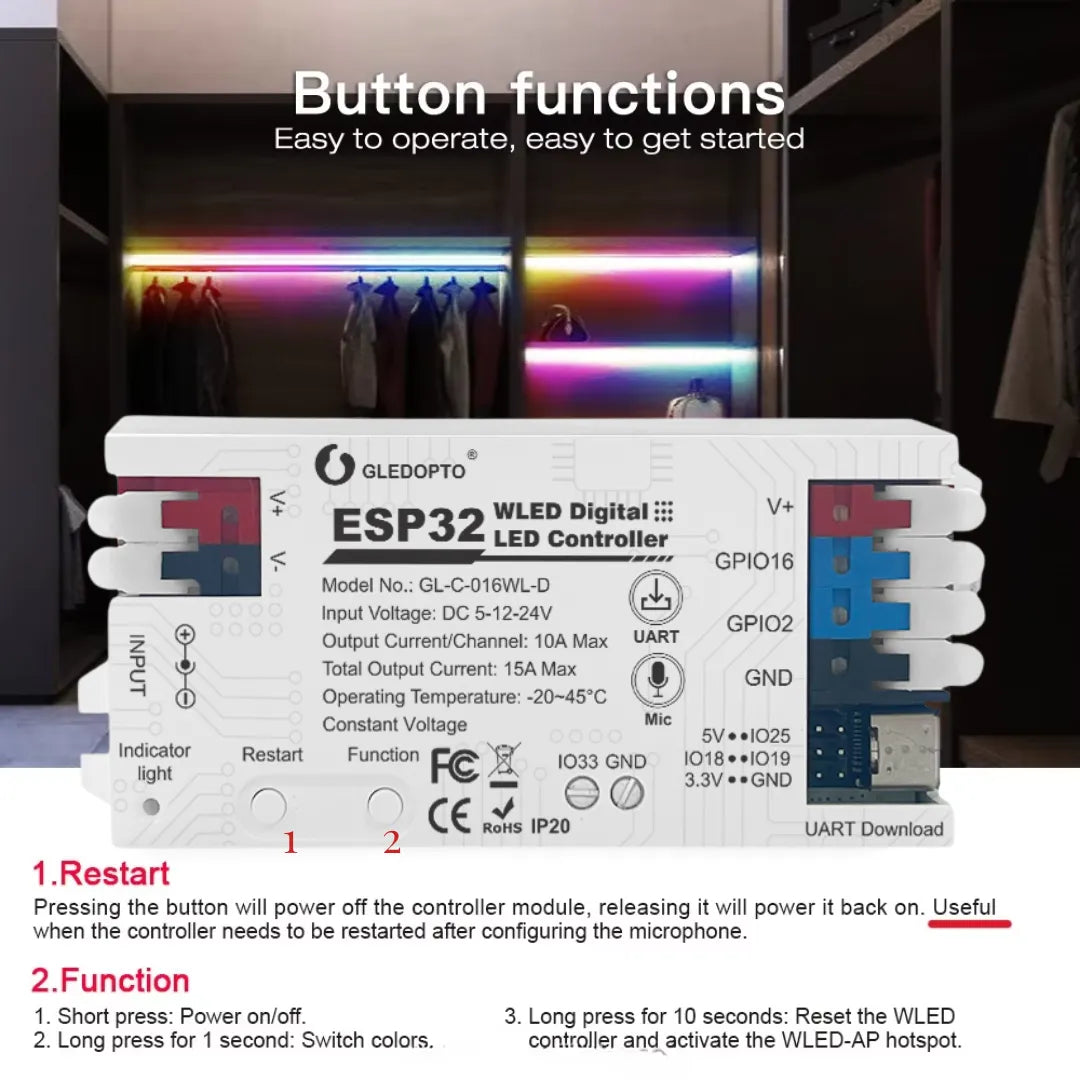
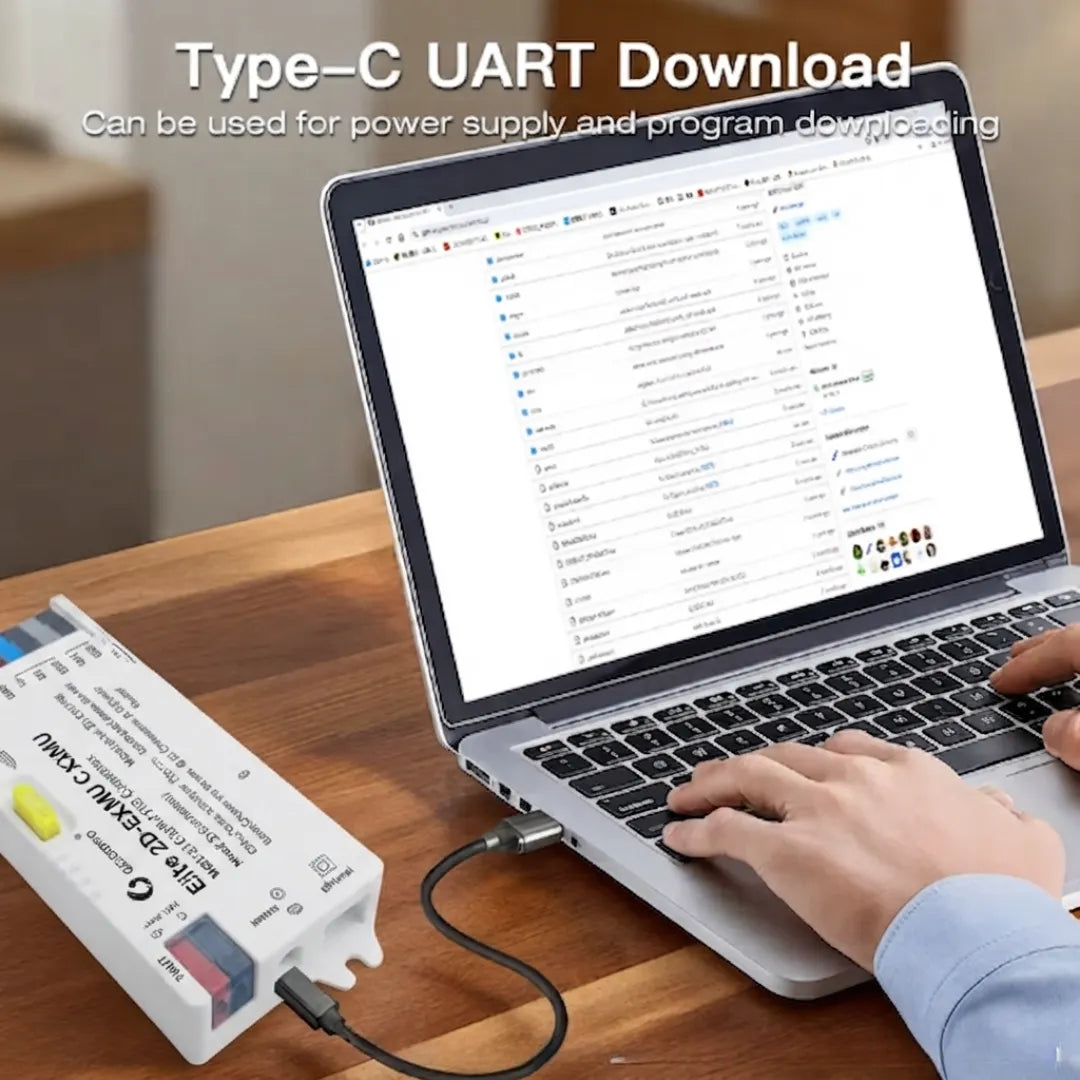
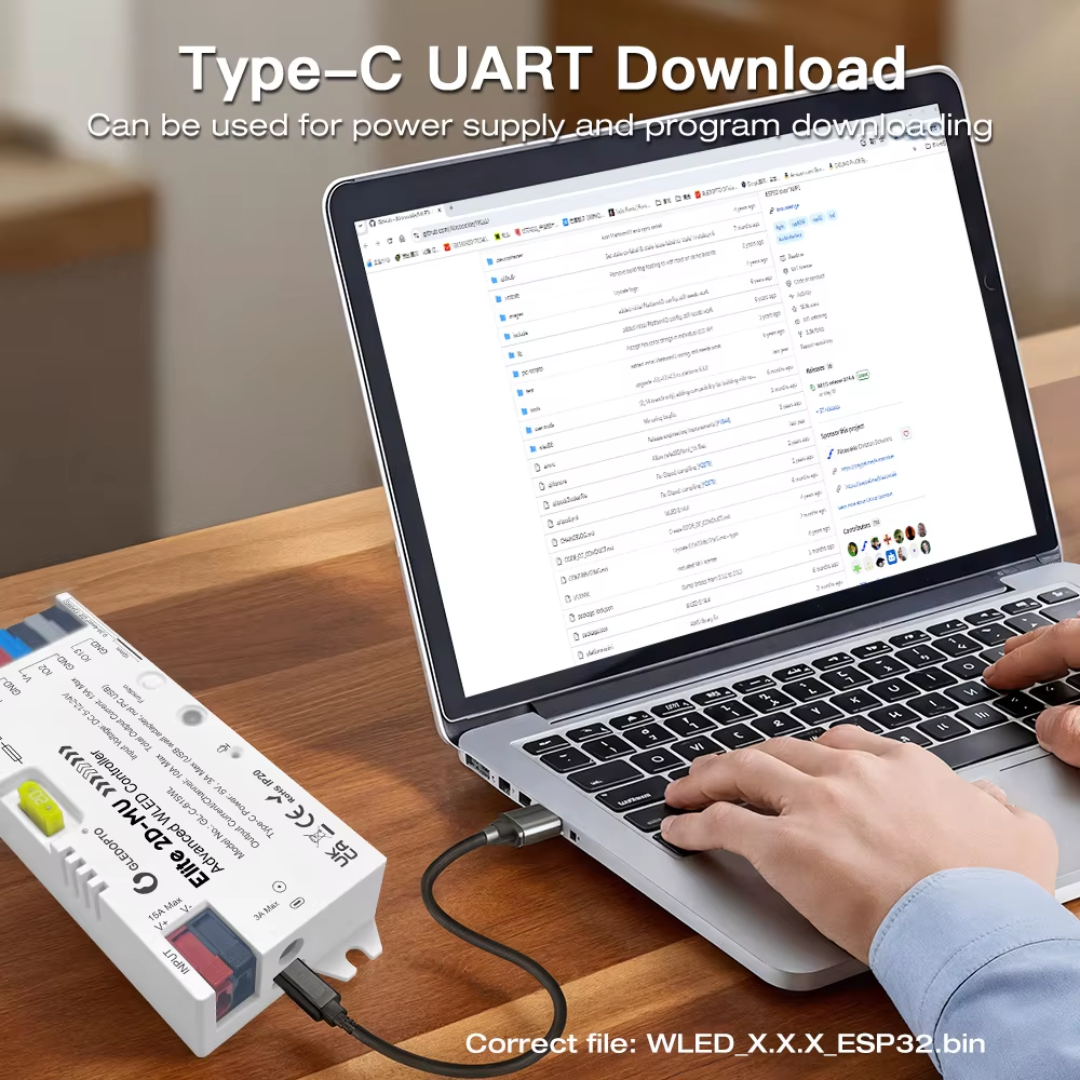
| GL-C-016WL-D | Dual SPI WLED | 5–24V | 15A, 360W | 800 px | WiFi + USB-C UART | Developers, ESPHome/Arduino |
| GL-C-010WL-D | Single SPI WLED | 5–24V | 10A | 800 px | WiFi + Micro-USB UART | Entry-level dev/maker builds |
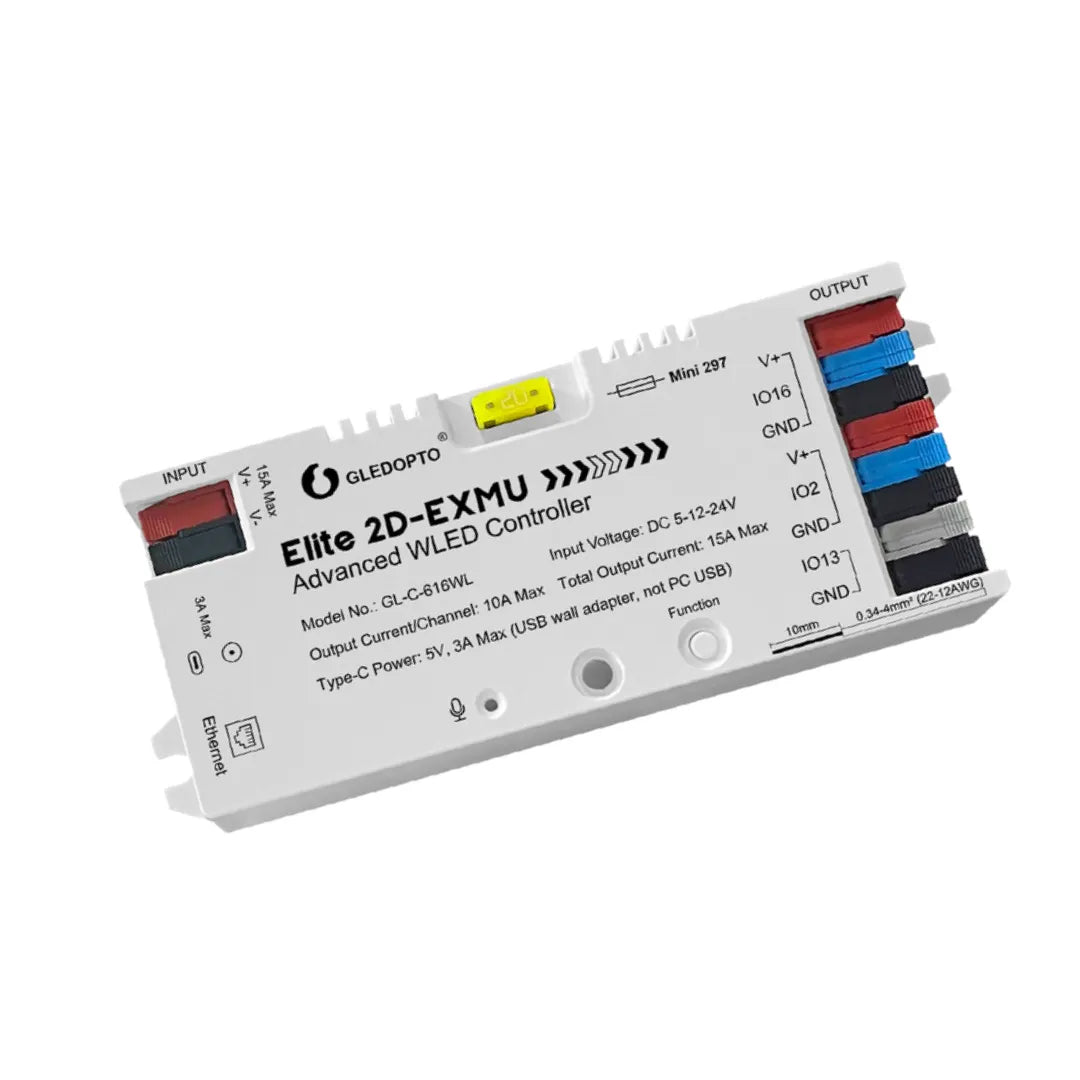
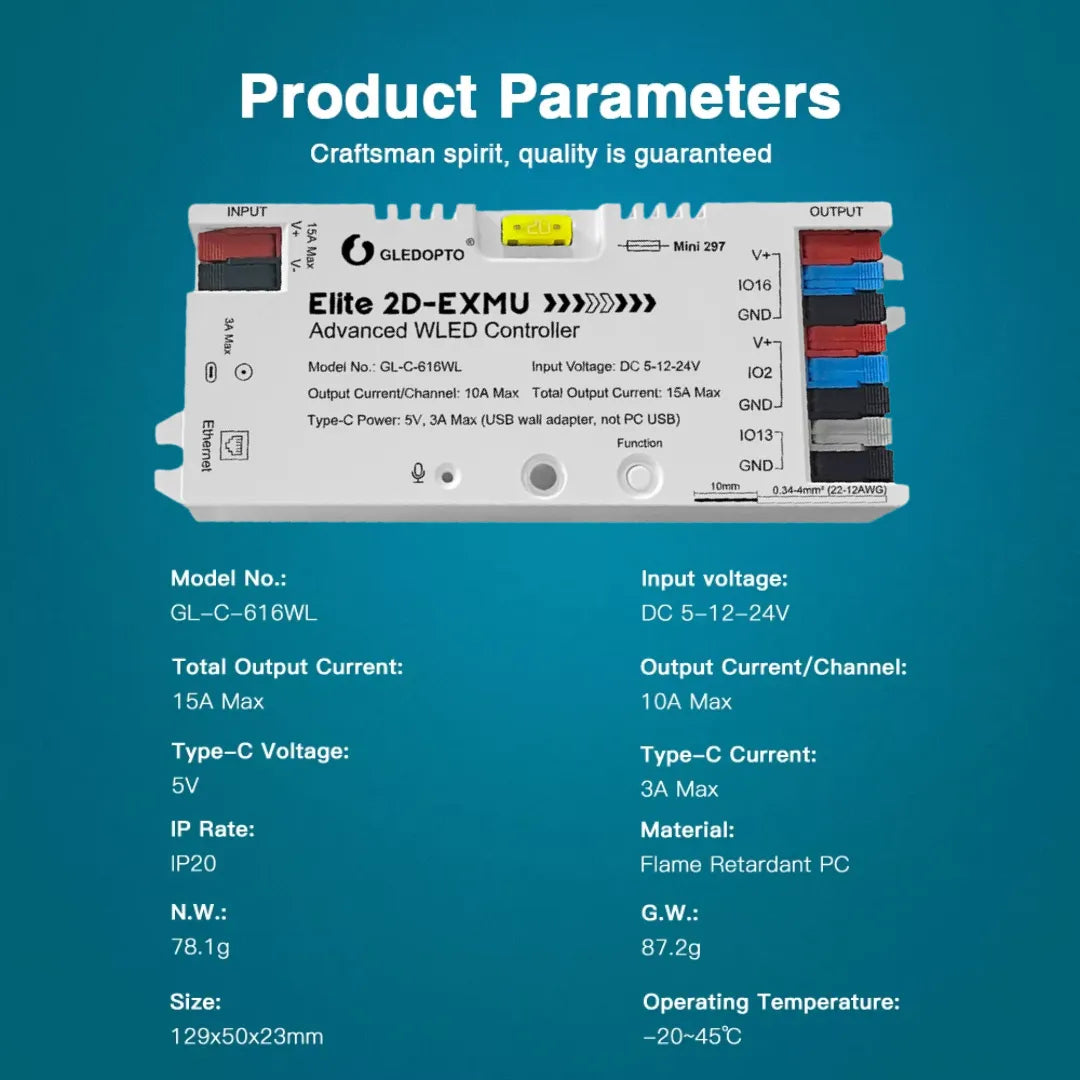
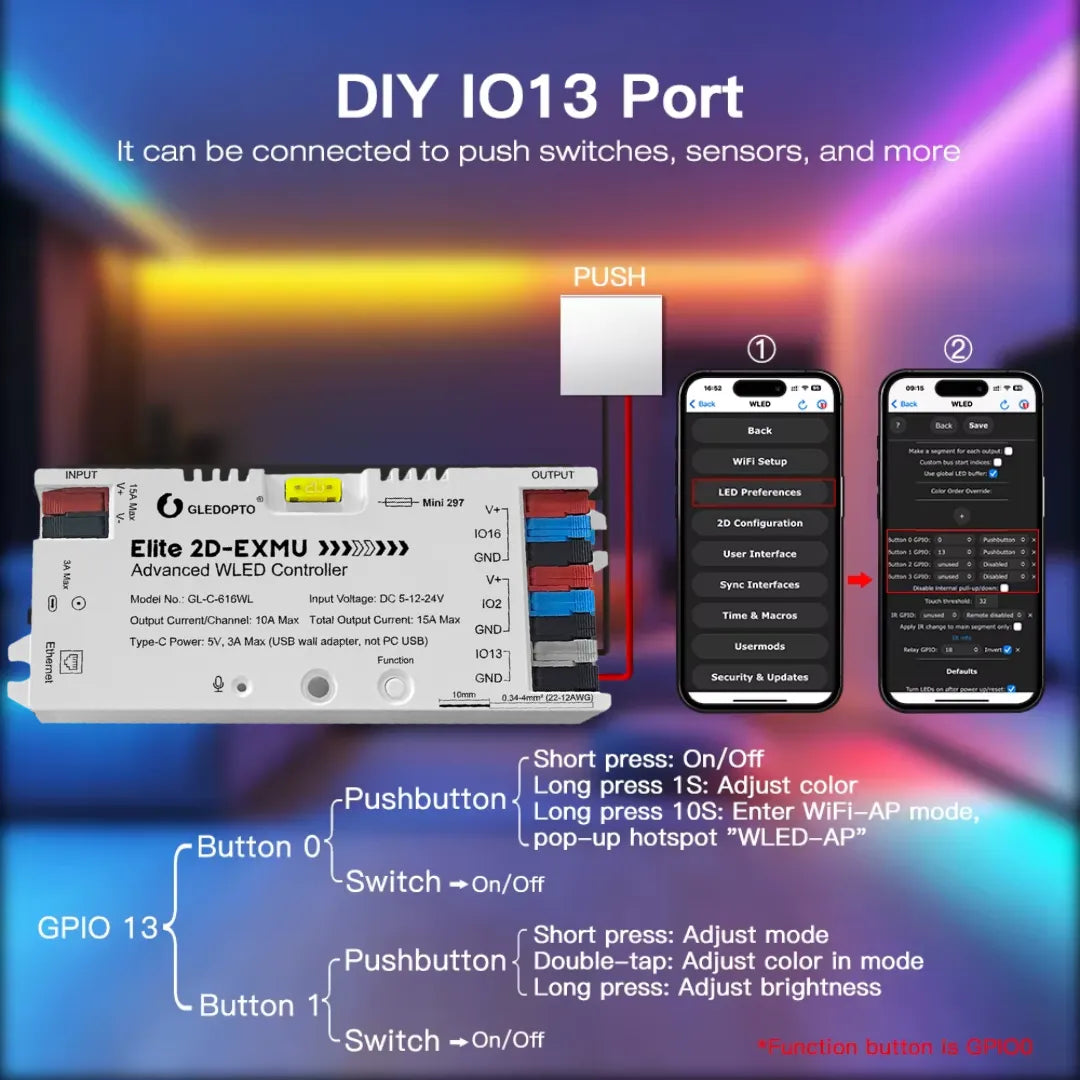
| GL-C-616WL | Dual SPI WLED (Pro) | 5–24V | 15A, 360W | 800 px | WiFi + Ethernet | Commercial/hospitality installs |
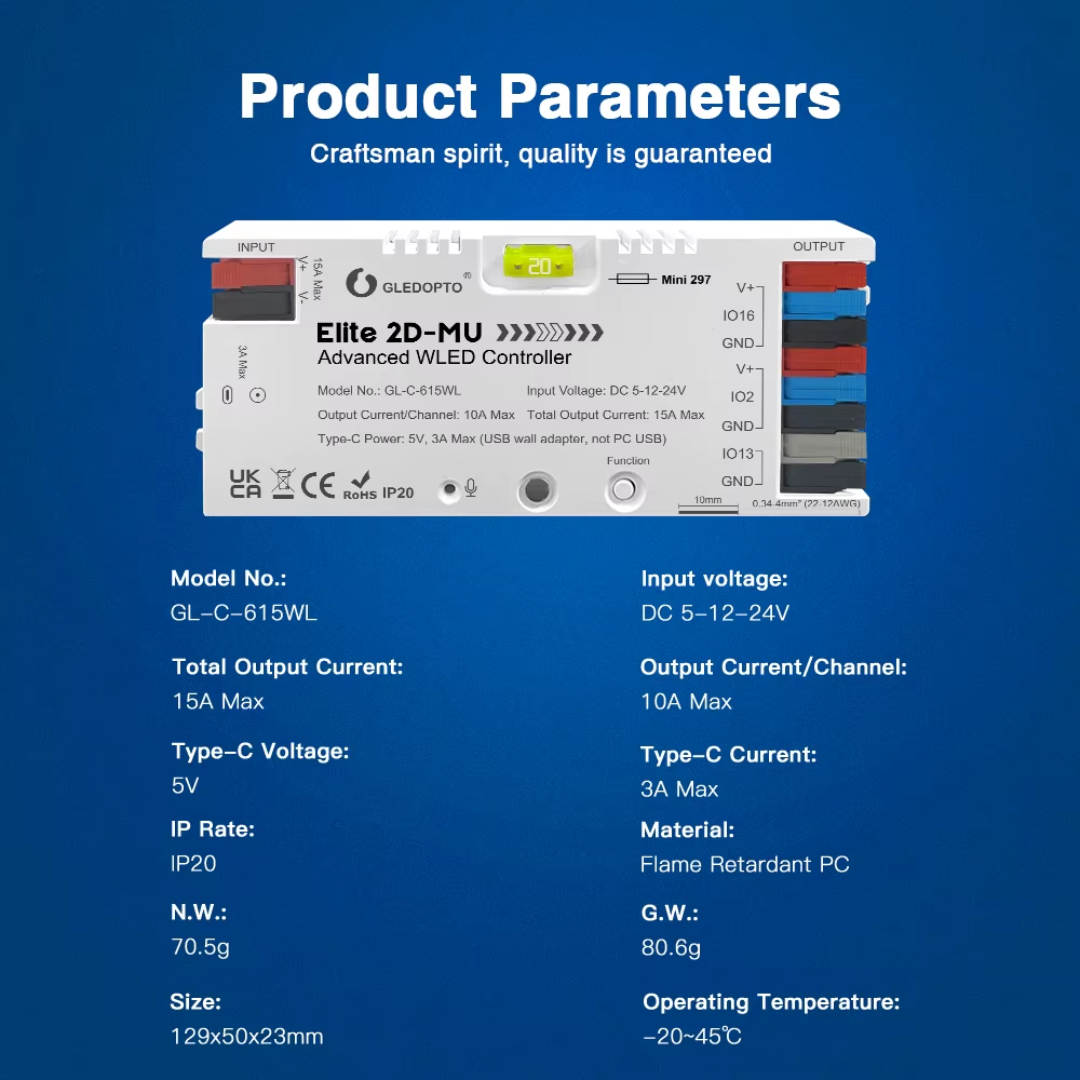
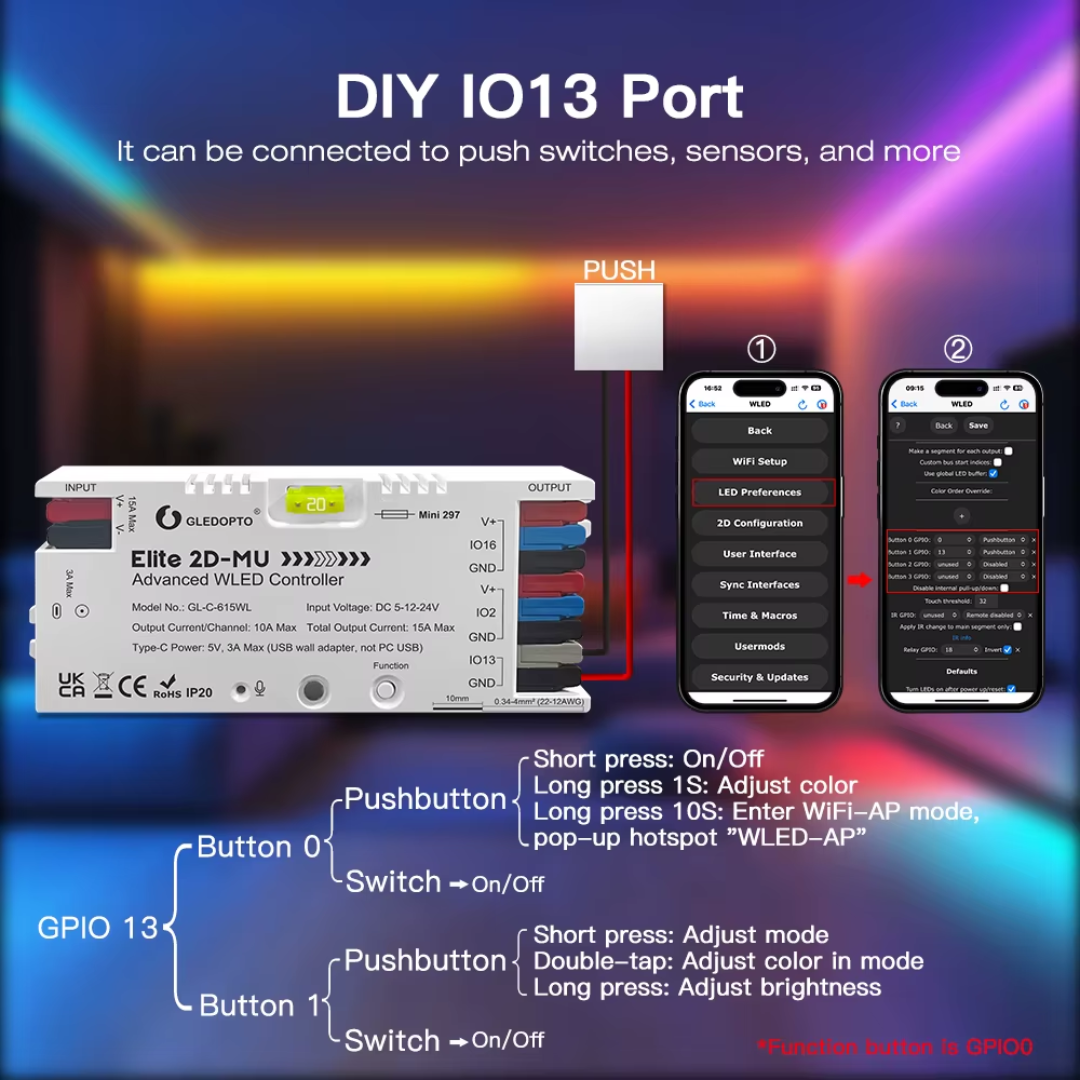
| GL-C-615WL | Dual SPI WLED | 5–24V | 15A, 360W | 800 px | WiFi | Residential dual-zone lighting |
| GL-MC-002WL | Mini WLED | 12–24V | 3A, 72W | — | WiFi | Compact 12V/24V installs |
| GL-MC-001WL | Mini WLED (USB) | USB 5V | 3A, 15W | — | WiFi | TV backlight, PC RGB, portable |
| GL-C-310WL | Dual-Output WLED | 5–24V | 10A, 6A/ch | 800 px | WiFi | General-purpose WLED projects |
FAQ (FAQPage schema):
- What is the difference between a WLED controller and a Tuya controller? WLED is open-source, app/web-controlled with no cloud account required; Tuya relies on the Smart Life app and cloud — better if you already run Tuya smart home devices.
- Can one controller run both a pixel strip and a normal CCT strip at once? Yes — the GL-C-620WL has 1 SPI output and 2 PWM outputs, driving both simultaneously through the same WLED interface.
- What's the difference between SPI and PWM LED controllers? SPI (digital) controllers address each LED chip individually for per-pixel effects; PWM (analog) controllers vary voltage across a whole strip that has no individual chips. Most controllers support only one — the GL-C-620WL supports both.
- Which controller should I choose for a hotel or commercial install? The GL-C-616WL and GL-C-620WL both add RJ45 Ethernet plus extra protection circuitry — built for environments where WiFi congestion and downtime aren't acceptable.
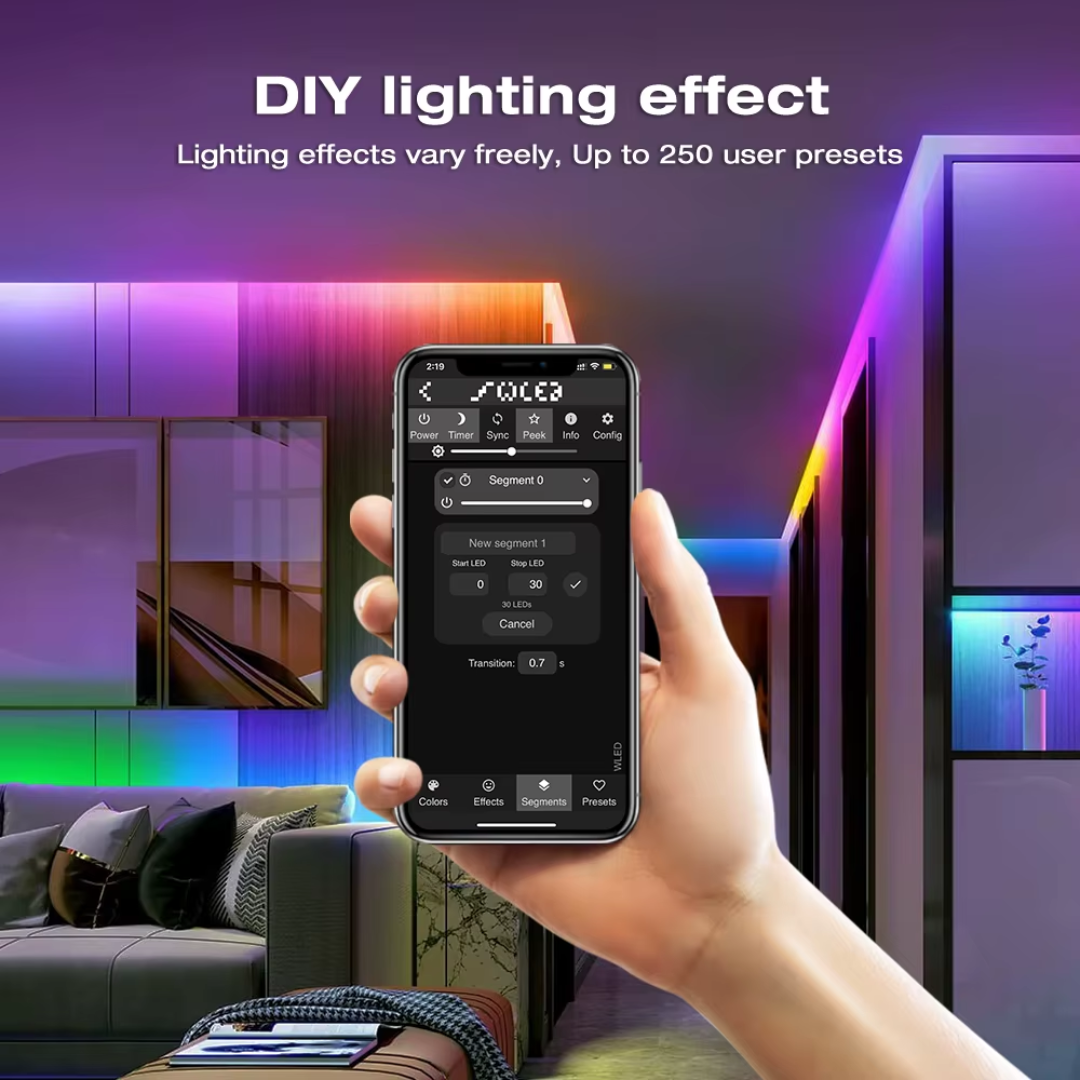
- Do I need programming knowledge to use these? No. Every controller works immediately with the WLED (or Smart Life) app. UART/USB-C ports on select models are optional, for users who want to flash custom firmware.