

























24V vs 12V LED Strip Lights — Which Should You Choose?
Quick answer: For cove ceilings, false ceilings, and any LED strip run longer than 5 metres — choose 24V. For short accent lighting under 5 metres, in vehicles, or with battery setups — 12V is sufficient. The difference comes down to voltage drop: 24V strips carry half the current, which means half the voltage drop and consistent brightness across long runs.
If you have spent more than five minutes looking at LED strip lights, you have seen both 12V and 24V options — often at similar prices, from the same brands, with nearly identical specifications. The voltage choice feels arbitrary. It is not.
The voltage you choose determines how far the strip can run without losing brightness, how thick the wiring needs to be, and which premium strip options are available to you. Choose the wrong one and no amount of expensive LEDs will fix the dim end of a cove ceiling.
This guide explains the difference in plain terms, with a clear answer for every common Indian home installation scenario.
What is voltage drop and why does it matter?
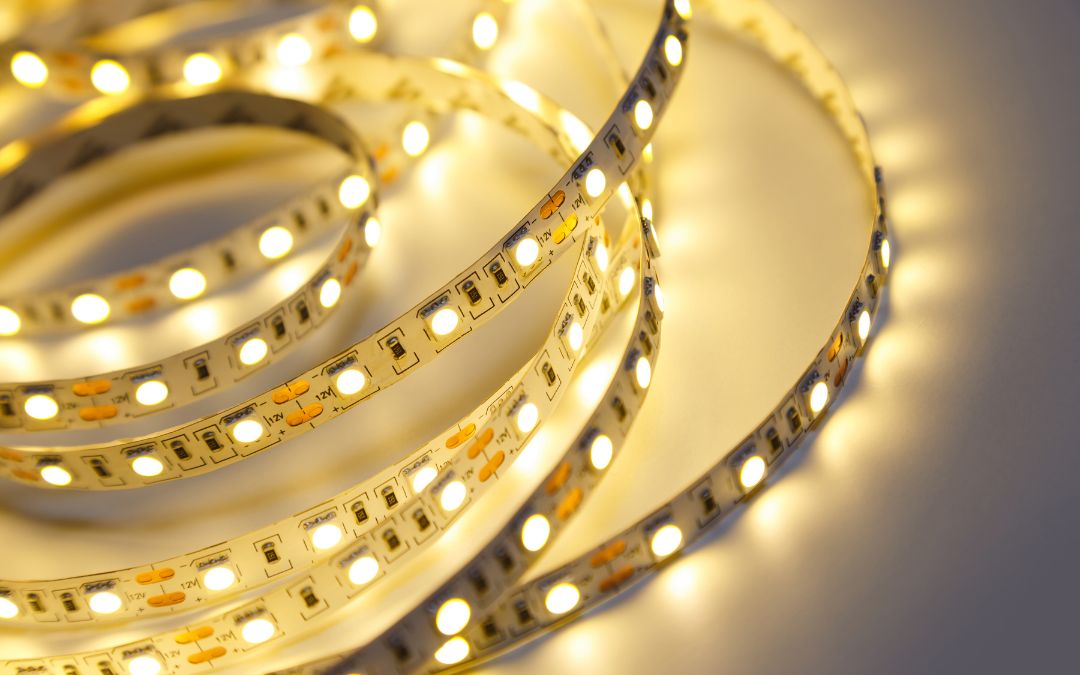
Voltage drop is the reduction in electrical voltage that occurs as current travels along a conductor. Every conductor — including the thin copper traces printed on an LED strip — has resistance. As electricity flows through this resistance, it loses energy. The further it travels, the more it loses.
In an LED strip, this means the LEDs near the driver receive the full rated voltage (12V or 24V), while the LEDs at the far end receive something less — perhaps 10.5V on a 12V strip after 7 metres. LEDs are sensitive to this: lower voltage means less current, which means measurably lower brightness. The result is a strip that looks bright at one end and noticeably dim at the other.
This is not a fault — it is physics. It happens to every LED strip. The question is how severe the drop is at the run length you need.
The core reason 24V outperforms 12V on long runs: for the same wattage output, a 24V strip draws exactly half the current of a 12V strip. Lower current means less energy lost to resistance, which means less voltage drop over the same distance.
12V vs 24V LED strip lights — full comparison
| Feature | 12V LED Strip | 24V LED Strip |
|---|---|---|
| Maximum single-feed run length | 5 metres | 10 metres |
| Voltage drop (long runs) | Significant above 5m | Minimal up to 10m |
| Current draw (same wattage) | Double | Half |
| Wire thickness required | Thicker (higher current) | Thinner (lower current) |
| Cutting interval | Every 3 LEDs (~2.5cm) | Every 6 LEDs (~5cm) |
| LED density options | Up to 120 LEDs/m | Up to 192 LEDs/m |
| High-CRI (90+) availability | Limited | Full range available |
| Driver cost | Slightly lower | Slightly higher |
| Energy efficiency | Standard | Higher (less heat loss) |
| Best for | Short runs, accent, vehicles | Cove ceilings, long runs, architectural |
When to choose 12V LED strip lights
12V is the right choice in four specific situations:
Short installations under 5 metres
Under-cabinet kitchen lighting, wardrobe strip lights, TV backlight, shelf accent lighting — anywhere the total run is 5 metres or less. At this distance, voltage drop is negligible on both 12V and 24V. The cheaper 12V driver is a legitimate advantage here.
Vehicle lighting
Cars, motorcycles, and most vehicles run 12V electrical systems. Using a 12V strip means you can power it directly from the vehicle battery without a converter. 24V in a vehicle requires a voltage step-up, which adds cost and complexity.
Battery-powered portable setups
12V lithium battery packs (common in portable power stations and camping equipment) pair directly with 12V strips. If the setup needs to be portable and battery-powered, 12V is typically more practical.
Precise cutting requirements
12V strips cut every 3 LEDs — typically every 2.5cm. 24V strips cut every 6 LEDs — typically every 5cm. If you need a very specific length in a tight space (fitting a strip inside a custom piece of furniture, for example), 12V gives more cut points and more flexibility.
When to choose 24V LED strip lights
For most Indian home applications — particularly anything involving a false ceiling — 24V is the correct choice.
Cove and false ceiling lighting
The most common LED strip application in Indian homes. A typical 3BHK living room has a perimeter of 14–18 metres — well beyond the 5-metre safe run length of 12V. At 15 metres on 12V, the voltage drop is severe enough to be immediately visible. 24V handles this comfortably, especially when the power feed is split to both ends of the run.
Runs above 5 metres
Any installation longer than 5 metres from a single power point. This includes kitchen counters in L-shaped layouts, long corridor ceiling strips, retail shelf lighting, and bedroom perimeter cove lighting.
High-density and high-CRI strips
Premium strip options — 120 LEDs/m, 192 LEDs/m, CRI 95+, CRI 98+ — are predominantly available in 24V. The reason is electrical: higher LED density draws more current per metre. 24V allows more LEDs to be packed onto the strip without overloading the copper traces. If light quality matters — and in a living room or bedroom it should — 24V is where the premium options live.
Commercial and hospitality installations
Hotels, restaurants, retail stores, and offices use 24V almost universally for architectural lighting. Professional lighting designers specify 24V for reliability, run length, and compatibility with dimmable drivers and building management systems.
Voltage and brightness — clearing up the confusion
A common misunderstanding: many buyers assume 24V strips are brighter than 12V strips because of the higher voltage. This is not correct.
Brightness in an LED strip is determined by wattage per metre and LED quality — not voltage. A 12V strip at 10W/m and a 24V strip at 10W/m produce the same light output. Voltage does not make LEDs brighter.
What 24V does allow is higher LED density without electrical overload. A 192 LED/m strip at 24V draws the same current per metre as a 96 LED/m strip at 12V. This means you can have twice the LED density — smoother light, no visible dots — without thicker wiring or a bigger driver. That is the indirect brightness advantage of 24V.
How to calculate if your run needs 24V
Use this simple test before you buy:
- Measure your total strip run length in metres
- If the run is 5 metres or under from a single power point — 12V is fine
- If the run is above 5 metres — use 24V
- If the run is above 10 metres on 24V — feed power from both ends, or add a second driver mid-run
For a room with a cove ceiling running around all four walls, add the perimeter: a 4m × 5m room has an 18-metre perimeter. That needs 24V with power fed from at least two points.
In over five years of supplying architectural LED strips across India, the single most common installation problem we hear about is uneven brightness in cove ceilings — always traced back to 12V strips on long runs. The fix is almost always replacing with 24V and adding a feed from the opposite end. Save yourself the rework: choose 24V for any ceiling application from the start.
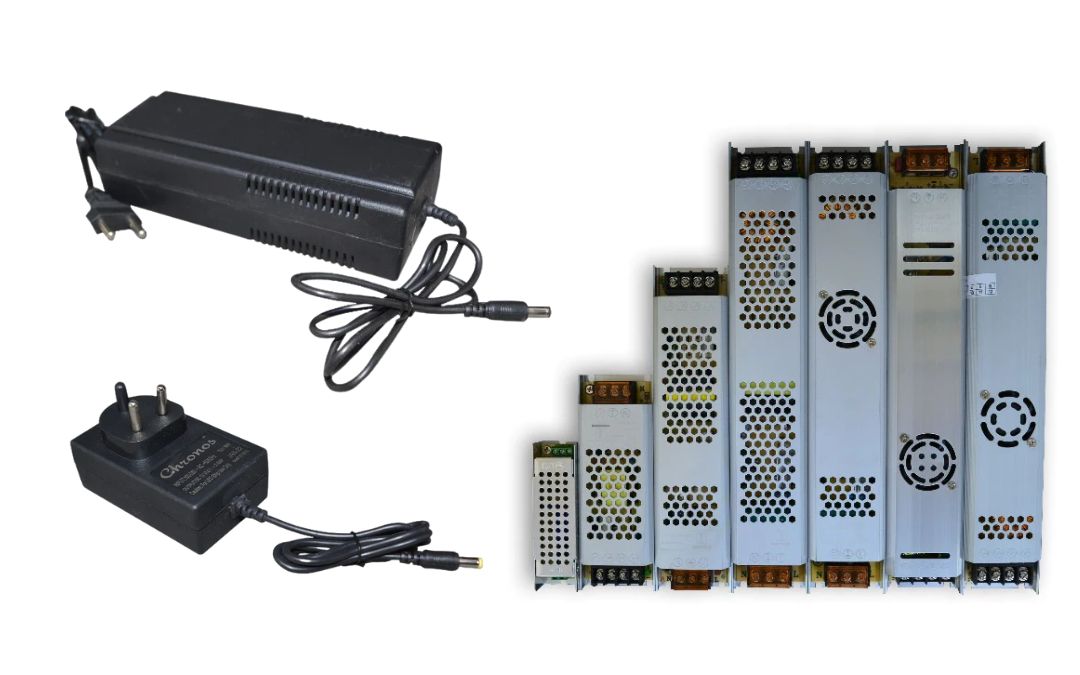
Driver selection — one rule for both voltages
Regardless of voltage, the driver sizing formula is the same:
Driver wattage = strip W/m × total metres × 1.2
The 1.2 multiplier is a 20% safety margin. Running a driver at 100% rated load shortens its lifespan. The margin keeps the driver cool and extends its life significantly.
Example: 10W/m strip × 10m × 1.2 = 120W. Use a 150W driver.
The driver must match the strip voltage exactly. A 24V strip on a 12V driver will be very dim. A 12V strip on a 24V driver will be damaged immediately.
Room-by-room recommendation for Indian homes
| Room / Application | Typical run length | Recommended voltage | Notes |
|---|---|---|---|
| Living room false ceiling | 12–20m | 24V | Feed from two points |
| Master bedroom false ceiling | 10–16m | 24V | Warm white 3000K, CRI 90+ |
| Kitchen under-cabinet | 2–5m | 12V or 24V | Natural white 4000K |
| Wardrobe interior | 1–3m | 12V | Cool or natural white |
| TV backlight | 2–4m | 12V | RGB or warm white |
| Corridor ceiling | 4–8m | 24V | Avoid 12V on runs above 5m |
| Retail shelf display | 10–30m | 24V | Multiple feed points for long runs |
| Car / bike accent | 1–4m | 12V | Matches vehicle electrical system |
Frequently asked questions
Should I use 12V or 24V LED strip lights for cove lighting?
Use 24V LED strip lights for cove lighting. Cove installations typically run 10–20 metres around a room perimeter. At these lengths, 12V strips develop visible voltage drop — the strip appears brighter near the driver and noticeably dimmer at the far end. 24V strips halve the current draw, which halves voltage drop and delivers even brightness across the entire run.
What is the maximum run length for 12V vs 24V LED strip lights?
12V LED strip lights have a maximum recommended single-feed run of 5 metres (approximately 16 feet) before voltage drop causes visible dimming. 24V strips can run up to 10 metres from a single feed point. For longer runs on either voltage, power should be injected from both ends or additional drivers added at intervals.
Is 24V LED strip more energy efficient than 12V?
Yes. For the same wattage output, a 24V strip draws half the current of a 12V strip. Lower current means less energy lost as heat in the wiring and driver — 24V systems are measurably more efficient, particularly over long runs where resistance losses are significant.
Can I connect a 24V LED strip to a 12V driver?
No — never mix voltages. A 24V strip on a 12V driver will be extremely dim or may not light at all. A 12V strip on a 24V driver risks immediate damage. Always match the driver voltage exactly to the strip voltage. This is the most common installation mistake and the easiest to avoid.
When is 12V LED strip better than 24V?
12V is better when: the run is 5 metres or under, the installation is in a vehicle (cars run 12V systems), a portable battery-powered setup is needed, or more frequent cut points are required (12V strips cut every 3 LEDs — approximately every 2.5cm — versus every 6 LEDs on 24V).
Does voltage affect the brightness of LED strip lights?
Not directly. Brightness is determined by wattage per metre and LED quality — not voltage. However, 24V strips can accommodate higher LED density (up to 192 LEDs/m) without overloading the copper traces, which is why premium high-brightness, high-CRI strips are predominantly available in 24V.
What LED strip voltage should I use for a bedroom false ceiling in India?
24V. A standard bedroom perimeter of 12–16 metres is beyond the safe single-feed run of 12V strips. Use 24V with warm white (2700–3000K), 120+ LEDs/m, and CRI 90+ for smooth, glare-free ambient light that renders wall colours and furnishings accurately.
Shop LED strip lights at Chronos Lights
Chronos Lights supplies 24V LED strip lights in warm white, natural white, and cool white — from standard 60 LED/m options to premium 192 LED/m, CRI 98+ architectural strips. All products are available for individual purchase and in bulk for contractors and interior designers.
- High CRI 98+ LED Strip Light — Warm White, 24V, 192 LEDs/m, 10m — ₹2,999
- High CRI 98+ LED Strip Light — Natural White, 24V, 192 LEDs/m, 10m — ₹2,999
- High CRI 98+ LED Strip Light — Cool White, 24V, 192 LEDs/m, 10m — ₹2,999
- Browse all LED strip lights
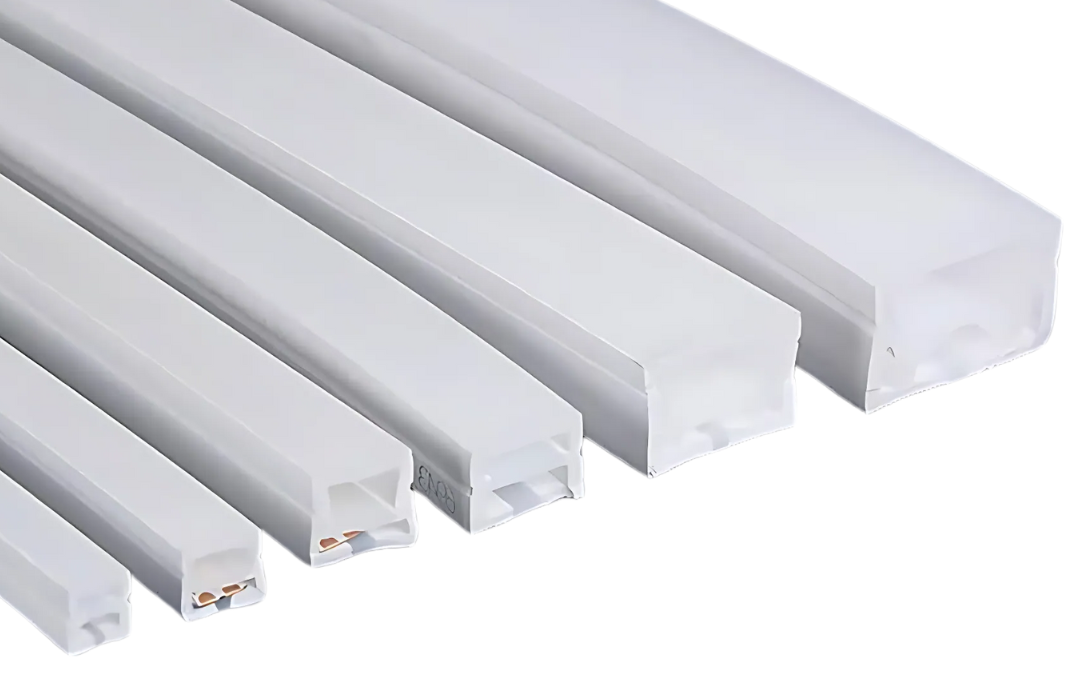
- Silicone profiles for cove lighting
Planning a project? See bulk pricing and MOQ for contractors and interior designers.