





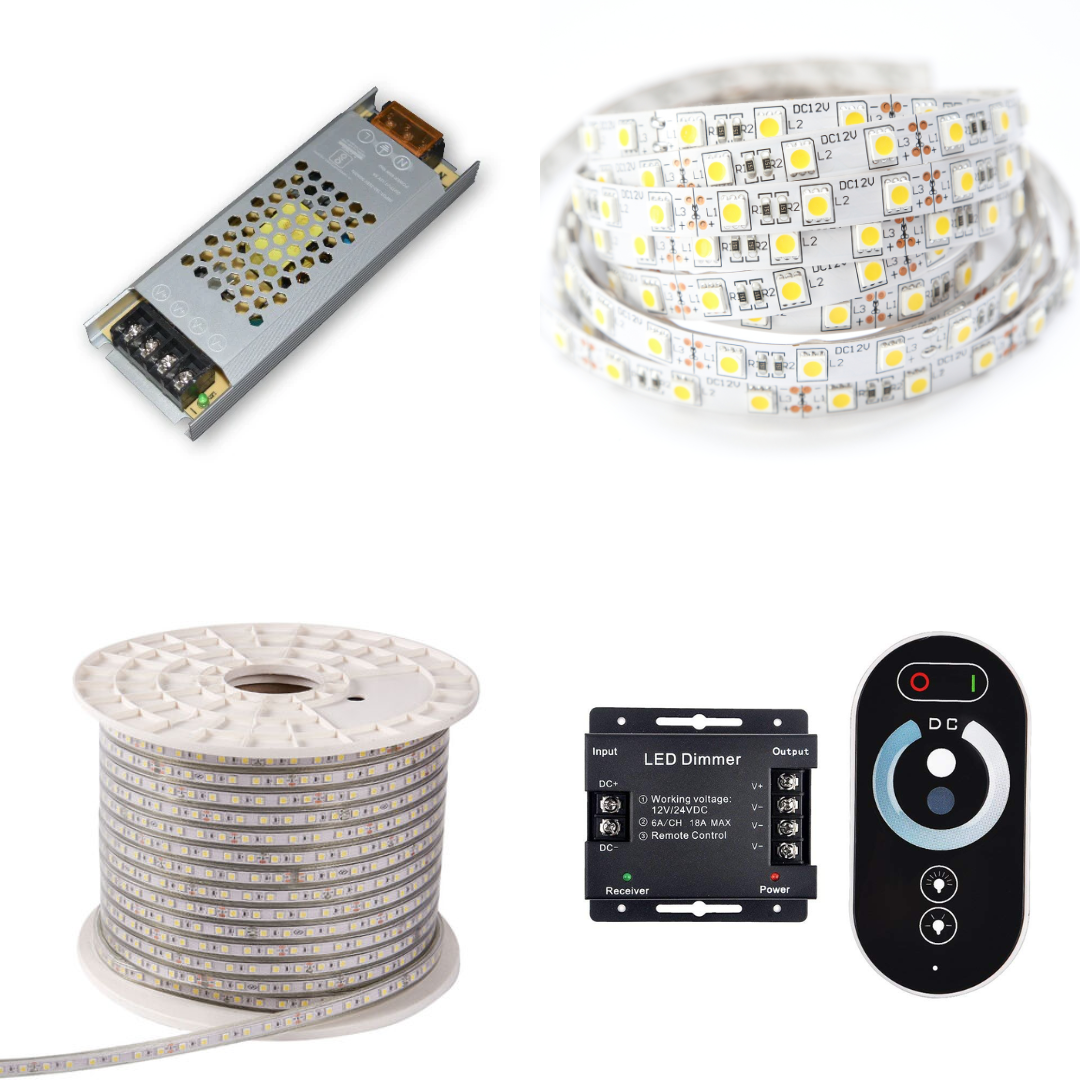
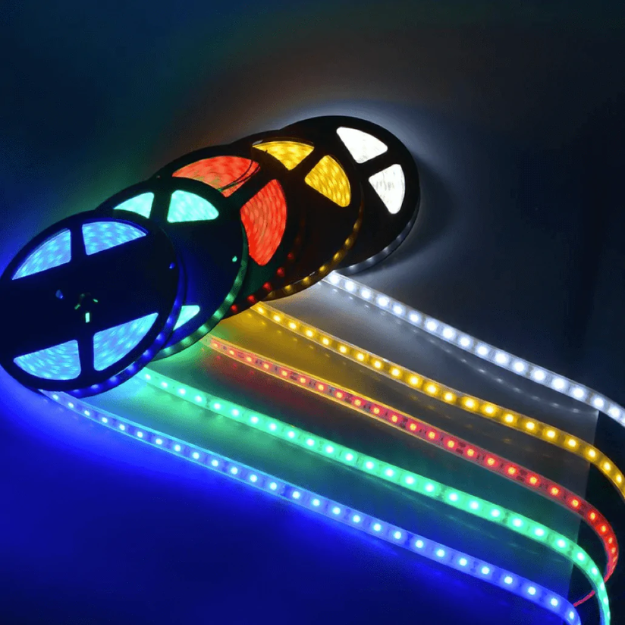
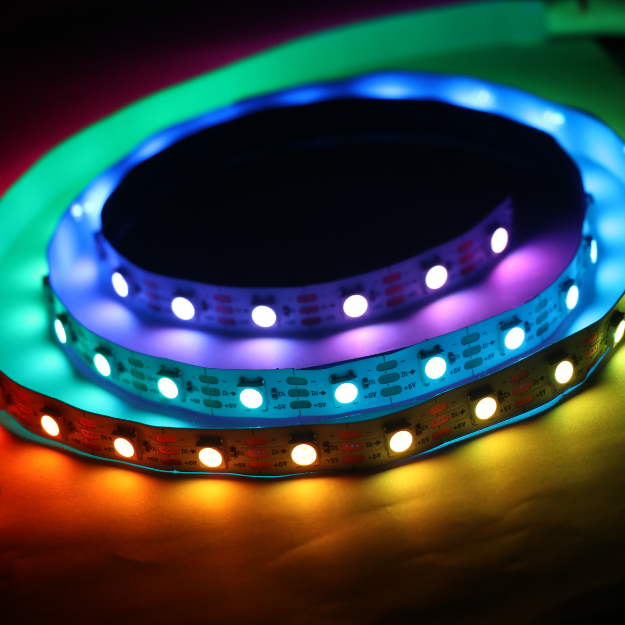

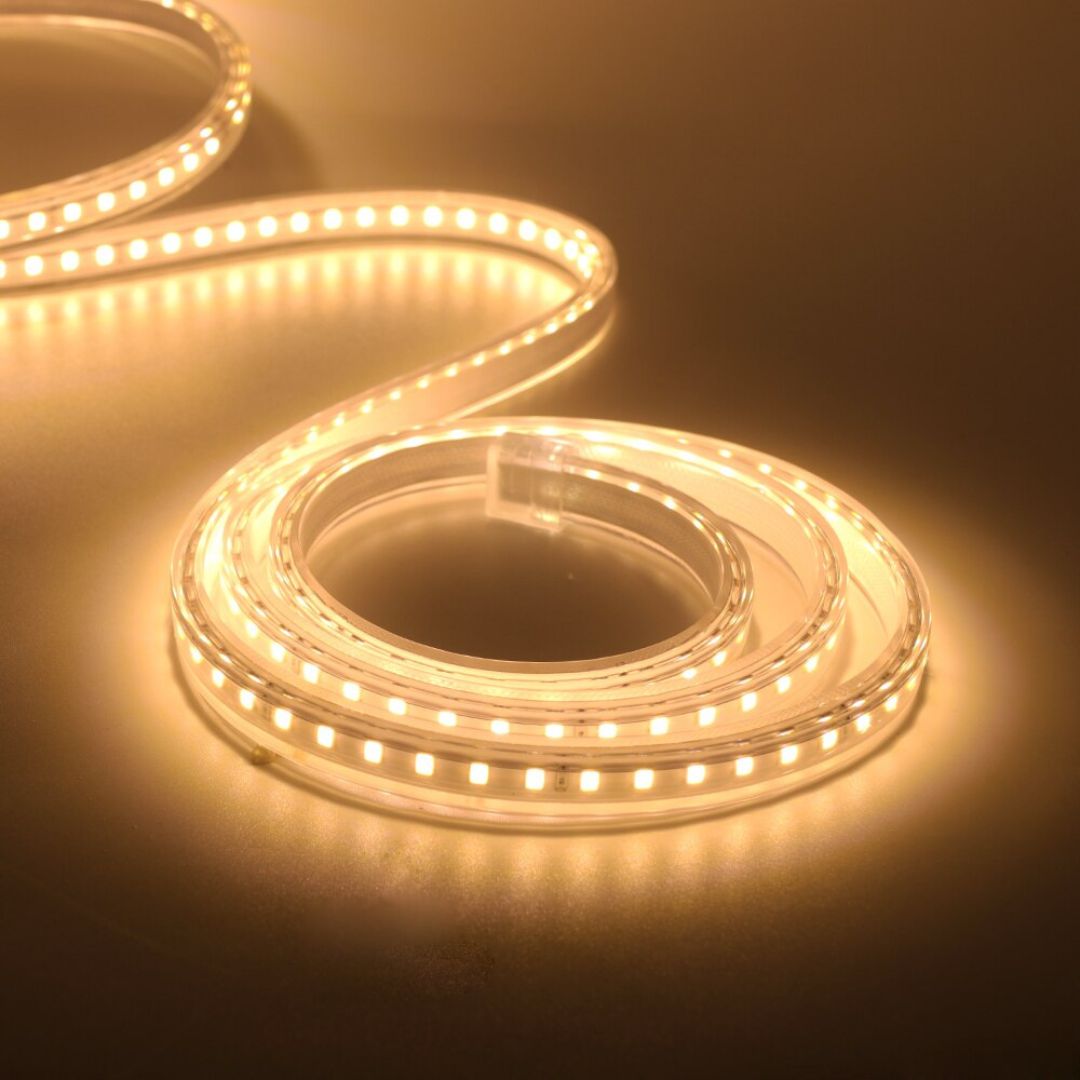





















How to Calculate LED Strip Wattage for Any Room
Quick answer: LED strip wattage = W/m × total length (metres) × 1.2. The 1.2 multiplier adds a 20% safety margin and gives you your minimum driver size. Example: a 9.6W/m strip across 10 metres needs a driver rated at minimum 115W — buy a 150W driver. Always check the W/m figure on your specific strip's product page as it varies by LED density.
Choosing the wrong LED driver is the most common — and most avoidable — mistake in a strip light installation. Too small and the driver overheats, flickers, and fails early. Too large and you have paid for more than you need. Neither is expensive to get right if you know the formula before you buy.
This guide gives you the complete calculation method, a reference wattage table for common Indian strip types, worked examples for real room sizes, and a checklist of what to do when running multiple strips from one driver.
LED strip wattage calculator
Enter your strip's wattage per metre and your total installation length to get the driver size you need.
Find this on your strip's product page under specifications
Total perimeter or run length — not room size
The formula — three steps
Every LED strip wattage calculation follows the same three steps regardless of strip type, voltage, or room size.
Step 1 — Find your strip's wattage per metre (W/m)
This is listed on the product page under specifications. It varies by LED density and LED chip type. Do not estimate — use the exact figure from the product you are buying. If you cannot find it, contact the supplier before purchasing a driver.
Step 2 — Measure your total installation length
Measure the total run in metres — not room size, but the actual length of strip you will install. For a cove ceiling running around all four walls, add all four sides. For a single accent wall, measure that wall only. Include any returns or joinery recesses in your measurement.
Step 3 — Apply the formula
Driver wattage = W/m × total metres × 1.2
The 1.2 multiplier is the 20% safety margin — also called the 80% rule. It means your driver only ever runs at 80% of its rated capacity during normal use. This keeps it cool and significantly extends its operating life.
Common LED strip wattage reference table
| Strip type | LED density | Typical W/m | Best for |
|---|---|---|---|
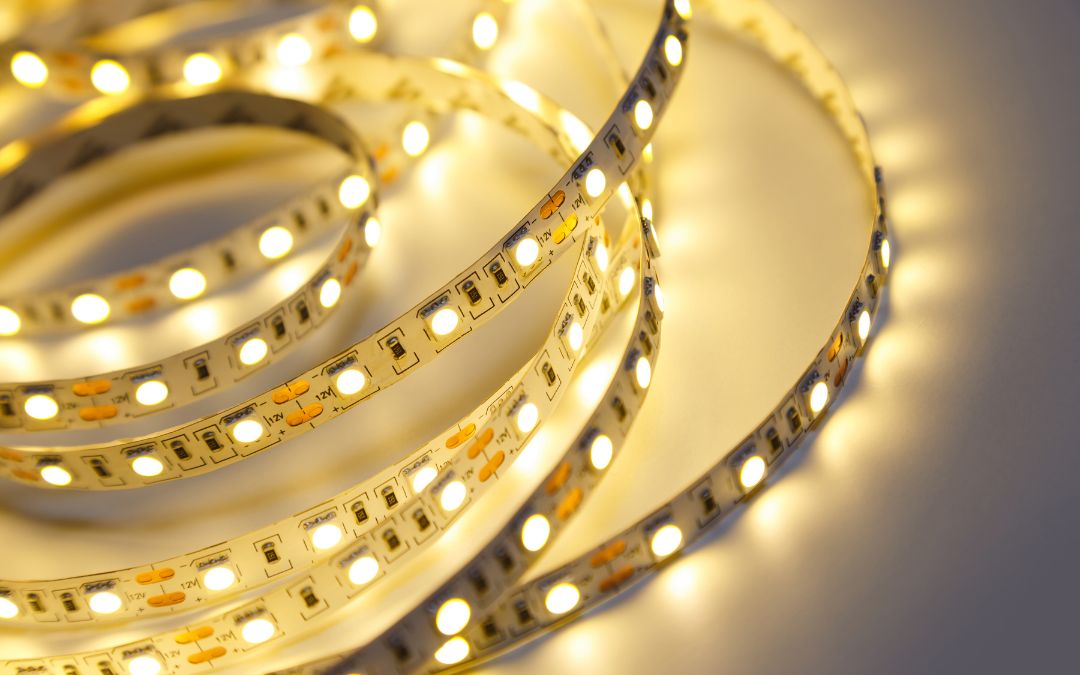
| Standard single colour | 60 LEDs/m | 4.8 W/m | Accent lighting, shelves, decorative use |
| Standard single colour | 120 LEDs/m | 9.6 W/m | Cove ceilings, under-cabinet, wardrobe |
| High power single colour | 120 LEDs/m | 14.4 W/m | Bright cove lighting, retail display |
| High density (192 LEDs/m) | 192 LEDs/m | 19.2 W/m | Premium cove, hospitality, showrooms |
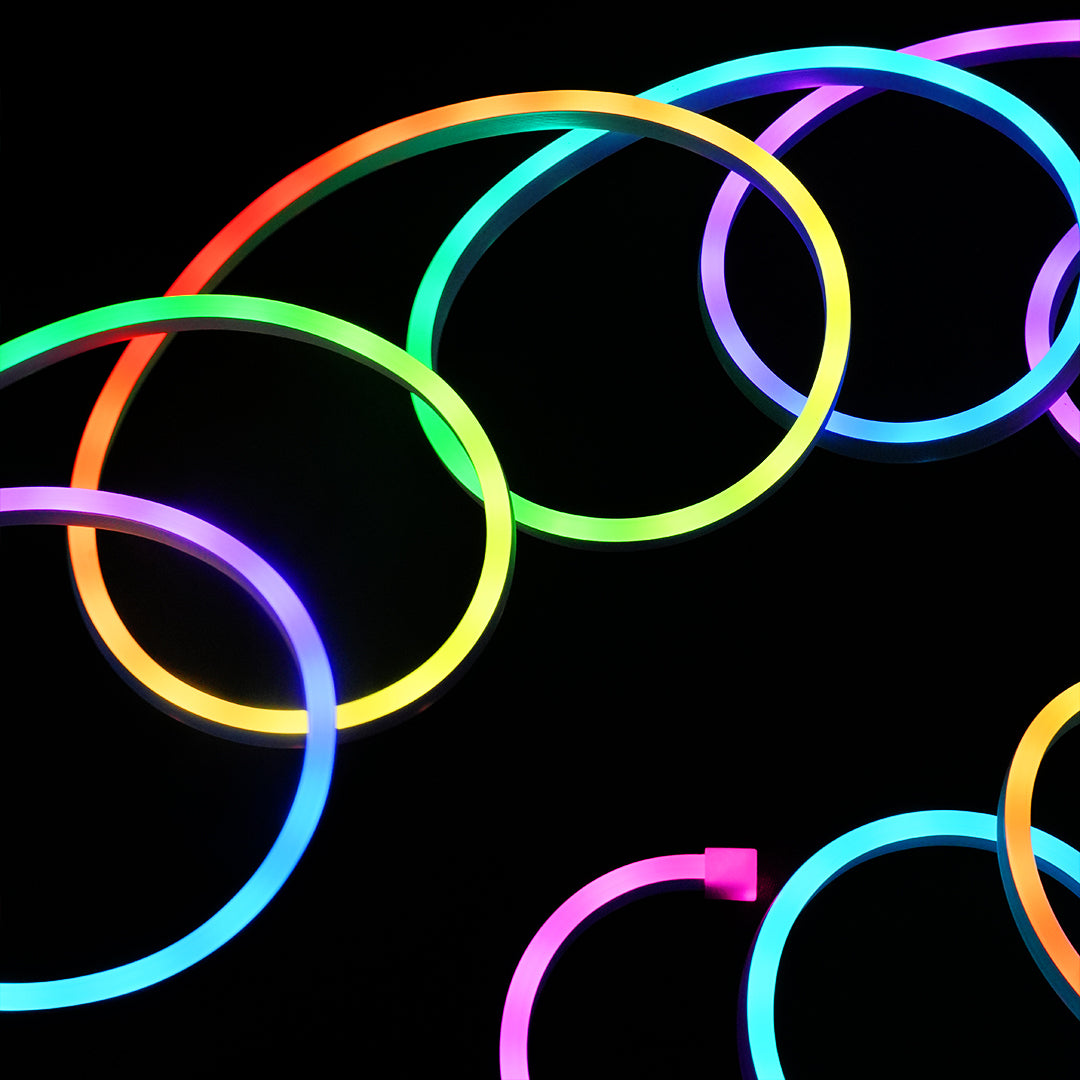
| RGB colour changing | 60 LEDs/m | 14.4 W/m | Gaming rooms, entertainment areas |
| RGB colour changing | 30 LEDs/m | 7.2 W/m | Accent and decorative RGB lighting |
| COB (chip on board) | — | 8–12 W/m | Ultra-smooth cove, no visible dots |
Note: these are typical values. Always use the exact W/m from your specific product's specification sheet — values vary between manufacturers and LED chip generations.
Worked examples for common Indian rooms
Example 1 — 3BHK living room false ceiling
Room size: 5m × 4m
Perimeter: (5 + 4) × 2 = 18 metres
Strip chosen: 120 LEDs/m at 9.6W/m, 24V
Calculation: 18 × 9.6 × 1.2 = 207W
Buy: 1 × 300W driver (or 2 × 150W drivers fed from opposite ends of the ceiling — better for voltage drop)
Example 2 — Master bedroom false ceiling
Room size: 4m × 3.5m
Perimeter: (4 + 3.5) × 2 = 15 metres
Strip chosen: 120 LEDs/m at 9.6W/m, 24V
Calculation: 15 × 9.6 × 1.2 = 172.8W
Buy: 1 × 200W driver
Example 3 — Kitchen under-cabinet
Cabinet run: 3.5 metres (L-shaped kitchen, both sides)
Strip chosen: 120 LEDs/m at 9.6W/m, 24V
Calculation: 3.5 × 9.6 × 1.2 = 40.3W
Buy: 1 × 60W driver
Example 4 — Premium living room with high-density strip
Room size: 6m × 5m
Perimeter: (6 + 5) × 2 = 22 metres
Strip chosen: 192 LEDs/m at 19.2W/m, 24V
Calculation: 22 × 19.2 × 1.2 = 506.9W
Buy: 3 × 200W drivers — one at each corner, one mid-run — fed in parallel. For very long high-wattage runs, always split the load across multiple drivers rather than using one very large unit.
Example 5 — Wardrobe interior
Strip length: 2 metres
Strip chosen: 60 LEDs/m at 4.8W/m, 12V
Calculation: 2 × 4.8 × 1.2 = 11.5W
Buy: 1 × 30W driver (the smallest standard size — plenty of headroom for a short run)
The single most common driver failure we see in installations across India is an undersized driver on a large room ceiling — typically a 150W driver running a 14-metre perimeter with a 9.6W/m strip, which puts the driver at 90%+ load continuously. It runs hot from day one, and fails within 6–12 months. The fix is always a 200W driver. The cost difference is ₹300–500. The rework cost after failure — pulling the false ceiling to access the driver — is many times that. Size your driver correctly from the start.
Running multiple strips from one driver
You can power multiple LED strip sections from a single driver as long as:
- All strips use the same voltage as the driver (all 12V or all 24V — never mix)
- The combined wattage of all strips does not exceed 80% of the driver's rated capacity
- All strips are connected in parallel — not in series
Parallel connection: connect the positive terminal of each strip to the driver's positive output, and the negative terminal of each strip to the driver's negative output. Each strip gets the full driver voltage independently.
Never series connect: connecting strips end-to-end in series causes voltage division — each strip gets a fraction of the voltage and will not light correctly or at all.
What goes wrong with an incorrectly sized driver
| Problem | Likely cause | Fix |
|---|---|---|
| Strip flickers intermittently | Driver at or above rated capacity | Replace with correctly sized driver |
| Driver very hot after 30 minutes | Driver running above 80% load | Upgrade to next size up or add a second driver |
| Strip dims after being on for a while | Driver thermal throttling to protect itself | Replace undersized driver |
| Driver shuts off after 1–2 hours | Thermal protection activating | Check driver size and ventilation |
| Strip never reaches full brightness | Driver wattage too low for load | Calculate correctly and replace driver |
| Circuit breaker trips when strip is switched on | Driver severely undersized or faulty | Disconnect immediately and replace driver |
Driver quality — why it matters as much as size
An undersized driver fails early. A cheap driver of the correct size also fails early — just for different reasons.
What to look for in a quality LED driver:
- Short circuit protection — shuts down safely if the strip connection is faulty
- Overload protection — protects against current spikes on startup
- Over-temperature protection — shuts down before components are damaged by heat
- Power factor correction (PFC) — important for larger installations above 75W. PFC drivers run more efficiently and produce less electrical noise on the mains circuit
- IP rating — IP20 for inside false ceilings and dry enclosures. IP65 for drivers installed in exposed or damp locations
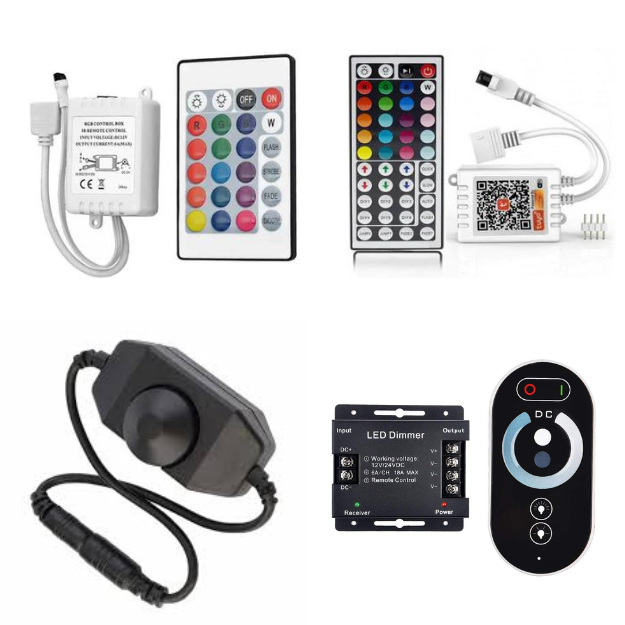
- Dimmable — if you want to dim the strip, the driver must be specifically rated as dimmable. Standard non-dimmable drivers cannot be dimmed and will fail if connected to a dimmer switch
Frequently asked questions
How do I calculate LED strip wattage?
Multiply the strip's wattage per metre (W/m) by your total installation length, then multiply by 1.2: Driver size = W/m × metres × 1.2. The W/m figure is on your product's specification sheet. The 1.2 multiplier adds a 20% safety margin so the driver runs at 80% load — cooler, longer-lasting, and more reliable.
Why do I need a 20% safety margin for an LED driver?
Running a driver at 100% of its rated capacity causes it to run hot continuously, which dramatically shortens its lifespan. The 20% margin (80% rule) means the driver operates at 80% load in normal use — it stays cooler, handles minor fluctuations, and lasts significantly longer. A correctly sized driver will outlast an undersized one by years, even if the undersized one has a higher rated wattage on the label.
What wattage LED driver do I need for a false ceiling?
Measure your ceiling perimeter and multiply by your strip's W/m, then by 1.2. A typical Indian 3BHK living room (5m × 4m, 18m perimeter) with a 9.6W/m strip needs: 18 × 9.6 × 1.2 = 207W — buy a 300W driver or two 150W drivers. For high-density strips (19.2W/m), the same perimeter needs: 18 × 19.2 × 1.2 = 414W — use two 250W drivers.
Can I connect multiple LED strips to one driver?
Yes — connect multiple strips in parallel to one driver as long as their combined wattage does not exceed 80% of the driver's capacity, and all strips share the same voltage. Connect all positive terminals to the driver positive and all negative terminals to the driver negative. Never series-connect strips — each strip must get the full rated voltage.
What happens if my LED driver is too small?
An undersized driver will run hot, flicker under full load, dim over time as it thermally throttles, and fail early — sometimes within months. In severe cases it can trip a circuit breaker. Signs of an undersized driver: the body feels very hot after 30 minutes, flickering starts after the lights have been on for a while, or the driver shuts off intermittently. Replace it with a correctly sized unit.
How many watts per metre do common LED strips use?
Common W/m values: 60 LEDs/m standard = 4.8W/m. 120 LEDs/m standard = 9.6W/m. 120 LEDs/m high power = 14.4W/m. 192 LEDs/m = 19.2W/m. RGB 60 LEDs/m = 14.4W/m. Always use the exact figure from your product specification — it varies between manufacturers.
What is the difference between an LED driver and an LED transformer?
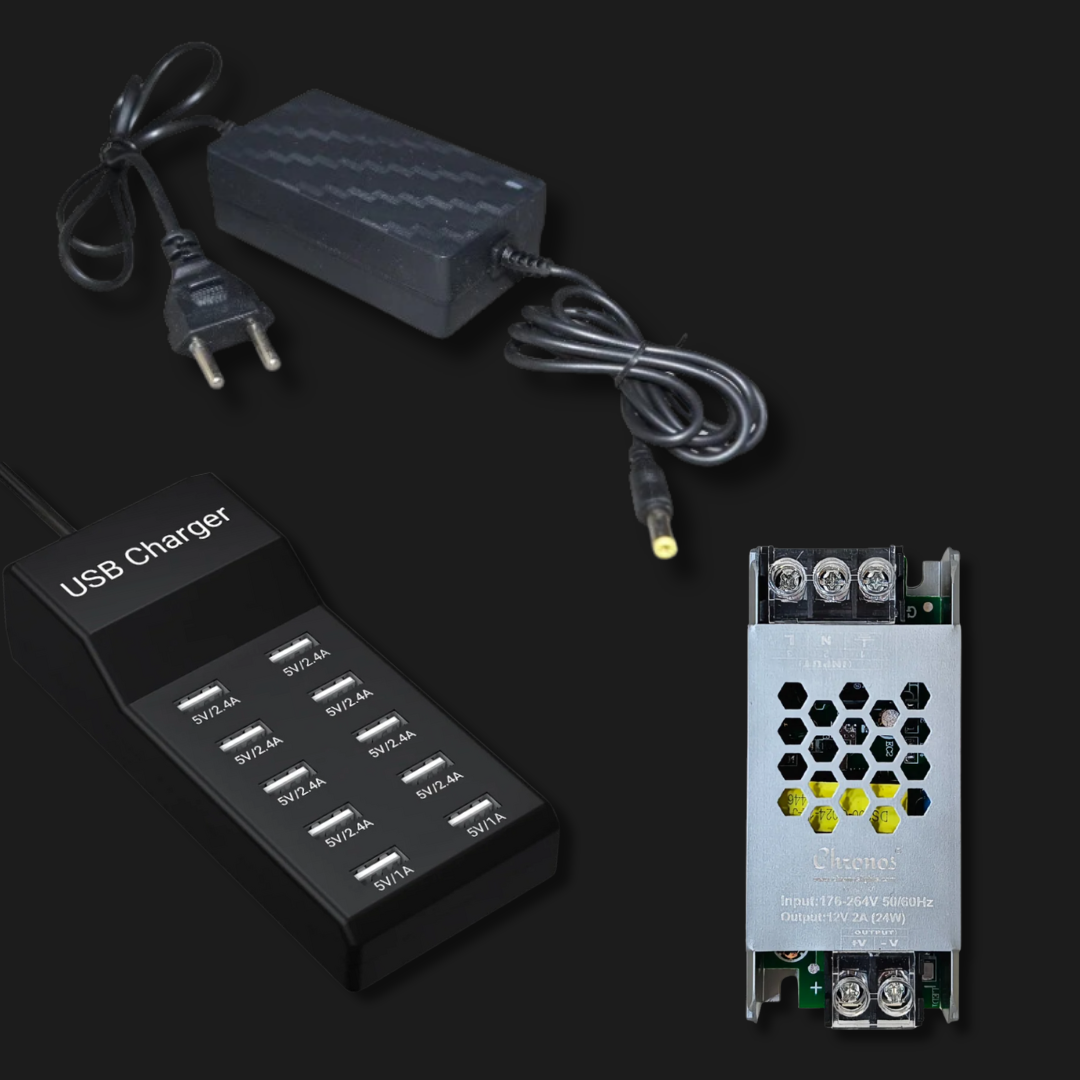
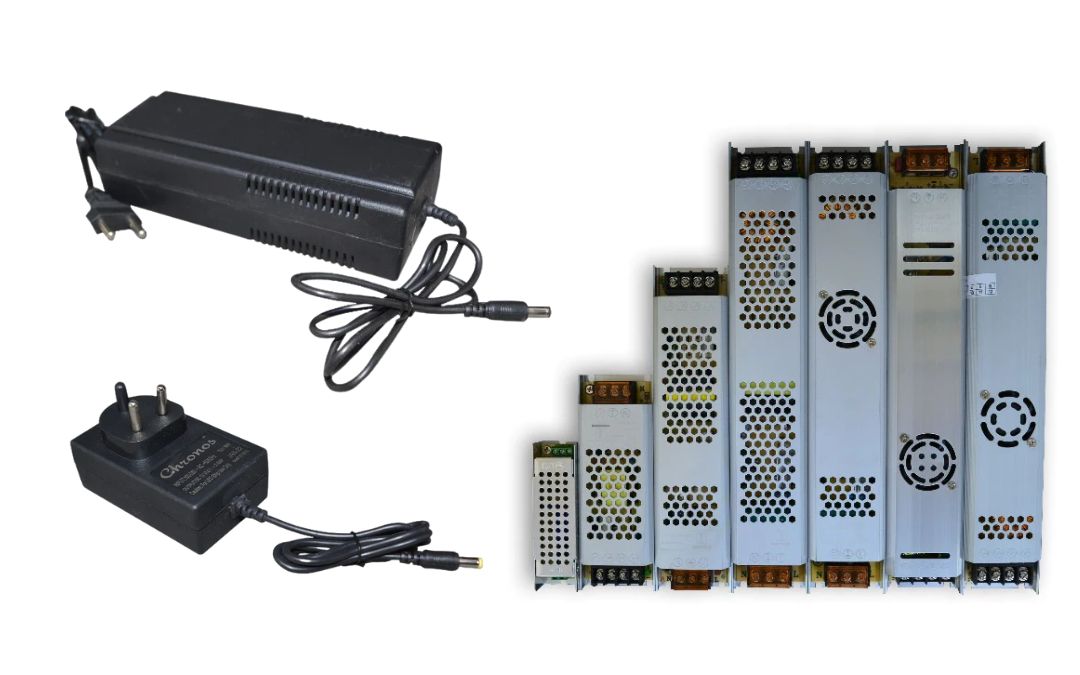
They are the same device — a power supply that converts 220V AC mains to low-voltage DC (12V or 24V) for LED strips. In India, both terms are used. The technically correct term is LED driver. When buying, match the driver voltage to your strip voltage and ensure the driver wattage is at least 20% more than your total strip wattage.
Shop LED strip lights at Chronos Lights
All Chronos Lights strip light product pages list the exact W/m value in the specification — use it directly in the calculator above. Our 192 LEDs/m, CRI 98+ strips run at 19.2W/m at 24V.
- High CRI 98+ LED Strip — Warm White, 24V, 192 LEDs/m (19.2W/m), 10m roll — ₹2,999
- High CRI 98+ LED Strip — Natural White, 24V, 192 LEDs/m (19.2W/m), 10m roll — ₹2,999
- High CRI 98+ LED Strip — Cool White, 24V, 192 LEDs/m (19.2W/m), 10m roll — ₹2,999
- All LED drivers and controllers
- Browse all LED strip lights
Planning a large project and need advice on driver configuration? Contact our technical team for project-specific recommendations and bulk pricing.