














How to Choose the Right Silicone LED Profile for Your Project (Complete Buyer’s Guide)
Introduction
Choosing the perfect Flexible Silicone LED Profile can feel overwhelming — with so many sizes, shapes, and specifications, how do you know which one fits your design needs? Whether you’re an architect, interior designer, lighting consultant, or DIY creator, understanding how to select the right profile ensures optimal light diffusion, safety, and longevity.
This comprehensive guide will help you make confident decisions by explaining profile types, use cases, compatible LED strips, installation methods, and pro tips for achieving flawless results.
What Are Silicone LED Profiles?
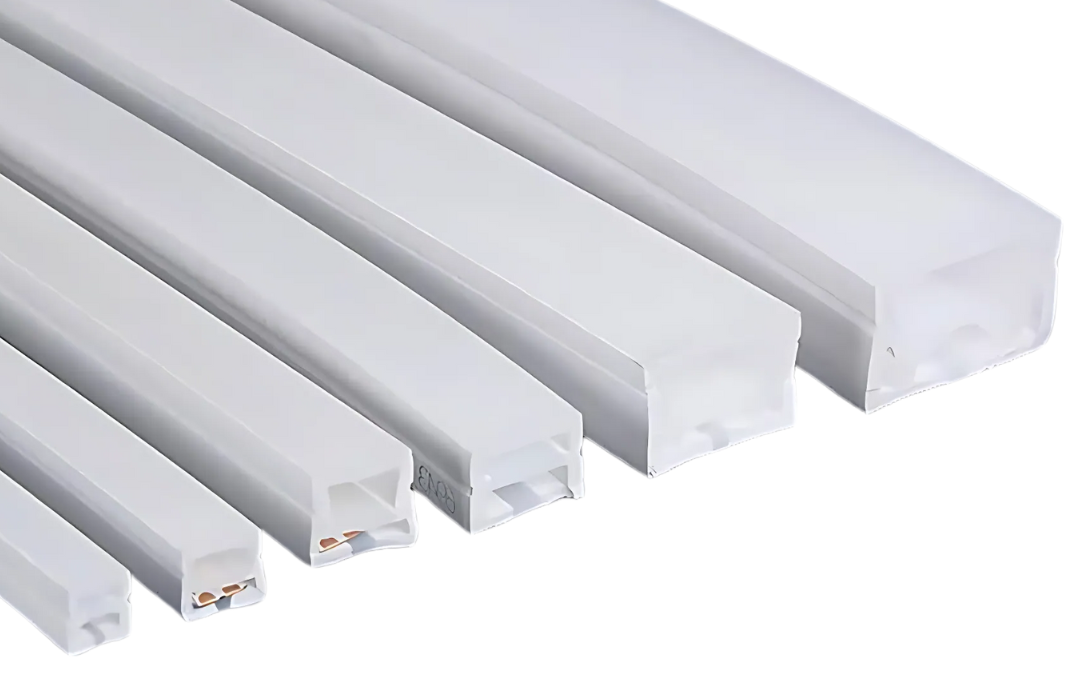
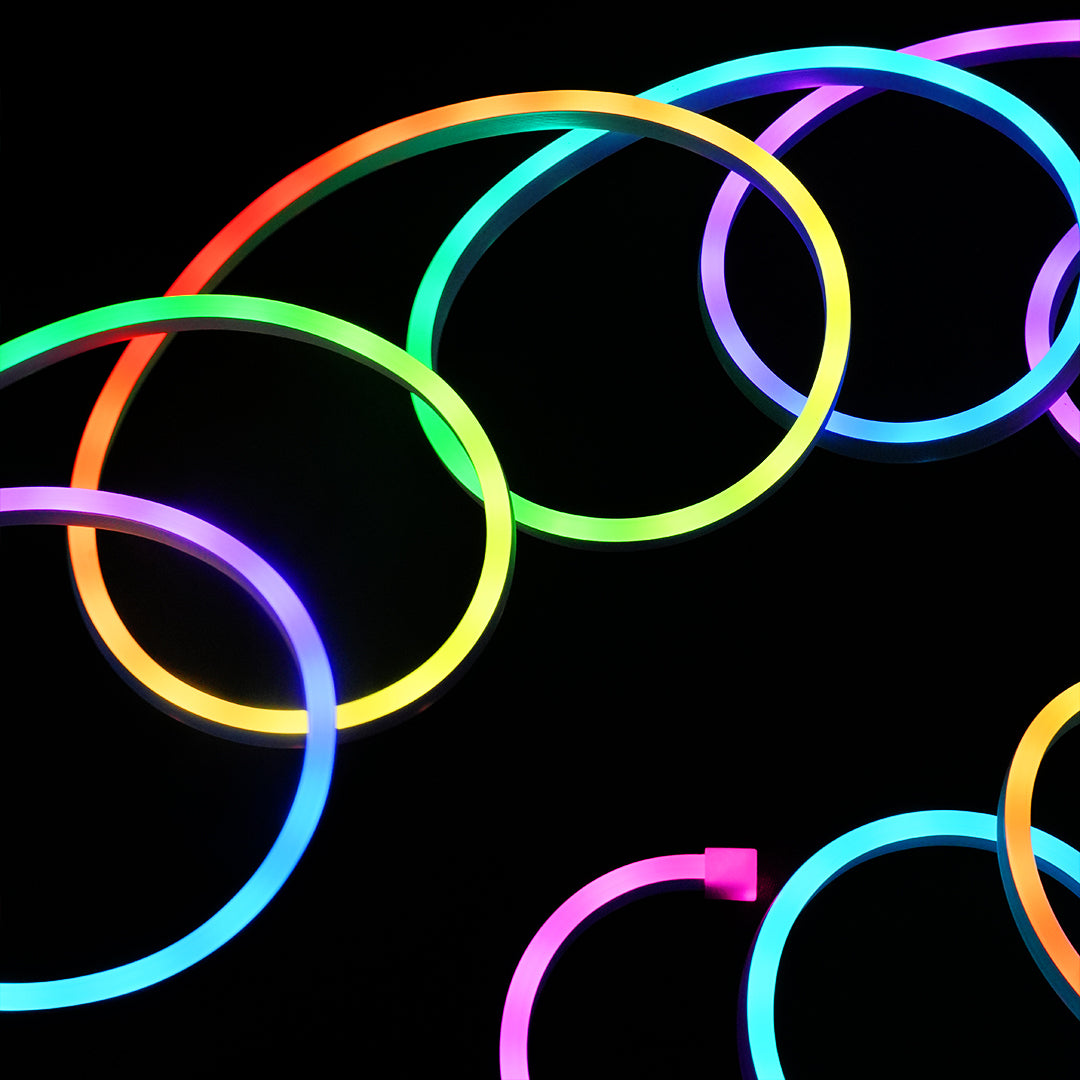
Silicone LED Profiles (also known as silicone LED channels or silicone diffusers) are flexible housings designed to protect and enhance LED strip lights.
They serve three key purposes:
-
Light Diffusion – Ensures smooth, dot-free lighting.
-
Protection – Shields LED strips from dust, moisture, and UV rays.
-
Aesthetics – Allows creative lighting designs that blend with modern architecture.
Unlike traditional aluminum profiles, silicone versions are bendable, waterproof (IP67), and resistant to yellowing, making them suitable for both indoor and outdoor applications.
Why Profile Selection Matters
Picking the wrong profile can lead to:
-
Uneven light output or visible LED dots
-
Poor waterproofing
-
Incompatibility with your LED strip width
-
Reduced LED lifespan due to heat buildup
The right silicone LED profile ensures:
✅ Uniform, diffused illumination
✅ Long-term protection and durability
✅ Seamless installation with the correct LED strip width
✅ Perfect lighting aesthetics for your project
Step-by-Step Guide: How to Choose the Right Silicone LED Profile
1. Define the Lighting Objective
Ask yourself:
-
Is this for ambient, task, or decorative lighting?
-
Will the light be indoor or outdoor?
-
Do you need linear, curved, or edge illumination?
Your objective determines the profile view type — Top View, Side View, or Corner View.
2. Choose the Profile Type
|
Profile Type |
Light Direction |
Ideal For |
Example Sizes |
|
Top View |
Light emitted upward/outward |
Ceilings, walls, furniture, coves |
8x8mm, 10x10mm, 16x16mm, 30x20mm |
|
Conceal View |
Hidden light source, diffused glow |
False ceilings, indirect lighting |
10x10mm, 16x10mm, 20x20mm |
|
Side View |
Light emitted from side edge |
Signage, vertical accents, curved surfaces |
8x17mm, 12x20mm |
|
Corner View (V-Shape) |
45° edge light |
Wall-to-ceiling junctions, stairs |
22x14mm |
|
D-Shape / Round |
Semi-circular/360° glow |
Decorative lighting, pendant or bar designs |
15x13mm (180°), 16mm (270°), 20mm (360°) |
3. Match the Profile with LED Strip Width
|
Profile Size |
Compatible LED Strip Width |
Recommended Use |
|
8mm x 8mm |
5mm |
Minimal, compact lighting |
|
10mm x 10mm |
5mm |
Concealed coves and under shelves |
|
13mm x 13mm |
5–8mm |
Furniture and display cases |
|
16mm x 16mm |
5–12mm |
Architectural linear lights |
|
20mm x 20mm |
5–15mm |
Outdoor and commercial spaces |
|
30mm x 20mm |
5–15mm |
High-lumen, large-scale lighting |
|
8mm x 17mm (Side View) |
5–8mm |
Edge or signage lighting |
|
12mm x 20mm (Side View) |
5–8mm |
Curved or contour lighting |
|
22mm x 14mm (V-Shape) |
5–10mm |
Corner or angular lighting |
|
20mm (360°) |
5–15mm |
Decorative pendant or garden lights |
Always verify your LED strip width before purchasing a profile. A mismatch can cause loose fitting, uneven diffusion, or overheating.
4. Consider Installation Type
|
Installation Method |
Description |
Best Suited Profiles |
|
Surface Mount |
Mounted directly on a wall, ceiling, or surface |
Top View, D-Shape |
|
Recessed Mount |
Hidden installation within false ceilings or panels |
Conceal View |
|
Corner Mount |
Angled lighting along edges |
V-Shape Profiles |
|
Suspended Mount |
Hanging or pendant installations |
Round / 360° Profiles |
|
Flexible Curved Mount |
Glued or shaped to curves |
Side View Profiles |
5. Evaluate Environmental Conditions
If your installation is outdoor, humid, or near water, ensure the profile and accessories are IP67 waterproof-rated.
For indoor architectural or decorative projects, flexibility and aesthetics take priority.
6. Select the Right Accessories
Each profile requires proper end caps, mounting clips, and sealants for secure installation.
|
Accessory |
Function |
|
End Caps (with hole) |
Cable entry for power connection |
|
End Caps (without hole) |
Dust and moisture sealing |
|
Metal Mounting Clips |
Stable surface mounting |
|
Silicone Glue |
Curved or irregular mounting |
👉 Learn more in our Accessories & Installation Guide.
Use-Case Examples
|
Application |
Recommended Profile |
LED Strip Type |
|
Kitchen Cabinets |
10x10mm Top View |
5mm LED Strip |
|
Cove Lighting |
16x10mm Conceal View |
8mm LED Strip |
|
Outdoor Facade |
20x20mm Top View (IP67) |
12mm Waterproof LED Strip |
|
Signage / Letter Lighting |
12x20mm Side View |
6mm Side-Emitting Strip |
|
Corner Accents |
22x14mm V-Shape |
8mm Strip |
|
Pendant Lights |
20mm 360° Round |
RGB LED Strip |
Pros and Cons of Silicone LED Profiles
|
Pros |
Cons |
|
Highly flexible and bendable |
Slightly higher cost than aluminum |
|
Waterproof and UV-resistant |
Requires proper sealing |
|
Smooth, glare-free light diffusion |
Limited heat dissipation |
|
Safe and eco-friendly |
Needs compatible LED strip size |
Common Mistakes When Choosing Profiles
🚫 Choosing profile size by guesswork
🚫 Ignoring LED strip width compatibility
🚫 Overlooking installation method
🚫 Using indoor profiles outdoors
🚫 Skipping sealing or accessories
✅ Pro Tip: Always plan your lighting layout before ordering — measure your LED strip, note power requirements, and decide mounting style.
FAQs About Choosing Silicone LED Profiles
Q1. Which is better — aluminum or silicone LED profiles?
Silicone profiles are flexible, waterproof, and bendable, while aluminum ones are rigid and better for heat dissipation. Choose based on project needs.
Q2. Can I use silicone profiles outdoors?
Yes, provided they are IP67 waterproof and properly sealed with end caps.
Q3. What LED strips work best with silicone profiles?
Flexible 12V/24V SMD LED strips (5–15mm wide) — single color, RGB, or RGBW.
Q4. Are these profiles suitable for commercial projects?
Absolutely — architects and designers prefer them for stores, offices, hotels, and signage.
Q5. Can I cut profiles to custom lengths?
Yes, silicone can be trimmed easily and resealed for custom-fit installations.
Q6. How do I prevent yellowing over time?
Use UV-stabilized silicone profiles, like those made by ChronosLights, which resist yellowing and degradation.
Q7. How do I choose between Top View and Side View?
If you want forward light, go Top View; for edge or curve illumination, go Side View.
Q8. Are profiles safe for residential interiors?
Yes — they are eco-friendly, non-toxic, and mercury-free.
Q9. What accessories do I need for installation?
End caps, metal clips, glue, and connectors — depending on mounting surface and profile type.
Q10. Where are ChronosLights profiles made?
All Flexible Silicone LED Profiles are proudly made in India, supporting local innovation and engineering.
Related Articles
Final Thoughts
Selecting the right Flexible Silicone LED Profile is not just about looks — it’s about precision, performance, and purpose.
From tiny 8mm profiles for cabinet lighting to 30mm industrial-grade housings for outdoor facades, each model serves a unique role in modern lighting design.
At ChronosLights, we help designers, architects, and builders choose the right combination of profile, LED strip, and accessory to achieve results that are as functional as they are beautiful.
Made in India, designed for brilliance — your perfect lighting starts here.
Suggested Meta Information
-
Title: How to Choose the Right Silicone LED Profile – Complete Buyer’s Guide (India)
-
Meta Description: Learn how to choose the right silicone LED profile for your project. Understand profile types, LED strip compatibility, installation methods, and expert design tips.
Keywords: silicone LED profile buyer’s guide, LED channel selection India, flexible LED diffuser types, top view vs side view profiles, waterproof LED profiles guide