






















# Best Study Lamps in India (2026 Buying Guide)
A good study lamp does more than light up your desk — the wrong lighting can genuinely make it harder to focus and cause real eye fatigue over a long session, while the right setup makes hours of reading or screen work noticeably more comfortable. This guide covers exactly what to look for, broken down by use case, so you can pick the right lamp without guessing.
## What to Look For
**Brightness (lumens).** For general reading and desk work, aim for roughly 400–800 lumens. Detailed or close-up work (drafting, craft, fine print) benefits from 800+ lumens, while a bedside reading lamp only needs around 200–300 lumens. More brightness isn't automatically better — too much can cause glare against a laptop or monitor screen and contribute to eye fatigue rather than reducing it.
**Color temperature.** Look for a lamp offering at least 3–5 adjustable color temperature settings, roughly spanning 2700K (warm) to 6000K (cool daylight). Cooler light (4000K–5000K) is generally considered better for focused daytime studying, while warmer light (3000K or below) is better for the last hour or two before bed, since blue-rich cool light can make it harder to wind down afterward.
**Eye-care certification and flicker.** Flicker that's invisible to the naked eye can still contribute to headaches and eye strain over a long session — this is one of the most important things to check and one of the easiest to overlook. Look for lamps explicitly marketed as flicker-free or eye-care certified, rather than assuming any LED lamp qualifies.
**CRI (color rendering).** A CRI of 90 or higher is the practical recommended minimum for reading and desk work — at this level, text on paper appears sharper and your eyes work less hard to interpret fine contrast, which matters over a multi-hour session. If a lamp's listing doesn't mention CRI at all, that's often a sign it's on the lower end (commonly under 80).
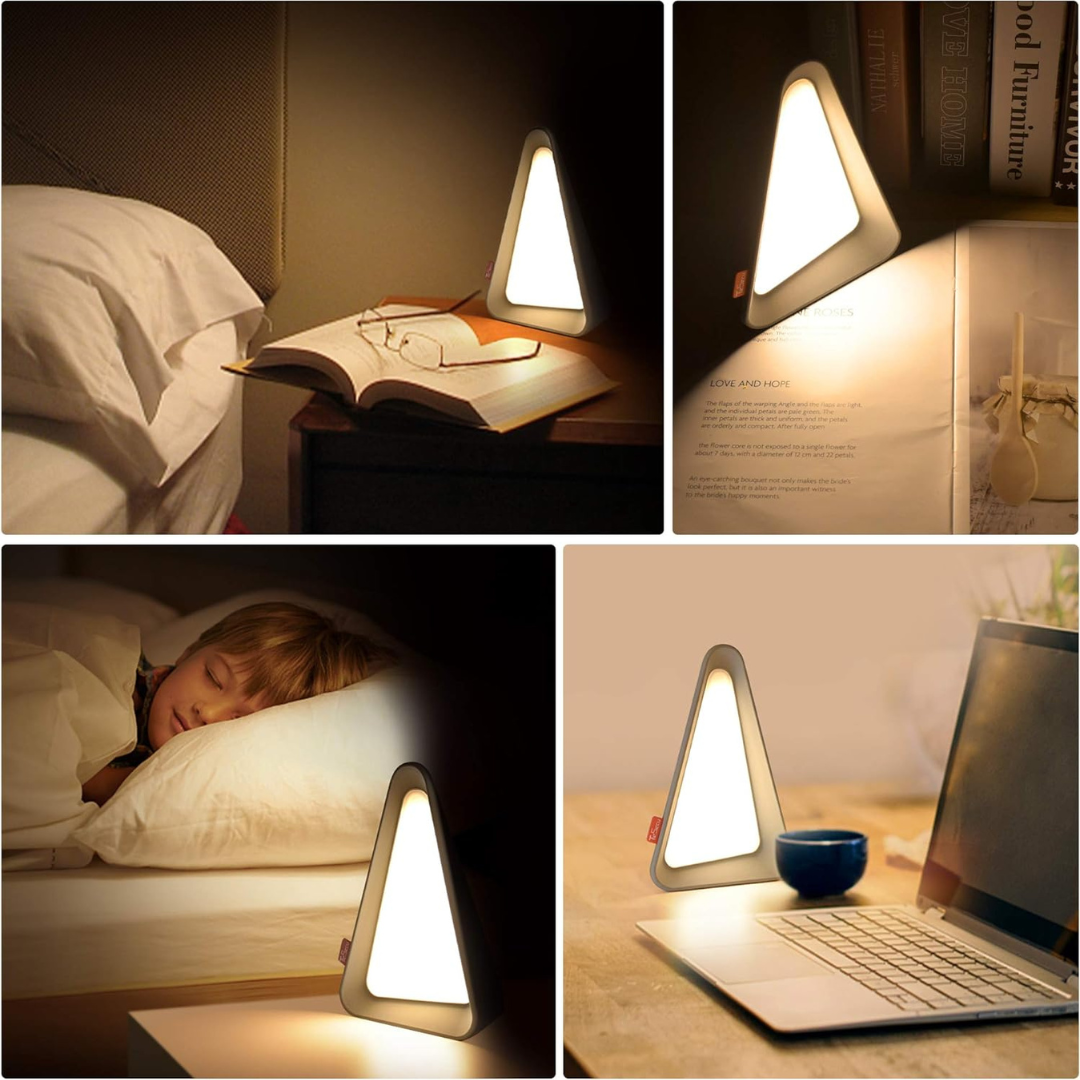
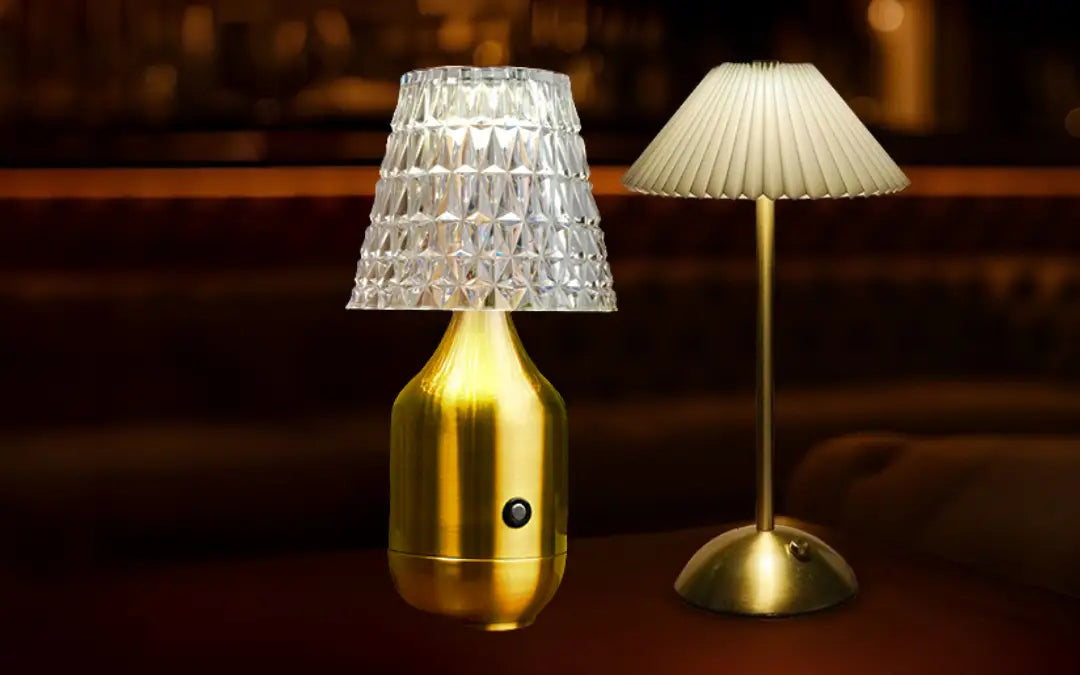
**Battery vs. corded.** A corded lamp is generally the more reliable choice for a fixed desk setup, with no need to think about charging. A battery/rechargeable lamp offers more flexibility — useful for moving between rooms, using during a power cut, or for hostel/dorm setups where outlet access is limited.
**Adjustability.** An adjustable arm or gooseneck lets you direct light exactly where it's needed and reduces shadows across your work surface — this matters more than most buyers expect, especially for left-handed users or anyone working across a wide desk.
## Top Picks by Use Case
**Best for Reading**
Prioritize warmer color temperature options (3000K–3500K) and moderate brightness (300–500 lumens) — enough to read comfortably without the harsher, more alert feeling of cool white light.
**Best for Desk Work / Screen Use**
Look for 400–600 lumens with a neutral-to-cool color temperature (4000K–5000K) and a wide, even beam that covers both a laptop and papers without creating hot spots or heavy shadows.
**Best for Detailed / Close Work**
Craft work, fine print, or detailed drafting benefits from 800+ lumens and a higher CRI (90+), since accurate color and sharp contrast matter more here than in general reading.
**Best Battery-Powered / Portable**
For hostel rooms, shared desks, or frequent power cuts, prioritize a rechargeable lamp with a reasonable runtime per charge and at least 2–3 brightness levels, so it isn't locked to one setting when you need to conserve battery.
## Battery vs. Corded for Study Use
| | Corded | Battery-Operated |
|---|---|---|
| **Reliability** | No charging to think about | Needs regular charging |
| **Best for** | Fixed desk setup | Hostel, dorm, or mobile use |
| **Power cut resilience** | None | Keeps working |
| **Typical brightness ceiling** | Usually higher | Often slightly lower to conserve battery |
If your desk setup is fixed and you have reliable power, corded is the simpler and generally brighter option. If flexibility or power-cut resilience matters more, battery-operated is worth the trade-off in charging upkeep.
## FAQ
**How many lumens do I need for a study lamp?**
400–800 lumens covers most general reading and desk work. Go higher (800+) for detailed close work, and lower (200–300) for a bedside-only reading lamp.
**What color temperature is best for studying at night?**
A neutral-warm range around 3500K–4000K is generally the best practical balance — bright enough to read comfortably, while being warm enough not to work against your ability to wind down afterward. Save cooler, brighter light (5000K+) for daytime focused work.
**Does CRI actually matter for a study lamp?**
Yes, more than most people expect. A CRI of 90+ makes text and fine details noticeably sharper and reduces the visual effort your eyes put in over a long session, compared to a standard-CRI lamp.
**Is a battery-operated study lamp bright enough for serious study?**
Many rechargeable lamps now match corded options on brightness, though very high-output modes (800+ lumens) can drain battery faster. For daily heavy use, check the lamp's specified runtime at its brighter settings, not just its maximum lumen rating.
---
Browse our full range of [study and desk lamps](/collections/portable-table-lamps) to find the right brightness, color temperature, and power option for your setup.