

















The Future of LED Lighting: Why Silicone Profiles Are Replacing Aluminum Channels
A Revolution in Flexibility, Durability, and Design Freedom
For years, aluminum LED channels dominated architectural and interior lighting.
They provided rigidity, structure, and heat dissipation — but they also came with limitations: inflexibility, glare, and installation complexity.
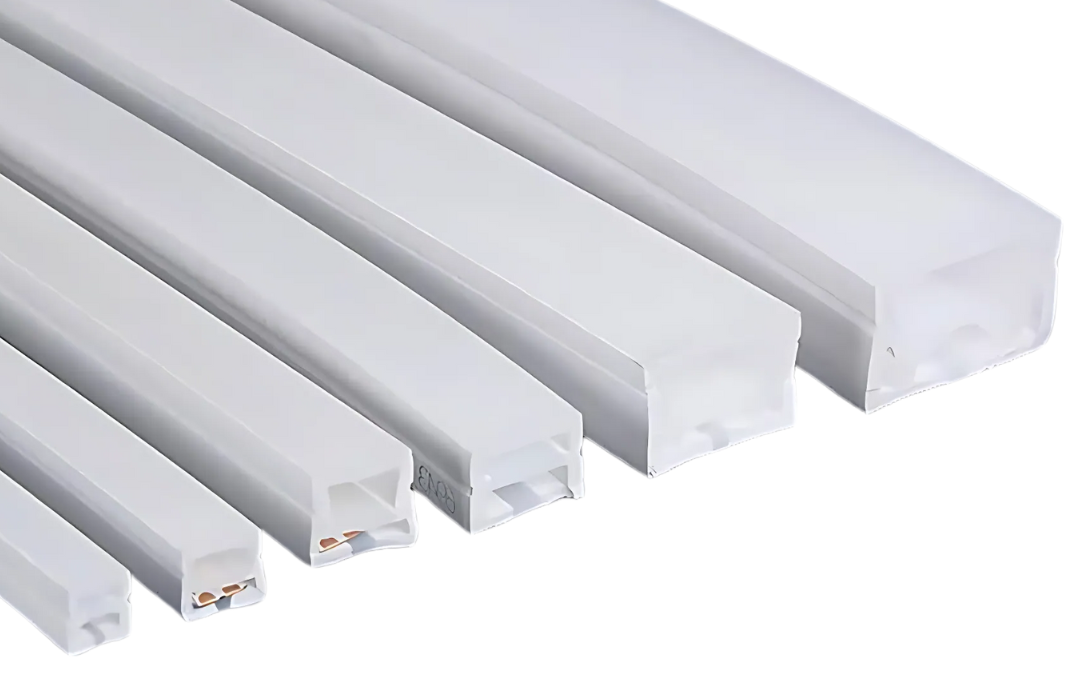
Today, lighting designers, architects, and OEM manufacturers are embracing a smarter alternative — Flexible Silicone LED Profiles.
They combine durability, smooth diffusion, and creative adaptability — redefining the next era of modern lighting design.
1. The Shift from Aluminum to Silicone LED Profiles
|
Aspect |
Aluminum Channels |
Silicone Profiles |
|
Flexibility |
Rigid and straight-line only |
Bendable, fits curves and corners |
|
Diffusion Quality |
Hard plastic covers; uneven light |
Soft silicone diffusers; uniform output |
|
Durability |
Prone to corrosion/yellowing |
UV & weather-resistant for years |
|
Installation |
Requires cutting, brackets, screws |
Easy glue-in or clip mounting |
|
Application Range |
Indoor, straight runs |
Indoor/outdoor, creative curves, signage |
|
Eco-Impact |
High energy use in production |
Recyclable, eco-friendly material |
💡 In essence: Silicone LED profiles offer everything aluminum can’t — freedom, fluidity, and finesse.
2. Why Silicone LED Profiles Are the Future
1. Superior Flexibility
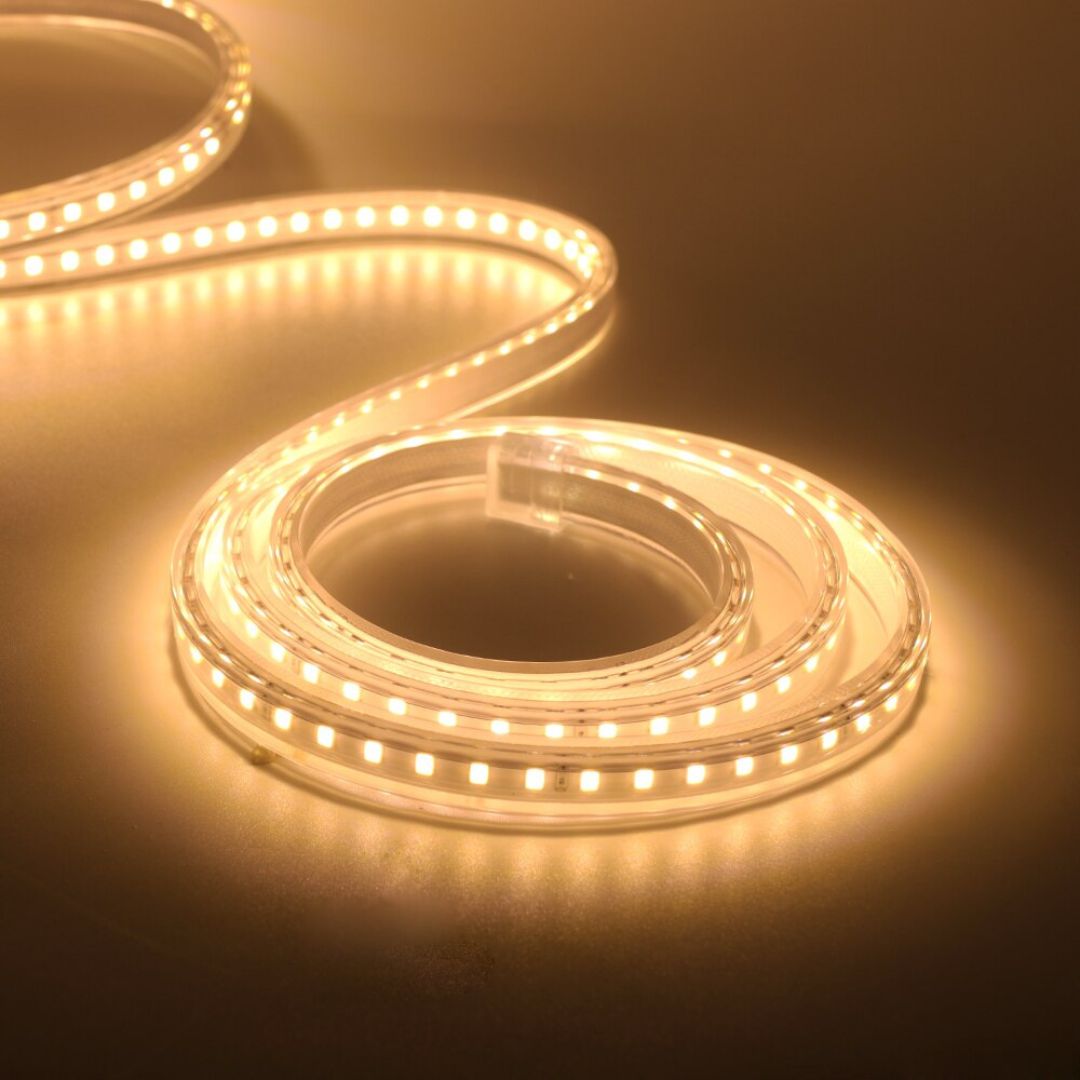
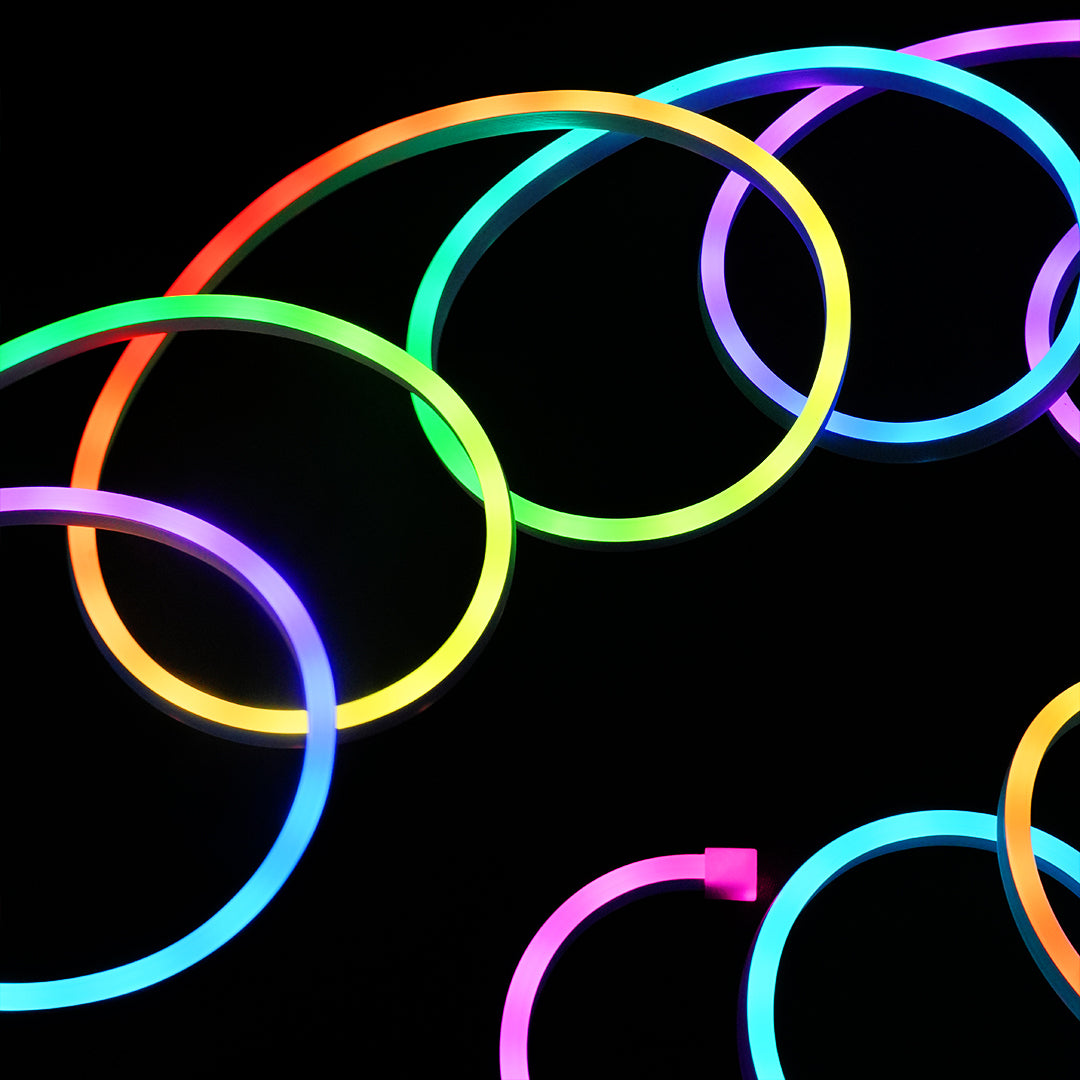
Silicone LED profiles bend smoothly without breaking — ideal for curves, circles, corners, and architectural highlights.
Designers can now create seamless linear and organic lighting forms previously impossible with aluminum housings.
2. Seamless Diffusion
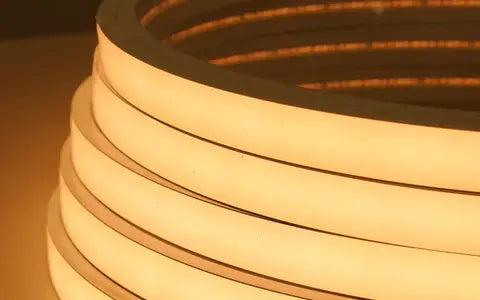
Silicone’s soft optical properties ensure dot-free lighting, even with narrow LED strips.
Perfect for luxury interiors, retail displays, and hospitality design where uniformity is key.
3. Weatherproof and Long-Lasting
Unlike aluminum or PVC, silicone doesn’t oxidize, yellow, or crack.
With IP67 waterproof ratings, it performs flawlessly in outdoor, poolside, and façade lighting.
4. Thermal Stability
Silicone maintains structure across -40°C to +120°C — meaning your lighting remains consistent whether in a cool showroom or hot exterior wall.
5. Eco-Friendly Manufacturing
Silicone extrusion uses less energy and contains no toxic chemicals or metals, aligning with sustainable building practices and LEED-certified design goals.
3. Applications Where Silicone LED Profiles Outperform Aluminum
|
Application |
Profile Type |
Advantage Over Aluminum |
|
Architectural façades |
V-Shape / 270° D-Shape |
Bends along curves, no glare |
|
Residential interiors |
Conceal View |
Easy recessed mounting |
|
Furniture / cabinetry |
Top View |
Compact and clean finish |
|
Signage / retail branding |
360° Round |
Neon-like glow without brittleness |
|
Outdoor lighting |
Waterproof Top View |
No rust, corrosion, or cracking |
4. Design Freedom Meets Performance
Flexible silicone profiles empower designers to:
-
Trace curved surfaces or organic walls
-
Integrate lighting into furniture and ceilings seamlessly
-
Create continuous, uniform light lines without visible breaks
From high-end residences to smart city facades, silicone profiles provide both visual continuity and structural resilience.
5. Performance Metrics Comparison
|
Performance Factor |
Aluminum Channels |
Silicone Profiles |
|
Heat Dissipation |
Excellent |
Moderate (use with low-heat LEDs) |
|
Light Uniformity |
Medium |
Excellent |
|
Waterproofing |
Moderate |
Excellent (IP67) |
|
Maintenance |
Medium |
Low |
|
Installation Time |
High |
Low |
|
Aesthetic Appeal |
Industrial |
Modern, fluid |
6. When Aluminum Still Has Its Place
While silicone dominates aesthetic and flexible applications, aluminum still plays a role in:
-
High-power LED strips requiring superior heat management
-
Industrial or commercial linear fixtures
-
Projects with strict structural rigidity needs
Many professional setups now combine both materials — using silicone for visible or curved sections, and aluminum for core thermal support.
7. How to Transition to Silicone LED Profiles
Step-by-Step Transition Guide
-
Identify existing aluminum use cases — e.g., cove lighting, cabinetry, walls
-
Select matching silicone dimensions (8mm–30mm profiles)
-
Choose compatible LED strips (width 5mm–15mm)
-
Use mounting clips or glue-in methods — skip heavy brackets
-
Seal ends for IP67 protection (for outdoor setups)
➡️ This migration improves both aesthetics and long-term cost efficiency.
8. Pros and Cons
|
Pros |
Cons |
|
Ultra-flexible and lightweight |
Slightly higher material cost |
|
Excellent light diffusion |
Less heat dissipation (use cool LEDs) |
|
Weatherproof, UV-resistant |
Needs proper sealing for IP67 |
|
Easy to cut and install |
Not ideal for heavy mechanical loads |
9. FAQs
Q1. Why are silicone LED profiles more flexible?
Because they’re made from soft silicone rubber — unlike rigid aluminum, they can bend freely without cracking.
Q2. Can silicone replace aluminum entirely?
Yes, for most interior and exterior decorative applications. For high-power LEDs, combine with aluminum backing.
Q3. Do silicone LED profiles overheat?
No, as long as you use low-heat or efficient LED strips. Silicone resists high temperatures naturally.
Q4. Are silicone profiles more expensive?
Initially, yes — but they save cost long-term due to zero corrosion and lower maintenance.
Q5. Are they suitable for outdoor lighting?
Yes, IP67-rated silicone LED profiles are completely waterproof and UV-stable.
10. The Future Outlook
As design trends shift toward soft, seamless, and sustainable lighting, silicone LED profiles are set to replace aluminum in:
-
Smart architecture
-
Biophilic design
-
Luxury interiors
-
Commercial façades
-
Outdoor art and signage
🌱 The future of LED lighting is flexible, green, and beautifully diffused.
CTAs
🔍 Explore Our Full Range of Flexible Silicone LED Profiles → View Collection
🏗️ Talk to Our Design Experts — get guidance on switching from aluminum to silicone profiles.
📘 Download Our “Aluminum vs. Silicone” Technical Comparison Sheet (Free PDF)
SEO Metadata
Title: The Future of LED Lighting: Why Silicone Profiles Are Replacing Aluminum Channels
Meta Description: Discover why silicone LED profiles are the next big thing in lighting. Learn how they outperform aluminum channels in flexibility, durability, and aesthetics.